


[* This interview originally appeared as “Jared Loughner and the Paranoid Style” on the Web site of New Left Project (UK) at: http://www.newleftproject.org/index.php/site/article_comments/jared_loughner_and_the_paranoid_style/]
1. Doherty: In the wake of the killings in Tuscon the tea party and their fellow travelers have been attacked for their lack of civility and for constant use of military metaphors regarding their opponents in the Democratic Party. Is civility really the key issue here?
Street: No, it isn’t. Citizens have no special obligation to be gracious and polite – to show “good manners” on the model of an aristocratic tea party – toward politicians and each other in a democracy. Real civic democracy often involves rugged and passionate conflict. Egos get bruised. Harsh words are exchanged. Unpleasant truths are spoken to and against power, often in justifiably angry tones.
On military metaphors, they are nothing new. Factions and parties and activists have spoke of rallying troops, winnings battles, waging wars, targeting opponents, raising campaign (finance) “war chests” and the like – making militarized political analogies and metaphors – since the beginning.
The elite call for civility generally reflects and expresses the “better sort’s” fear of “the rabble’s” “populist rage” – of the non-affluent majority’s legitimate popular anger. And ordinary people get understandably irate and “uncivil” when “representative democracy” translates into too much representation for powerful corporations and financial interests and little if any real democracy for the people. That translation is deeply entrenched in the U.S. , where, as the American philosopher John Dewey noted a century ago, “politics is the shadow cast on society by business.” U.S. policy now seems more captive than ever to the closet dictatorship of money. Lots of regular are reasonably outraged by that. As the left liberal commentator William Greider put in (in a column titled “Obama Asked us to Speak, but is he Listening?”) in the spring of 2009: “People everywhere [have] learned a blunt lesson about power, who has it and who doesn’t. They [have] watched Washington run to rescue the very financial interests that caused the [economic] catastrophe. They [have] learned that government has plenty of money to spend when the right people want it.”
During the Iowa presidential Caucus campaign, the Democratic candidate John Edwards used to say that big progressive change could never be accomplished without “an epic fight with concentrated wealth and power” (whether Edwards actually wished to wage that fight is an open question). He openly and quite impolitely attacked Hillary Clinton and Barack Obama as “corporate Democrats” and mocked Obama’s “Kumbaya” notion that good results could come from “sitting down at a big negotiating table with corporations and Republicans.” Obama scored points with corporate funders and the corporate media by rejecting Edwards’ common-sense populist rhetoric as uncivil, arguing in a Des Moines debate that “we don’t need more heat, we need more light.” We have seen who his bringers of “light” are – the very same Wall Street and Pentagon overlords who ran the country into the ground under George W. Bush. Lecturing the masses on the need for civility while making policy on behalf of the rich and powerful is an ugly elitist game.
Still, the Tea Party’s particular brand of incivility should be a source of concern. It has little to do with legitimate popular anger. The Tea Party is basically the fake- and rancid-populist right wing of an ever more reactionary, racist, plutocratic and authoritarian Republican Party. It is largely a corporate-funded, corporate-crafted, and corporate media-ted, top-down phenomenon, Its membership is disproportionately affluent and very predominantly white and its rage is directed primarily (and quite illegitimately) at the poor, blacks, Latinos, Muslims and at government programs that serve – or are perceived as supporting – the disadvantaged. Its anger often takes paranoid forms, including the widespread and highly moronic sense among Tea Partiers that Obama is some type of socialist and Marxist totalitarian who is scheming to steal American prosperity and freedom.
The Tea Party does include on its margins dodgy, hard-right, proto-fascistic elements who advocate violence against “government” (a third of “Tea Party activists” surveyed by CBS and the New York Times last April agreed that it is “justified for citizens to take violent action against the government”), immigrants, and “the left” (a category that for Tea Partiers seems to range from Angelina Jolie and Charles Schumer to the local natural foods coop, NBC, and Hugo Chavez.) Attachment to guns (including rapid- and repeat-fire assault weapons that are about killing large numbers of human beings) runs strong with many Tea Partiers, especially among its more extreme elements. So does a deep sense of persecution and powerlessness in the face of “big government” and other large forces. When we factor in ongoing economic insecurity, the deepening mental illness and even psychosis of many isolated and marginalized Americans, the absence of a serious mental health policy in the U.S., widespread deadly-gun ownership and lax gun laws (Arizona allows citizens to carry concealed weapons without a permit) it becomes a cause for apprehension when:
* Tea Party chapters put up billboards telling citizens to "PREPARE FOR WAR" with a “Marxist” government (their openly idiotic take on the corporate-imperial Obama administration). This happened last year.
* Tea Party inspirational leader and neo-John Bircher Glenn Beck uses his widely viewed prime-time far right Fox “News” television show to compare American progressives to Osama bin Laden and to say the following to the Obama administration and the Democratic-controlled Congress: "Shoot me in the head if you try to change our government—I will stand against you. And so will millions of others." This happened last June.
* Beck advances on air a hypothetical scenario where the government is considering taking his children because he refused to let them receive a mandatory flu vaccine and tells the audience that his response to the government would be "Meet Mr. Smith and Mr. Wesson." This happened last October.
* Beck regularly screams at callers-in, condemns his detractors as dangerous anti-Christian socialists, and calls for armed rebellion to “take the country back” from horrid leftist “progressives” and the “big government” they support.
* Fox “News” host Bill O'Reilly fantasizes on air about killing a Washington Post reporter and tells co-host Megyn Kelly, "I think you and I should go and beat him up” (this happened last November) – a comment that is consistent with O’Reilly’s regular practice of verbal bullying, coupled with hints of physical coercion. O’Reilly and Beck regularly interrupt and “out shout” opponents. O’Reilly cuts guests off, yelling “I don’t want to hear it.”’ He calls his critics “pinheads” and orders them to “shut up!” O’Reilly has physically threatened those on “the left” on more than one occasion. His latest bestselling book is titled “Pinheads and Patriots” – a title meant question the Americanism as well as the intelligence of liberals and leftists.
* 24 percent of Tea Party supporters and 32 percent of Tea Party activists believe that political goals can be legitimately pursued through “violent action against the government.” This opinion was registered in an April 2010 CBS-New York Times poll, which also found that more than three in four of those activists get their television political news from Fox .
* Rick Barber, a Tea Party candidate seeking the Republican nomination in Alabama 's Second Congressional District, runs a campaign advertisement in which he compares taxation and "the tyrannical health care bill" to slavery and the extermination of Jews in Nazi Germany. "We live in perilous times … We are all becoming slaves to our government," Barber warned. The "army of voters" depicted in his ad included a number of openly armed individuals. This happened last June.
Paul Street is an independent radical-democratic policy researcher, journalist, historian, author and speaker based in Iowa City, Iowa, and Chicago, Illinois. He is the author of more than ten books and numerous essays.
Street has taught U.S. history at numerous of Chicago-area colleges and universities. He was the Director of Research and Vice President for Research and Planning at the Chicago Urban League (from 2000 through 2005), where he published a highly influential grant-funded study: The Vicious Circle: Race, Prison, Jobs and Community in Chicago, Illinois, and the Nation (October 2002).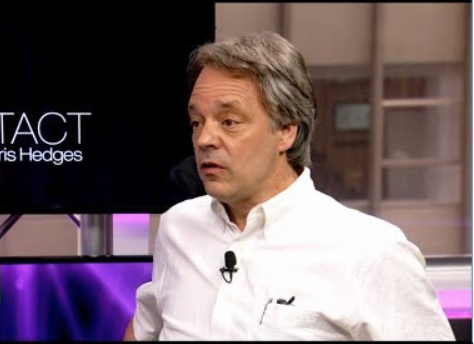

ZNetwork is funded solely through the generosity of its readers.
Donate




