


Whatever democracy we have, most notably the rights to vote, to organise, to demonstrate, to strike, have been won by people fighting for them on the streets, in their workplaces and communities. Now we are on the streets again to defend and extend the right, through our Members of Parliament, to call the government to account.
Our rights to vote and to organise are severely limited by the institutions of our so-called ‘parliamentary democracy’ which are in fact fundamentally undemocratic, a lasting consequence of the unfinished nature of Britain’s democratic revolution in the 17th century. This revolution briefly produced a (flawed) republic but was thwarted by the restoration of the monarchy with powers through its political servants in parliament: ‘Her Majesty’s Government’. Thus, we have the universal franchise to vote for our parliamentary representatives, but the oath that these same MPs swear is not to the people to whom they owe their election, but to the crown.
This symbolises the distinctively centralised nature of power, disguised by the ritual of ‘the crown in parliament’. All that flummery and pomposity, robes and rods, crowns and courtiers that is on show at the Queen’s speech are an elaborate disguise for the fact that the executive (the government), and particularly the Prime Minister, have in effect the power of a monarch. They rule in the name of the monarch, effectively accountable to no one between elections.
Boris Johnson’s attempt to close down parliament, with the Queen’s assent, has revealed the real relations of power beneath the seemingly harmless, decorative show. Over the years, MPs have struggled to gain some rights to make the executive accountable and, in the Labour Party, to make MPs accountable to their constituents rather than to the crown. They’ve won some minor victories – stronger select committees for instance, but they have not been able to challenge the fact of an over bearing, over centralised, over secretive executive, whose hidden powers can all too easily be abused by a desperate Prime Minister lacking a popular mandate – unless the people revolt and continue the democratic revolution.
In 1991, Tony Benn MP made what has been perhaps the most radical challenge to this concentration of power so far when he proposed the Commonwealth of Britain Bill. It was seconded by the future leader of the Labour Party, Jeremy Corbyn. It proposed abolishing the British monarchy, with the United Kingdom becoming a ‘democratic, federal and secular Commonwealth of Britain’, or in effect a republic with a codified constitution. It was introduced by Benn a number of times until he retired in 2001, but never achieved a second reading. ‘Under the Bill:
-
- The monarchy would be abolished and the constitutional status of the crown ended;The Church of England would be disestablished;
- The head of state would be a president, elected by a joint sitting of both Houses of the Commonwealth Parliament;
- The functions of the royal prerogative would be transferred to Parliament;
- The Privy Council would be abolished, and replaced by a Council of State;
- The House of Lords would be replaced by an elected House of the People, with equal representation of men and women;
- The House of Commons would similarly have equal representation of men and women;
- England, Scotland and Wales would have their own devolved National Parliaments with responsibility for devolved matters as agreed;
- County Court judges and magistrates would be elected; and
- British jurisdiction over Northern Ireland would be ended.
- The judiciary would be reformed and a National Legal Service would be created.’
This proposal, made by Tony Benn and Jeremy Corbyn, is more relevant today than ever, as the reckless actions of a Prime Minister concerned only to consolidate and maintain his personal power reveal that we are not governed by a parliamentary democracy but rather by a constitutional monarchy under which we are subjects not citizens. A genuinely democratic constitution based on the principle of popular sovereignty must be an urgent priority for Jeremy Corbyn’s Labour government and for the movement that would make this government possible.

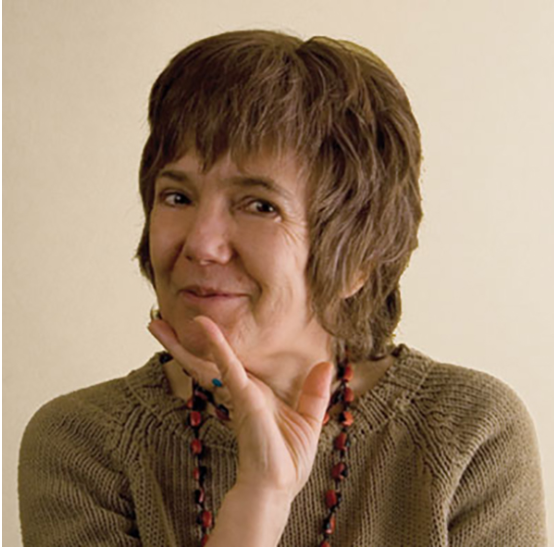
Hilary Wainwright is Research Director of the New Politics Programme at the Transnational Institute and editor of Red Pepper, a popular British new left magazine. She is also an Honorary Fellow in Sociology at Manchester University, UK. Her books include Reclaim the State: Adventures in Popular Democracy (Verso/TNI, 2003) and Arguments for a New Left: Answering the Free Market Right (Blackwell, 1993). She has written for ZNet, The Guardian, The Nation, New Statesman, Open Democracy, Carta, Il Manifesto and El Viejo Topo, as well as appearing as a commentator on BBC1, BBC Radio 4 and the BBC World Service. She has been a Senior Research Fellow at the International Labour Studies Centre, University of Manchester; a Research Fellow at the Centre for the Study of Global Governance at the London School of Economics, at Durham University and at the Open University, UK; Visiting Professor at the University of California, Los Angeles; and a Visiting Scholar at the Havens Center, University of Wisconsin, Madison and at Todai University, Tokyo. Wainwright also founded the Popular Planning Unit of the Greater London Council during the Thatcher years, and was convenor of the new economics working group of the Helsinki Citizens' Assembly from 1989 to 1994.
ZNetwork is funded solely through the generosity of its readers.
Donate




