


It is too early to judge how solid is the ceasefire agreed upon in the second Lebanon war. But it is already possible to draw some initial conclusions – the most important of which is the resounding Israeli military failure. Such a failure can stop for a while the more ambitious US-Israeli plans to extend the military campaign against Iran and Syria, although the danger is not over.
The Israeli debacle however has more complex implications. The first is in the realm of domestic Israeli politics. The major theme of the developing internal debate is the question of the “lost deterrence”.
Aggressive
Surely, say Israeli commentators, the war that meant to regain Israel its lost power of deterrence has eroded that power even further. In other societies common sense would have dictated that such a defeat would lead to a rethinking over the usage of military power – but not in Israel. The danger is that the conclusion would be to use more force to regain that lost deterrence.
The first buds of the local soul searching indeed indicate that this is going to be the major conclusion of both the army and the political system.
Thus, we should expect more bloodshed and more aggressive policies – if not immediately against Syria and Iran, then against the Palestinians. The second realm is the politics of the Arab world in general and that of Palestine in particular. Enormous admiration is felt in the Arab world and in Palestine for the success of Hizbollah.
However, with all the respect for the resistance and its steadfastness, secular and socialist movements are fearful that such an admiration is not just for the resilience of the Hizbollah but also for the dogma that guided it. This can and should lead to a more fruitful and meaningful dialogue between the left and the popular Islamic movements of resistance in order to find a common ground for the future. This future must be based on respect for tradition and religion, an aspiration for social and economic justice and, hopefully, careful observance of human and civil rights for all.
Without the rebuilding of the left in the Arab world there is a danger that a much narrower interpretation of Islamic tradition would reign in the Arab world and beyond. And yet it seems that many in the Arab world – and particularly in Palestine – were empowered by the successful resistance Hizbollah has shown. Without Hizbollah, the Lebanese Prime Minister Fouad Siniora would not have dared to tell US secretary of state Condoleezza Rice, “You are not welcome here without a ceasefire agreement.”
If more moderate and secular forces in the Arab world would follow suit and use wisely the weapon of the weak – which is a refusal to play the role accorded to them in the US charade of “the new Middle East” – they would win the popular support and credibility enjoyed now only by Hamas and Hizbollah.
Siniora’s stance would hopefully encourage Palestinian Authority president Mahmoud Abbas to follow suit. He is still seen by the US as a future authoritarian Arab leader who would rule a pro-US Bantustan. The dismantlement of the Palestinian Authority he heads is going to be the most effective Palestinian move towards forcing the international community to rethink the basic features of a future solution.
The third realm is that of Lebanon. Whatever the United Nations (UN) resolution recommended, the south would be under the influence of three military forces – Hizbollah, the enlarged UN force and the Lebanese army.
Palestinians
It will not be long, before Israel is tempted to reinvade Lebanon. And as long as there is no substantial change in the US fundamentalist vision, the same destructive US policy that has pushed Iraq back into pre-modern chaotic times is going to be attempted in Lebanon. Therefore, we can say that we have only witnessed the first phase in a long conflict over the future of Lebanon, intertwined with the longer conflict over the future of Palestine.
The renewed lethal Israeli air raids on Gaza in the first day after the ceasefire in Lebanon is a precursor of worse to come.
To sum up, Hizbollah’s achievement may indicate that the days of the US empire in the Middle East are numbered and nearly over. However in history “nearly” can take years.
These can be dangerous years in which we who live in this area – especially the Palestinians – are going to undergo tough times.
Ilan Pappe is senior lecturer in the University of Haifa department of political science, chair of the Emil Touma Institute for Palestinian Studies and author of several books.

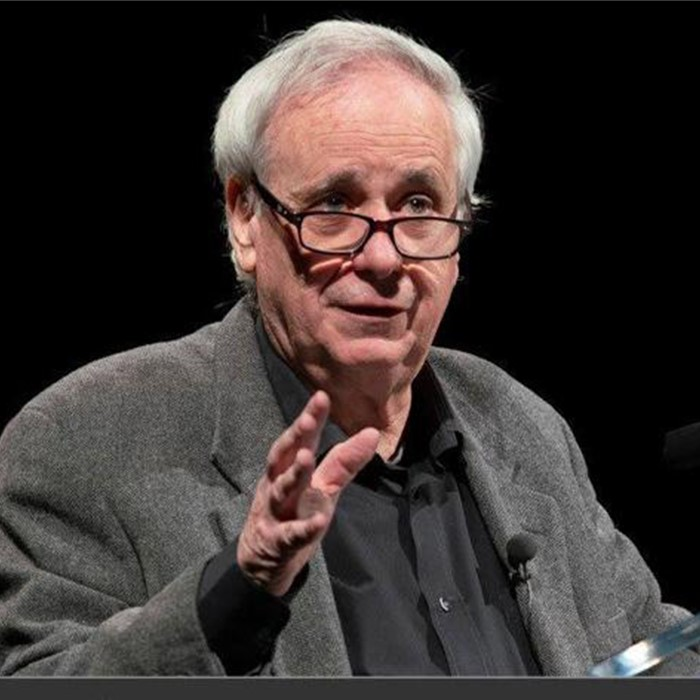
Ilan Pappé is an Israeli historian and socialist activist. He is a professor of history at the College of Social Sciences and International Studies at the University of Exeter in the United Kingdom, director of the university's European Centre for Palestine Studies, and co-director of the Exeter Centre for Ethno-Political Studies. He is also the author of the bestselling The Ethnic Cleansing of Palestine (Oneworld), A History of Modern Palestine (Cambridge), The Modern Middle East (Routledge), The Israel/Palestine Question (Routledge), The Forgotten Palestinians: A History of the Palestinians in Israel (Yale), The Idea of Israel: A History of Power and Knowledge (Verso) and with Noam Chomsky, Gaza in Crisis: Reflections on Israel's War Against the Palestinians (Penguin). He writes for, among others, the Guardian and the London Review of Books.
ZNetwork is funded solely through the generosity of its readers.
Donate




