


In the midst of what has become known in Israel as the “knifers’ Intifada”, an unusual scene unfolded in Ramat Gan, where many of the residents are Iraqi Jews. A small slender woman was protecting a man lying on the ground who was being pursued by a mob of 40 people, including a few soldiers, who wanted to lynch him.
While lying on the ground, pepper gas was sprayed into his eyes at close range. He managed to whisper to his guardian angel: “I am a Jew.” When the mob finally got the message, he was left alone.
He was chased because almost all the Iraqi Jews look like Palestinians; in fact, most of us Jews in Israel look like Palestinians. The only Jews who are “protected” are the Mizrahi Orthodox Jews who don the same clothes their Ashkenazi predecessors wore in 17th-century Europe, dismissing their traditional “Arab” dress.
Invisible people
his attack was not the only one. Other Arab Jews have been mistaken for Palestinians. Being considered an Arab in Israel, even based on looks, means you are part of the invisible, disempowered and dispensable natives.
Such an attitude is not unique in history. Most settler colonial societies adopted this attitude towards the natives: Natives, for settler-colonial societies, are an obstacle to be removed along with the stones in the fields, the mosquitoes in the swamps, and in the case of early Zionism, with the less fit – physically and culturally – Jews.
After the Holocaust, Zionism could not afford to be that choosy any more.
When one analyses the origins of the present Intifada, one can rightly point to the occupation and the expanded Jewish colonisation.
But the desperation that has produced the current unrest isn’t a direct outcome of the 1967 colonisation, but rather, of nearly 100 years of invisibility, dehumanisation and potential destruction of the Palestinian people, wherever they are.
How deeply this denial of the humanity of the natives of Palestine is rooted in today’s Israeli political discourse could be seen in the two main speeches by Prime Minister Benjamin Netanyahu and the leader of the opposition, Yitzhak Herzog, given on Tuesday at the Knesset.
Netanyahu explained very well why the Palestinian desperation will produce more and more Intifadas in the future and why Israel’s international delegitimisation will increase exponentially.
He described 100 years of colonisation as a proud project that for no good reason, other than Islamic incitement, was resisted by the native people of Palestine.
The message to the Palestinians was clear: Accept your fate as invisible, citizen-less inmates of the biggest prison on earth in the West Bank and the Gaza Strip, and as a community under a severe apartheid regime, and we can all live in peace. Any attempt to reject this reality is terrorism of the worst kind and will be dealt with accordingly.
Within this narrative, if his speechwriter was attempting to calm down worries in the Muslim world about the fate of al-Haram al-Sharif (the Noble Sanctuary), the opposite message came through. Much of his speech about al-Haram al-Sharif was a history lesson on why the place belongs to the Jewish people.
And although he ended this section with a promise not to change the status quo, the presence of the leaders of a party strongly believing in the need to build a third temple there was hardly reassuring.
‘Never together’
In his speech, Herzog, the leader of the liberal Zionist opposition, manifested the dehumanisation of the Palestinians in a different way. His nightmare, he stressed repeatedly, was a country where Jews and Palestinians would live together.
Therefore, separation, ghettoisation, and enclaves are the best solution, even if it means shrinking a bit of greater Israel. “We are here, and they are there,” he repeated Ehud Barak and Shimon Peres’ famous slogan from the late 1990s.
Haaretz’s liberal Zionist journalist, Barak Ravid, repeated the horror of liberal Zionists: If you have a binational state, stabbings will be a daily occurrence, he warned. The idea that a liberated Israel/Palestine will be a democracy for all has never been on the liberal Zionist agenda.
This wish not to share life with anything Arab is an attitude felt by every Palestinian on a daily basis. More than a century of colonisation and nothing has changed in the complete denial of the native Palestinians’ humanity or their right to the place.
It was Israeli policy and actions against Al-Aqsa Mosque that ignited the present wave of protests and individual attacks. But it was triggered by a century-long atrocity: the incremental culturecide of Palestine.
The Western world was horrified by the destruction of ancient cultural gems by the Islamic State of Iraq and the Levant (ISIL). The Israeli destruction and wiping out of the Islamic heritage of Palestine was far more extensive and significant. Hardly one mosque remained intact after the Nakba, and many of those remaining were turned into restaurants, discotheques, and farms.
The Palestinians’ attempt to revive their theatrical and literary heritage is considered by Israel as a commemoration of the Nakba, and is outlawed if undertaken by anybody who relies on governmental funding.
What we see – and will continue to see – in Palestine is the existential struggle of the native people of a country still under threat of destruction.
Ilan Pappe is the director of the European Center of Palestine Studies at the University of Exeter. He has published 15 books on the Middle East and on the Palestine Question.

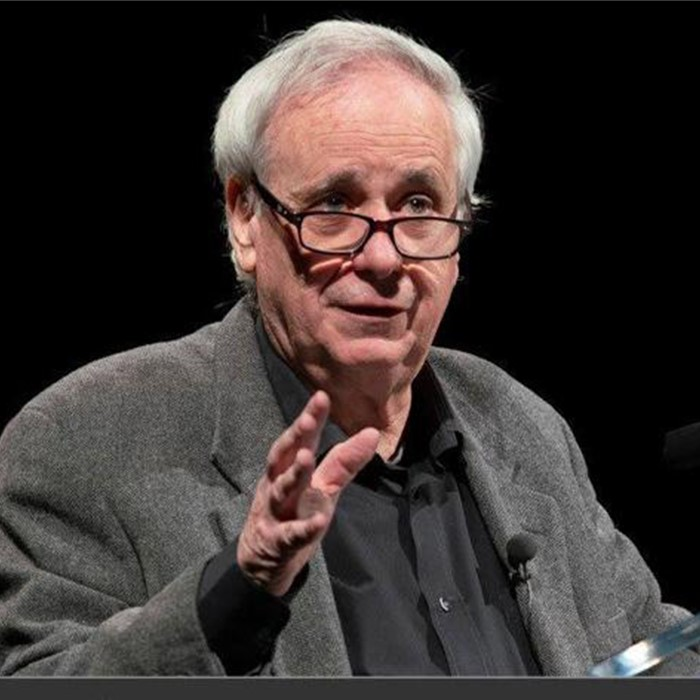
Ilan Pappé is an Israeli historian and socialist activist. He is a professor of history at the College of Social Sciences and International Studies at the University of Exeter in the United Kingdom, director of the university's European Centre for Palestine Studies, and co-director of the Exeter Centre for Ethno-Political Studies. He is also the author of the bestselling The Ethnic Cleansing of Palestine (Oneworld), A History of Modern Palestine (Cambridge), The Modern Middle East (Routledge), The Israel/Palestine Question (Routledge), The Forgotten Palestinians: A History of the Palestinians in Israel (Yale), The Idea of Israel: A History of Power and Knowledge (Verso) and with Noam Chomsky, Gaza in Crisis: Reflections on Israel's War Against the Palestinians (Penguin). He writes for, among others, the Guardian and the London Review of Books.
ZNetwork is funded solely through the generosity of its readers.
Donate




