

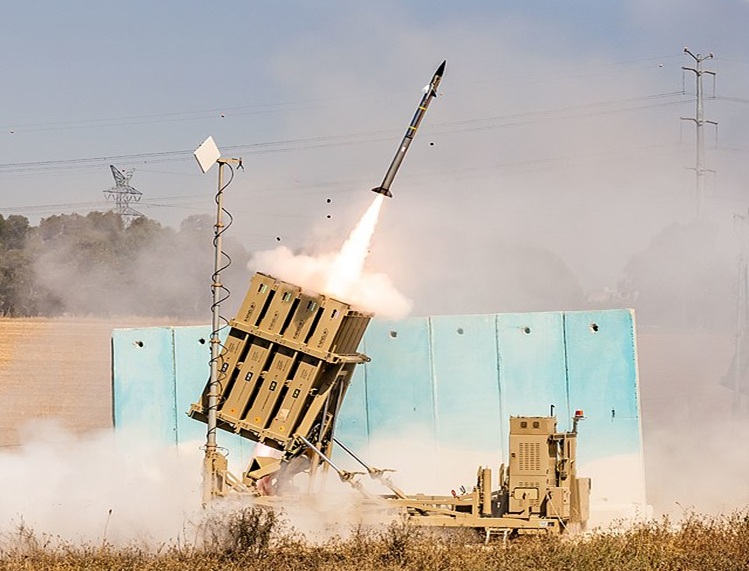
Israel’s war with Iran is a direct result of a political culture that depends for survival upon a permanent state of war, says Israeli academic and left-wing activist Idan Landau in the interview that follows. He observes that Israeli society on the whole has embraced a fascist mindset, “reflecting extreme paranoia and anxiety,” and thus intolerance for dissent. Subsequently, peace is a taboo and there is total indifference to genocidal acts and human casualties. Moreover, there is very little hope for a different trajectory, argues Landau, “as long as the U.S. and Europe continue to insulate Israel from the moral consequences of its actions.”
Landau is professor of linguistics and head of the department of linguistics at Tel Aviv University. He writes a political blog (in Hebrew) on Israeli affairs and has been imprisoned on several occasions for his refusal to serve in the Israel Defense Forces reserve.
C. J. Polychroniou: Since the Hamas’ October 7 attack on southern Israel, the Netanyahu government embarked on a genocidal campaign against Palestinians in Gaza, expanded Jewish settlements in occupied West Bank and thus encouraged settlers to escalate West Bank terrorist attacks, exchanged fire with Hezbollah and the Houtis, then attacked Iran in what has been dubbed as the 12-Day War, and finally persuaded U.S. President Donald Trump to go to war with Iran. What is Israel’s endgame in terrorizing the Middle East, and how has permanent war impacted Israeli society and the Israeli psyche?
Idan Landau: I think the whole point of permanent war – I agree this is the most appropriate concept to use here – is that there is no endgame. Permanent war, with ever growing economic, emotional and political costs, is exactly what keeps the Israeli right-wing in power; it feeds on anxiety, paranoia and visions of imminent destruction (interestingly, our own and our enemies’ destruction, equally vivid). Not being able to concentrate on and fully understand what’s going on is also crucial; the Israeli public is extremely underinformed about key issues, like the fraudulent nuclear talks in Geneva, the far-reaching proposals by the Lebanese government, etc. The media – always complicit, these days criminal – bombards us with caricatures of our surrounding countries.
That said, I think there is one constant, never-changing endgame lurking behind all the upheavals: The expansionist project in the West Bank. Not just Smotrich but a dedicated section within the Likkud, of right-wing religious settlers, are working tirelessly on this project, actually from the first week after October 7. Plans for resettlement of Gaza combined with increased settlement in the West Bank (specifically, the northern Samaria, surrounding Jenin and Tulkarem) were immediately aired and pushed forward by the settlers’ lobby together with their MK partners. The surge we now see in ethnic cleansing and forced displacement of Palestinian communities throughout the West Bank is inherent to the overall vision of this government, and it was stated as such even before October 7; that only gave it a huge impetus.
The impact on Israeli society is perhaps the most depressing aspect of it all. Political discourse has been reduced to hollow slogans. Every single issue in foreign affairs in framed as either “existential threat” or “unavoidable use of military force.” There’s absolutely no room for talk about non-violent paths (“peace” is a taboo even on the left). The Enemy is an undifferentiated mass of Hamas/Iran/Hezbollah/Houtis, in short, different guises of Amalek. Much of that, as I noted, is fueled by the deliberate absence of facts and evidence for rational conduct on the part of our enemies.
Israelis live in a peculiar state of mind: total disbelief in the possibility of normal life, clinging on to the very ideology that perpetuates this state of mind.
C.J. Polychroniou: Israel has actual and perceived enemies. But is Benjamin Netanyahu alone the actual problem behind Israel’s permanent state of war? I mean, even most of Israeli opposition supported the genocide in Gaza and it’s doing the same thing now with the war against Iran.
Idan Landau: Netanyahu is the most able consolidator of all the dark impulses of Israeli society, but of course he didn’t make up anything on his own. If you go back to Begin’s speeches in the 1970s-1980s, they also constantly invoked the Holocaust as the ultimate justification for whatever Israel does. The Messianic drive to settle the greater Israel predates Netanyahu, as well as the overall brutal, racist degradation of Palestinians inside and outside Israel. You can go on and on – nothing is new here. At most, as you note, it is the subservience of the “opposition”; I don’t recall anything like it in the past. If you look at the governments that went to wars in 1973 and 1982, they faced considerable opposition, within the Knesset and outside of it, on the very issue of whether the war was justified (in 1973, it was clearly preventable; in 1982, it was pure imperial vanity). None of that is left today.
Which is why the temptation of permanent war is so strong: You’re guaranteed to make the willful silence of the opposition also permanent.
C. J. Polychroniou: In Lebanon, the Israeli armed forces are using Gaza tactics, attacking hospitals and killing medical staff, while in Iran they have engaged in what has been rightly described as chemical warfare on account of strikes on fuel depots. Isn’t the country concerned at all about its blatant assault on international law and that it has turned into a pariah state in the eyes of the overwhelming majority of the people across the globe? What happened to Israel’s labor party which combined socialism with nation-building?
Idan Landau: As to the labor party, I always say that one should not speak ill of the dead. A handful of members of Knesset (MKs) that are obsessed with displays of liberal values and with welfare legislation when genocide is in full force and Apartheid shifts from de facto to de jure. The other “opposition” parties are either led by generals (Golan, Eizenkot) who offer zero alternatives to military dominance, or by right-wing neoliberals (Bennet, Lapid). The only representatives of left values in the Knesset are the Arab MKs. As to International Humanitarian Law (IHL), my impression is that Israelis are unconcerned insofar as Uncle Sam is, and it sure looks like he is, thoroughly unconcerned. The Trump administration vindictively sanctioned the International Criminal Court (ICC) judges presiding over the Israeli case, and quite explicitly stated that IHL does not apply to the U.S. and its allies. There’s a lot of duplicity in Israeli discourse regarding the so-called “Principle of Complementarity”; the official response to the ICC described the “independent and robust judicial system” of Israel, which investigates any suspicions for wrongdoings. Most Israelis simply think that the rules don’t apply to us since they don’t apply to the Hamas (they do apply to both parties; I already said that Israelis are shrouded in disinformation). But even the liberals that appeal to our own “independent and robust judicial system” look ridiculous in face of the massive cover-up we witness from the beginning of the genocide; the dropping of charges against the five torturers/rapists in Sde-Teiman is but the latest instance. Hundreds of heinous crimes did not even yield any charges.
C. J. Polychroniou: Courageous voices against war and violence can be heard here and there across Israeli society and peace activists have organized scores of demonstrations in cities like Tel Aviv, Haifa, and Jerusalem to express their opposition to the war in Iran. Are anti-war demonstrations really seen as a threat to national security by the Netanyahu government and even segments of the Israeli citizenry?
Idan Landau: These things happen and they do lift our spirit. In honesty, I don’t think anyone views them as “a threat to national security,” that’s fascist talk. The public atmosphere is just incredibly intolerant, with or without the presence of the police, with or without any legal process. Just try to voice your opposition to the war – any war, pick your favorite – out in the street, and you’re sure to be harassed and probably beaten by random pedestrians within 15-20 minutes. So I think it is a typical fascist all-embracing violent climate, reflecting extreme paranoia and anxiety: The mere verbal expression of “sacrilegious” opinions is seen as a personal threat to our carefully maintained peace of mind; so tenuous and feeble, that it cannot even stand to face dissent. Point it out to Israelis and urge them to make out what it means for their confidence in what their state is doing that they must violently banish any expression of doubt and criticism (this is now the position of many journalists as well!) – well, see if you get an answer.
C. J. Polychroniou: Israel censored reporting on the genocide in Gaza. Is the same thing happening now with the war in Iran?
Idan Landau: Luckily, the IDF doesn’t control the entrance and exit to Iran. So we don’t have the brute force censorship, instead it’s the good old “filter and distort and leave out the context” censorship. They would report civilian casualties only if forced (because it’s getting too much international media), and you wouldn’t be surprised to hear that the “human shield” trick is now applied reflexively, before any facts are even known. In this sense, as all human right organizations pointed out, the Gaza genocide has set a shocking new standard of indifference to civilian casualties: All targets are criminalized by association to your favorite Amalek (currently the Islamic Revolutionary Guard Corps or IRGC), and we stopped bothering about substantiating this association with actual facts; declaring it so makes it so. In this context, one can watch civilian suffering in Iran with a level of detachment and blame it all on the IRGC. We should remember, though, that the Iranian regime is no more scrupulous in its choice of targets in Israel; the war crimes are on both sides. Yet I cannot say that Israeli media covers the wider civilian effects of the war on Iranian citizens in any serious way. Pretty much 95% of what we get are silly, heroic odes to our courageous pilots and genius cyber fighters.
C. J. Polychroniou: In your view, is there a pathway towards peace in Israel? Is permanent peace even possible for Israel?
Idan Landau: Ultimately there can’t be any other solution; wars eventually end, consuming nations. I just don’t think it will be “Israel” as we now know it that will see the fruits of peace. It will be a totally different entity, somehow letting Jews and Arabs live together as equals. That’s not possible within the current regime. Sadly, the shift to non-violence only occurs after the level of death and suffering is insurmountable to both sides. No one knows when that will be. As long as the U.S. and Europe continue to insulate Israel from the moral consequences of its policies, it won’t change trajectory.


C.J. Polychroniou is a political scientist/political economist, author, and journalist who has taught and worked in numerous universities and research centers in Europe and the United States. Currently, his main research interests are in U.S. politics and the political economy of the United States, European economic integration, globalization, climate change and environmental economics, and the deconstruction of neoliberalism’s politico-economic project. He has published scores of books and over one thousand articles which have appeared in a variety of journals, magazines, newspapers and popular news websites. His latest books are Optimism Over Despair: Noam Chomsky On Capitalism, Empire, and Social Change (2017); Climate Crisis and the Global Green New Deal: The Political Economy of Saving the Planet (with Noam Chomsky and Robert Pollin as primary authors, 2020); The Precipice: Neoliberalism, the Pandemic, and the Urgent Need for Radical Change (an anthology of interviews with Noam Chomsky, 2021); and Economics and the Left: Interviews with Progressive Economists (2021).
ZNetwork is funded solely through the generosity of its readers.
Donate




