


The US and Australia voted against, which was to be expected. US Secretary of State John Kerry also worked the telephones to urge member states to abstain – the resolution would have passed if nine states voted “yes”. Only eight did, as it turned out, meaning the US didn’t have to wield its veto power.
Over the course of the past two decades, votes in the UN General Assembly about the Israeli occupation of Palestine usually line up the same way: the entire world votes for Palestinian self-determination, while the United States, Israel and a few of its choice allies vote for the Israeli occupation. Who are these US and Israeli allies? The most consistent voters for this small bloc are the Federated States of Micronesia, Palau, the Marshall Islands and, recently, Canada.
The entire bloc of the Global South in the UN – the G77 – now made up of 134 member states – votes for Palestine. This has been the position of the G77 since its foundation in 1964. It has been joined in this unanimity in recent years by China, Russia and the European states. Amongst the G77, one of the moral leaders has been India. It had been a consistent defender of the rights of Palestinians and an important role model for the G77 and the Non-Aligned Movement.
Matters are more unstable at present, however. Over the past two decades, India has drifted close to Israel for at least two reasons. First, India – the world’s largest importer of weaponry – has come to rely upon arms imports from Israel. India currently buys half of the arms that Israel exports. In a roundabout way, India subsidizes the occupation of Palestine by providing this major fillip to the Israeli economy.
Second, the Bharatiya Janata Party (BJP) that leads the right-wing government in New Delhi has had a long affinity with the Zionist temperament toward territory and identity. Fantasies of an alliance between the legions of Zionism and Hindutva (the ideology of the BJP) against “Islamic terrorism” have driven this linkage.
The distance Indian foreign policy has travelled since the heyday of the 1970s and 1980s is remarkable. Gone are the warmly effusive visits of the Palestinian leadership to India – there was a time when India’s Prime Minister Indira Gandhi would personally greet the PLO chief Yasser Arafat. Now the Palestinian ambassador in New Delhi, Adli Hassan Shaban, has taken to the media to complain about the milquetoast statements made by the Indian government during the Israeli bombardment of Gaza in 2012 and 2014.
On December 21, The Hindu’s Amit Baruah reported that, “India may end support to Palestine at the UN.” An unnamed Indian government source told Baruah that the right-wing government “is looking at India’s voting record at the United Nations on the Palestinian issue”. The implication was that India might join the United States, Israel, Canada, Palau and Micronesia to vote for the occupation of the Palestinians. This would be a blow to the solidarity of the Global South.
No change in policy
There is precedent for this break. In 2007, India turned its back on the Global South and voted against Iran twice at the International Atomic Energy Agency. This was a serious shock. The worry was that India’s vote might draw others to fall in line with a consensus that the US has demanded from the countries of the South – allegiance to its foreign policy objectives in exchange for a good word from the US Treasury to the IMF and World Bank as well as the commercial banks.
India’s vote, however, did not provoke a major disruption in the Global South. Nor did it, at the time, change the tenor of Indian diplomacy. As Stephen G. Rademaker, former US Assistant Secretary for Nonproliferation and International Security, put it, “I am the first person to admit that [India’s] votes [at the IAEA] were coerced.” This coercion meant that there was no shift in Indian diplomacy; the 2007 votes were unusual by all counts.
When asked about the report in The Hindu, Syed Akbaruddin, spokesperson for the Indian Ministry of External Affairs (MEA) said, “There is no change in our policy of extending traditionally strong support for the Palestinian cause while maintaining good relations with Israel.”
Evidence for the continued support for Palestine was most recently demonstrated in Prime Minister Narendra Modi’s message to the UN on the International Day of Solidarity with the Palestinian People (November 29). The Prime Minister said that India continues to support the “Palestinian people for their struggle for a sovereign, independent, viable and united state of Palestine within secure and recognized borders, side by side at peace with Israel, and with East Jerusalem as its capital.” This is indeed the conventional position of the Indian government.
Former Indian Ambassador K. P. Fabian, who served in Iran and Qatar, told me that in the “Indian diplomatic establishment there is a growing school of thought that it is in India’s interests to get closer to Israel without bothering too much about Arab or Palestinian reaction or sensitivities.” This is the school that also believes that India needs to throw itself into the US orbit – part of the encirclement of China that would include Japan, South Korea, and Australia.
India’s realistic interests disrupt this right-wing undertow. India remains in need of Gulf Arab oil and gas, and so cannot afford to make a clean break with the consensus on Palestine. The BRICS bloc has since its formation in 2009 taken a firm position on Palestine. India, as a charter member of this group, has found it unwise to stray too far from their collective positions. In the Prime Minister’s November statement he pointed out that India has joined with Brazil and South Africa to finance development projects in Gaza, including the Atta Habib Medical Centre in Shujiyaa, bombed by the Israelis in its last assault.
Despite the effusions for Israel amongst the establishment hawks, certain important material constraints prevent a headlong dive into the Israeli narrative. A vote in the UN for Israel would be impossible in the short or medium run.

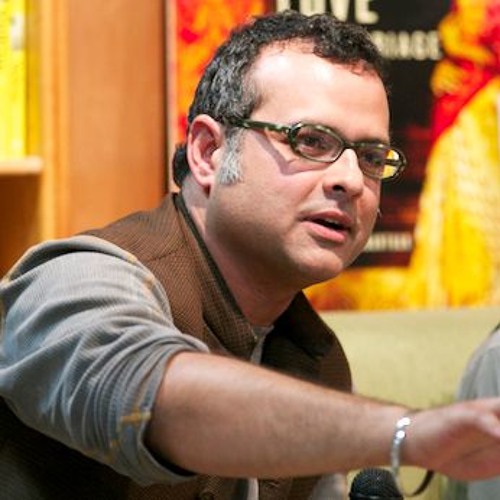
Vijay Prashad is an Indian historian, editor, and journalist. He is a writing fellow and chief correspondent at Globetrotter. He is an editor of LeftWord Books and the director of Tricontinental: Institute for Social Research. He is a senior non-resident fellow at Chongyang Institute for Financial Studies, Renmin University of China. He has written more than 20 books, including The Darker Nations and The Poorer Nations. His latest books are Struggle Makes Us Human: Learning from Movements for Socialism and (with Noam Chomsky) The Withdrawal: Iraq, Libya, Afghanistan, and the Fragility of U.S. Power. Tings Chak is the art director and a researcher at Tricontinental: Institute for Social Research and lead author of the study “Serve the People: The Eradication of Extreme Poverty in China.” She is also a member of Dongsheng, an international collective of researchers interested in Chinese politics and society.
ZNetwork is funded solely through the generosity of its readers.
Donate




