


Violence is taking a heavy toll in Iraq, but everyday economic difficulties could be hurting people more.
Nearly 20 months into the occupation, Iraqis find themselves in a desperate situation, with countless struggling to survive.
U.S. President George W. Bush said at a speech at the U.S. Army War College May 24 this year that the United States wants “freedom and independence, security and prosperity for the Iraqi people.”
Prosperity now looks like 70 percent unemployment. A recent study found that if the food ration programme set up by Saddam Hussein’s regime during the U.S.-led sanctions was disbanded, more than 25 percent of Iraqis would starve to death.
Bush had also praised “a growing private economy” in Iraq after the former governing council approved a new law “that opens the country to foreign investment for the first time in decades.”
But Antonia Juhasz, project director at the International Forum on Globalisation based in San Francisco in the United States says that orders to this effect by the disbanded Coalition Provisional Authority have allowed the economy of Iraq to be sold from under Iraqis.
In a paper ‘The Hand-Over That Wasn’t: Illegal Orders give the U.S. a Lock on Iraq’s Economy’, she wrote that order no. 39 allows for “(1) privatisation of Iraq’s 200 state-owned enterprises; (2) 100 percent foreign ownership of Iraqi businesses; (3) ‘national treatment’ — which means no preferences for local over foreign businesses; (4) unrestricted, tax-free remittance of all profits and other funds; and (5) 40-year ownership licences.”
Iraqis are therefore not given preference in reconstruction efforts in their own country. Foreign corporations such as Halliburton and Bechtel have been allowed “to buy up Iraqi businesses, do all of the work and send all of their money home,” Juhasz said.. “They cannot be required to hire Iraqis or to reinvest their money in the Iraqi economy. They can take out their investments at any time and in any amount.”
The consequences of those decisions are being felt in Iraqi homes. Abu Ahmed al-Hadithi, 40, sells vegetables in the al-Adhamiya district of Baghdad. “The economic situation is very bad now,” he said as he stood waiting to sell some cucumbers. “The costs of gas and food are going up so high. So even if we make more now, everything is costing more.”
The vegetables he sells now are imported. “I make less profit now, I have nine people to take care of, and it has made my life very difficult,” he said.
This is the consequence of order no. 12 of the Bremer orders as they came to be called after former U.S. administrator in Iraq L. Paul Bremer. The order suspends “all tariffs, customs duties, import taxes, licensing fees and similar surcharges for goods entering or leaving Iraq.”
Juhasz says this led to “an immediate and dramatic inflow of cheap foreign consumer products — devastating local producers and sellers who were thoroughly unprepared to meet the challenge of their mammoth global competitors.”
Another critical factor leading to the dismal economic situation in occupied Iraq is that little has come by way of the promised reconstruction funds.
Anthony Cordesman from the Centre for Strategic and International Studies in Washington says that as of June 25 this year, “the Programme Management Office (PMO) data show…out of 18.4 billion dollars in aid, 11 billion dollars has been apportioned, 7.6 billion dollars has been committed, 4.8 billion dollars has been obligated, and all of 333 million dollars has actually been spent.”
This has meant idle factories, and Abu Gouda, 50, knows what that means.
The ex-factory worker too is now selling vegetables in al-Adhamiya market.
“I make between 8,000-10,000 dinars (five to seven dollars) a day, and this is just enough to feed my family of seven,” he said at his vegetable stall. “Things have become so difficult for us, this is what I have to do to take care of my family.”
The charity Christian Aid says the U.S.-controlled coalition in Baghdad is handing over power to an Iraqi government without properly investigating what it has done with some 20 billion dollars of Iraq’s own money. Many Iraqis say the economy is suffering because of the security situation.
“We have no security and this means our economy cannot function,” said Sabah Ahmed, a former local official, now unemployed. “People are in a critical situation because of the increase in prices. The gasoline, transportation, everything is going up so much.”
Another former official is trying to sell sweets, but does not sell many.. “Before people used to eat so many sweets, but now they are buying less because nobody can afford them.”

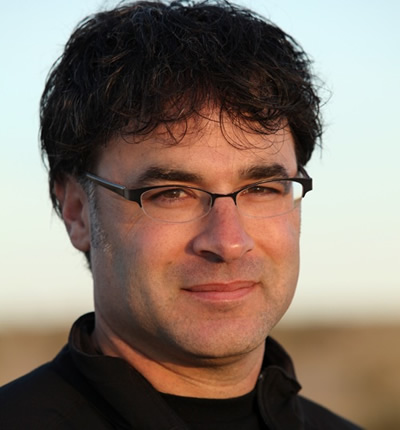
Dahr Jamail is the Baghdad correspondent for The NewStandard. Jamail, a political activist from Anchorage, Alaska, first traveled to Iraq in November 2003 to write about the effects of the US occupation on the Iraqi people. After nine weeks covering Iraq under occupation, he returned to the US and addressed audiences in Alaska and the Northeast about his experience. He has recently returned to Iraq in order to continue reporting on US occupation and privatization. You can view his dispatches and articles at http://newstandardnews.net/iraq.
ZNetwork is funded solely through the generosity of its readers.
Donate




