


There are great cultural, political and physical differences between Vietnam and Iraq that cannot be minimised, and the geopolitical situation is entirely different. But the US has ignored many of the lessons of the traumatic Vietnam experience and is repeating many of the errors that produced defeat.
In both places, successive American administrations slighted the advice of their most knowledgeable intelligence experts. In Vietnam they told Washington’s decision-makers not to tread where France had failed and to endorse the 1955 Geneva Accords provisos on reunification.
They also warned against underestimating the communists’ numbers, motivation, or their independent relationship to China and the Soviet Union. But America’s leaders have time and again believed what they wanted, not what their intelligence told them.
The Pentagon in the 1960s had an uncritical faith in its overwhelming firepower, its modern equipment, mobility, and mastery of the skies. It still does, and Donald Rumsfeld believes the military has the technology to “shock and awe” all adversaries. But war in Vietnam, as in Iraq, was highly decentralised and the number of troops required only increased, even as the firepower became greater. When they reached half-a-million Americans in Vietnam, the public turned against the president and defeated his party.
Wars are ultimately won politically or not at all. Leaders in Washington thought this interpretation of events in Vietnam was bizarre, and they ignored their experts whenever they frequently reminded them of the limits of military power.
In both Vietnam and Iraq the public was mobilised on the basis of cynical falsehoods that ultimately backfired, causing a “credibility gap”.
The Tonkin Gulf crisis of August 1964 was manufactured, as the CIA’s leading analyst later admitted in his memoir, because “the administration was seeking a pretext for a major escalation”. Countless lies were told during the Vietnam War but eventually many of the men who counted most were themselves unable to separate truth from fiction.
Many US leaders really believed that if the communists won in Vietnam, the “dominoes” would fall and all South-East Asia would fall under Chinese and Soviet domination. The Iraq War was justified because Saddam was alleged to have weapons of mass destruction and ties with al-Qaeda, but no evidence for either allegation has been found.
There are 130,000 American troops in Iraq now – twice the number Bush predicted would remain by this month – but, as in Vietnam, their morale is already low and sinking. Bush’s poll ratings have fallen dramatically. He needs more soldiers in Iraq desperately and foreign nations will not provide them.
In Vietnam, president Nixon tried to “Vietnamise” the land war and transfer the burdens of soldiering to Nguyen Van Thieu’s huge army. But it was demoralised and organised to maintain Thieu in power, not win the victory that had eluded American forces.
“Iraqisation” of the military force required to put down dissidents will not accomplish what has eluded the Americans, and in both Vietnam and Iraq the US underestimated the length of time it would have to remain and cultivated illusions about the strength of its friends.
The Iraqi army was disbanded but now is being partially reconstituted by utilising Saddam’s officers and enlisted men. As in Vietnam, where the Buddhists opposed the Catholics who comprised the leaders America endorsed, Iraq is a divided nation regionally and religiously, and Washington has the unenviable choice between the risks of disorder, which its own lack of troops make likely, and civil war if it arms Iraqis.
Despite plenty of expert opinion to warn it, the Bush Administration has scant perception of the complexity of the political problems it confronts in Iraq. Afghanistan is a reminder of how military success depends ultimately on politics, and how things go wrong.
Rumsfeld’s admission in his confidential memo of October 16 that “we lack the metrics to know if we are winning or losing the global war on terror” was an indication that key members of the Bush Administration are far less confident of what they are doing than they were early in 2003.
But as in Vietnam, when defence secretary Robert McNamara ceased to believe that victory was inevitable, it is too late to reverse course and now the credibility of America’s military power is at stake.
Eventually, domestic politics takes precedence over everything else. It did in Vietnam and it will in Iraq. By 1968, the polls were turning against the Democrats and the Tet offensive in February caught President Lyndon Johnson by surprise because he and his generals refused to believe the CIA’s estimates that there were really 600,000 rather than 300,000 people in the communist forces. Nixon won because he promised a war-weary public he would bring peace with honour.
Bush declared on October 28 that “we’re not leaving” Iraq soon, but his party and political advisers are likely to have the last word as US casualties mount and his poll ratings continue to decline.
Vietnam proved that the American public has limited patience. That is still true.
The real lessons of Vietnam have yet to be learned.
Gabriel Kolko is professor emeritus of history at York University in Canada and the author of Anatomy of a War, a history of the Vietnam War.

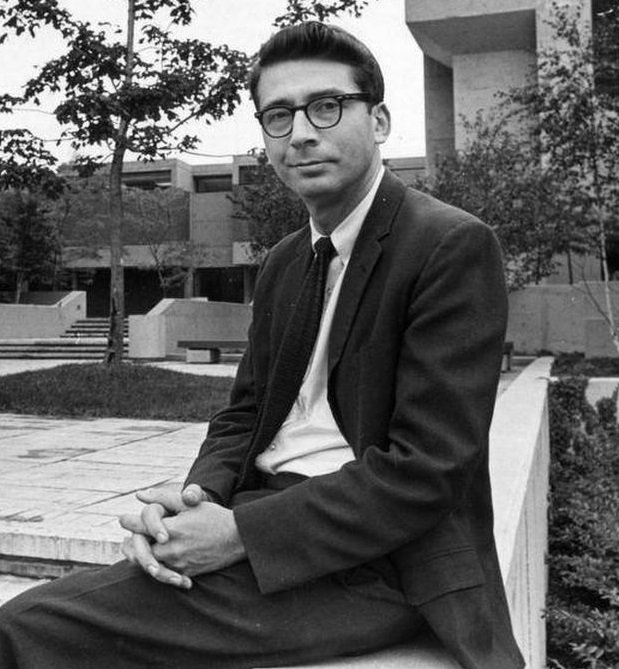
Gabriel Morris Kolko (August 17, 1932 – May 19, 2014) was an American historian. His research interests included American capitalism and political history, the Progressive Era, and U.S. foreign policy in the 20th century. One of the best-known revisionist historians to write about the Cold War, he had also been credited as "an incisive critic of the Progressive Era and its relationship to the American empire." U.S. historian Paul Buhle summarized Kolko's career when he described him as "a major theorist of what came to be called Corporate Liberalism...[and] a very major historian of the Vietnam War and its assorted war crimes."
ZNetwork is funded solely through the generosity of its readers.
Donate




