

In international relations, security is not an absolute. It is a relative calculation.
For the Islamic Republic of Iran, a nuclear deterrence posture is a reasonable, if not necessary, response to decades of jingoism and the ongoing war instigated by Israel and the United States.
On Sunday, 9 August 2026, during commemoration of the 81st anniversary of the U.S. atomic bombing of Nagasaki, the city’s current mayor called nuclear weapons an “absolute evil” that can never coexist with humanity.
That has been the position of Iran’s leadership since Supreme Leader Ayatollah Ruhollah Khomeini (1979-1989) refused to authorize the use of chemical weapons during the Iran-Iraq War, citing Islamic principles; and when his successor, Ayatollah Ali Khamenei (1989-2026), officially voiced a religious prohibition (haram) against nuclear weapons in 2003.
The relentless, unprovoked U.S.-Israel air wars, culminating in the devastating 28 February 2026 missile strikes that assassinated the Supreme Leader and his family, as well as dozens of senior military and security officials, have shattered any remaining illusions of diplomatic restraint. Every air strike, targeted assassination and expansion of the war have intensified a growing consensus across Iran that the ultimate guarantor of national survival is nuclear deterrence.
These acts of foreign aggression—disguised as defense against a nuclear Iran—have achieved the exact inverse of their stated intent, transforming the pursuit of an atomic shield from a debated topic into an existential imperative for a population pushed to the brink.
Traditional diplomatic constraints dissolve when a nation experiences an existential threat to its sovereignty. Stripped of conventional safety nets and subjected to “regime” change schemes, targeted assassinations, deadly military strikes and America’s threat of total annihilation, Iran’s pursuit of a nuclear weapon ceases to be viewed by its leadership as a theoretical choice. Absolute deterrence becomes the ultimate guarantor of sovereignty.
Iran is located in one of the most heavily militarized and volatile regions on earth; surrounded by tangible reminders and remnants of Western imperial intervention.
To understand the country’s strategic progression, security threats must be examined through the lens of vulnerability.
The conditions driving Tehran toward nuclear weaponization rests on three pillars:
- Two nuclear-armed states have waged devastating wars on Iran based on the manufactured premise that the country is “on the brink” of possessing a nuclear weapon: Given that Israel has failed to achieve its war aims, it may resort to the Sampson Option (nuclear retaliation). Unlike the national security doctrine of Mutually Assured Destruction (MAD)—designed to deter a nuclear adversary from a first strike—under the Israeli Sampson Option, Tel Aviv would use nuclear weapons against a non-nuclear adversary to ensure its survival; if it believes it has run out of options. It is plausible, considering its ruthlessness, that Israel would be willing to use this last-resort strategy, even it meant taking the world down with it.
- Aggressive U.S. economic/military containment: From the Trump administration’s unilateral withdrawal in 2018 from the Joint Comprehensive Plan of Action (2015 nuclear deal), to decades of economic warfare, regional military encirclement, sabotage and direct kinetic strikes on Iranian soil, Washington has consistently signaled that its final objective is destabilization or overthrow of Iran; the one remaining regional state standing in the way of total U.S.-Israeli dominance.
- Israel’s occupation of Palestine and regional expansion: Tel Aviv’s ongoing genocide, occupation, annexation and devastation of Palestinian land, its military invasions of Lebanon and Syria, have made the Islamic Republic’s resistance to its expansionist plans inevitable. Washington’s unwavering diplomatic, financial and military support, have left Tehran little choice but to view Israel as a regional extension of U.S hegemony, designed to destroy or keep Iran vulnerable and the region dependent.
In the political discourse of the United States and its Western allies, Iran’s civilian nuclear program is routinely framed as an imminent menacing threat. Deterrence theory, however, offers a vastly different reality. When a sole militarily powerful nation attacks others preemptively, non-nuclear countries learn a stark lesson: countries with nuclear weapons stay safe from invasion; those without are dismembered.
For example, Iran absorbed a geopolitical lesson from the fate of Iraq and Libya: regional states forced into abandoning their nuclear pursuits would face Western regime-change wars, destabilization and in Libya, balkanization.
The ongoing Iran War has exposed the disparity between the countries’ military arsenals. Facing adversaries with powerful offensive and defensive weapons, Iran’s missile and drone deterrence, while effective, has not been sufficient to prevent direct attacks.
Beyond the nuclear file, the pressure exerted by the U.S.-Israel axis has forced Iran to invest vast resources in ballistic missiles, unmanned aerial vehicle arsenals and strategically position military infrastructure.
Tehran has never used its nuclear expertise to threaten its neighbors or to seek regional conquest. It is essentially a nuclear insurance policy that should compel rational governments to weigh the heavy cost of implementing MAD and to shatter Israel’s “Sampson Option.”
For decades, the U.S. and Israel have reaped enormous political advantage in portraying Iran as dangerous and its civilian nuclear ambitions as the primary source of regional instability. This isolation strategy successfully built public hostility against Iran, kept it under continuous pressure and bridled its influence. Their real dread, however, has always been over how the balance of power would shift if Iran gained nuclear capability.
Such deceptive claims, however, have begun to lose their intended effect. There is growing awareness that if Washington and Tel Aviv truly wanted a nuclear-free Middle East, they would not have pursued policies that have compelled Iran to weigh nuclear deterrence as its ultimate defense.
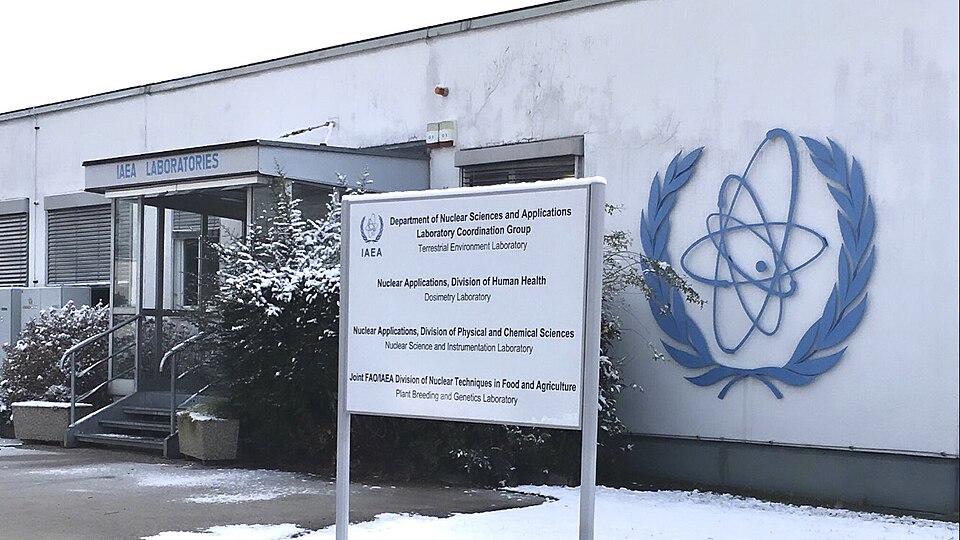
In addition, the U.S. would have urged Israel, (the sole nuclear-weapons state in the region) to allow International Atomic Energy Agency (IAEA) inspectors into its secret weapons (nuclear, chemical and biological) sites; and sign, as Iran has, the United Nations Non-Proliferation Treaty, which prohibits signatories from developing, acquiring or using nuclear weapons.
A deadly array of economic and military forces have, for decades, been used against Iran to bring it into submission. The claims of a nuclear weapons program and imminent threat have been the political pretexts used by the U.S. and Israel to justify aggression against the Islamic Republic.
Paradoxically, while Tehran declares its commitment to nuclear disarmament and the establishment of a nuclear-free zone in the Middle East, the United States—the only country to have used nuclear weapons in warfare—continues to expand and modernize its nuclear arsenal; and a nuclear-armed Israel alludes to using the Sampson Option against Iran.
Policy choices carry inevitable consequences. While American foreign policy relies on aggressive military posturing, economic strangulation and unconditional alignment with Israel, the structural incentives for Iran to surrender its nuclear potential will remain non-existent.
ZNetwork is funded solely through the generosity of its readers.
Donate




