


HOW DO you suggest we cut the deficit then?
You'll be asked this if you ever oppose a cost-cutting scheme, such as merging the sewer system with the library service or something. So here's one answer, we could pay a bit less to ATOS, a company that receives $163 million a year from the British government for assessing who should be cut off from disability benefit.
The method they choose is to interview each claimant, asking them a series of questions such as, "Do you look after your own pets?" Because clearly if someone can feed a hamster they're capable of driving a fork-lift truck. Another is "Do you cry?" If you do, you're probably told it's all very well being depressed but there's no reason why you can't get a job imitating actresses who've won an Oscar, or hiring yourself out to appear at funerals to make it seem the deceased knew more people than they did.
During this questioning the interviewer taps the answers into their computer, which makes an automatic calculation as to whether the claimant loses their benefit. This is so much quicker as a method of assessing health than the old-fashioned way of examining someone.
Hospitals should follow this example. Instead of faffing about with x-rays and stethoscopes, the consultant could say, "Which do you prefer, pizza or a curry? Who would you rather have to dinner out of Fearne Cotton and Dermot O'Leary? Okay, let's see what the computer says – aah, you've got gallstones."
Maybe the plan is to turn the whole process into a radio panel show called "Fit on the Fiddle," in which claimants answer the questions from a panel including regular captain Gyles Brandreth.
One man who might as well have done this was Larry Newman, who attended an ATOS interview with a terminal lung disease, when he could hardly breathe. So he took his medical records and ATOS ignored them, preferring their method of asking questions.
They decided there was nothing wrong with him, so his benefit was cut, and a few weeks later, as the hospital attached a ventilator he'd have to wear permanently, with splendid jollity he said to his wife: "Still, at least I'm fit for work." He died a few weeks later, and I expect if his wife took him in again now they'd still say there was nothing wrong with him and send him for an interview to be a town crier.
– – – – – – – – – – – – – – – –
STILL, THE cuts have to be made somewhere so I suppose it's only fair that the brunt of them should fall on the terminally ill.
But here's where it gets complicated. The ATOS system has worked so well that in the past three years 160,000 people have successfully appealed against their decision. So from now on perhaps they'll use a more reliable method, such as rolling two dice and anyone who gets eight or over loses their money. Or they could still call people in for interviews but do three at a time while the assessor lines them up and goes, "Ip dip dog shit, you are not it," and the loser has to crawl to the job center.
The trouble is that these tribunals have cost $49 million (and you'll laugh at this bit), and that money is paid by the government, out of taxes. So they still get paid the $163 million, out of taxes, and all the mistakes are paid for out of more taxes.
It's like a minicab firm that always takes you in the wrong direction, but you still have to pay them, then they charge you again to bring you back where you started. And to complete the analogy, on the way home they run someone over and shout: "If you can stroke a cat there's nothing wrong with you", as the victim is carried into the ambulance.
So here's my suggestion. On live television ATOS are called in for an interview by a panel of disabled people, who ask them to mime looking after their pet, then assess whether they're entitled to still get $163 million or have to go and get a proper job.
First published in The Independent [2].
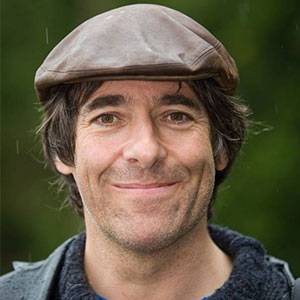
Mark Steel is a comedian, a columnist for the Independent [3] newspaper, and a socialist and activist in Britain. He's the author of two collections about contemporary Britain, It's Not a Runner Bean: Dispatches from a Slightly Successful Comedian [4] and Reasons to Be Cheerful [5]–as well as Vive la Revolution: A Stand-up History of the French Revolution [6].

ZNetwork is funded solely through the generosity of its readers.
Donate




