


Harkishanpura is a non-descript village in Bathinda district of Punjab in northwestern India. It suddenly made its way into news when in an unprecedented move the village panchayat announced that the village was up for sale. That was in Jan 2001. Since than five more villages in Punjab – in the midst of the food bowl of the country – are awaiting auction.
What began as an isolated and an extreme case of rural distress is now slowly and steadily spreading its tentacles throughout the country. In December 2005, Dorli in Wardha district of Maharashtra in central India became the first village outside the frontline agricultural state of Punjab – the harbinger of Green Revolution in India – to make itself available for sale. With signboards pasted all around, and the slogan ” Dorli village is for sale” painted on the cattle back and trees, what appeared to be a bizarre tale is now becoming a sad but widespread reality.
Dorli village comprises 270 residents, 500 livestock, and nearly 600 acres of agricultural land. Every villager, including children, has an outstanding debt of Rs 30,000 (425 pounds).
A few weeks later, hundreds of residents of Chingapur village in Yeotmal region of Maharashtra, invited the President of India, Dr Abdul Kalam, and the Prime Minister, Mr Manmohan Singh, to preside over a ‘human market’ for the sale of kidneys. Unable to repay the mounting debts, the villagers had decided to go in for mass sale of kidneys. The situation in the neighbouring villages is no better. Agricultural distress is written all around.
In the neighbouring village, Shivani Rekhailapur, banners read: “This village is ready to be auctioned. Permit us to commit mass suicides.” Rural indebtedness has reached such alarming proportions that village communities are being forced to sell not only their body organs but also their lands – willing to lose control over their only means of economic security.
Malsinghwala is a tiny village in the Mansa district of Punjab. The village owes upto Rs 50 million to banks and another Rs 25 million to private moneylenders and commission agents. ” We are neck deep in debt. We are left with no other option but to sell of our land,” says village panchayat head Jasbir Singh. Showing the panchayat resolution that authorized the sale, he said that each of the 4000 residents had an outstanding debt of Rs 13,000. With crop yields faltering, and with no other hope of repaying the outstanding debts, the village had decided to sell off its assets spread over 1800 acres.
Five years after Harkishanpura in Bathinda district was put up for sale, the village is still awaiting a buyer. Like any other village in prosperous Punjab, Harkishanpura has nothing to indicate that it is different from others. With some 125 families, and 1170 acres of land, the village somehow continues to slog in its march for survival. Mounting indebtedness and an indifferent Punjab government is slowly and steadily pushing several villages in its neighbourhood into a severe socio-economic crisis.
Bhuttal Kalan in Sangrur district comprises 1000 acres of land. The neighbouring Bhuttal Khurd has 1200 acres of land. Eighty per cent of the village land is already mortgaged to moneylenders and commission agents. While both these villages are up for sale, the situation is no better in the adjoining villages. “The situation is alarming. But no one seems to take any notice of our cry for help,” says Hardayal Singh, sarpanch of the adjoining village of Govindpura Jawaharwala. No wonder, 40 per cent of the farmers have in the latest National Sample Survey Organisation (NSSO) report expressed the desire to quit farming.
And yet, it doesn’t shock the conscious of the world’s biggest democracy. There was no public outrage when earlier reports showed that sixty-five of the 243 farmers who committed suicide in Vidhrabha region of Maharashtra in 2004 alone had debts as little as Rs 8,000 (110 pounds). That Meena Prakash Rechpade, widow of the 36-year-old farmer, Prakash, of village Dhanori, near Wardha, in Maharashtra, had no money to arrange for the last rites of her husband, who took the fatal route to escape the misery of Green Revolution, did not evoke strong reaction. Except for routine inquiries and promises, such stories have failed to move the nation.
Not only in Punjab and Maharashtra, tens of thousands of farmers throughout the country are migrating every season looking for menial jobs in the urban centres. Mofussil newspapers in the heartland of the cyberstate – that’s how Andhra Pradesh in south India wanted itself to be called – are full of advertisements inviting people to mortgage their gold and silver belongings. In Karnataka, where farmer suicide rate is equally high, the over-emphasis on technology had only alienated a large percentage of farming populations from economic growth and development. The biggest tragedy being that both the states have turned into a national capital of shame for farmers’ distress, visible more through the increasing rate of suicides in the rural areas
While the rural misery continues to multiply, what is more depressing is that the government is clueless of the reasons that aggravate agrarian crisis. Nor is there any effort from agricultural scientists, economists, and social scientists to come out with proposals to put an end to this shameful blot on the country’s image. The reason is obvious. No one has the political courage to point a finger at the fundamental reason behind the collapse of the Green Revolution. It not only acerbated the crisis leading to an environmental catastrophe but also destroyed millions of rural livelihoods.
The alarm bells had been ringing for quite some time now. For nearly a decade, agricultural production had almost stagnated, than began the downslide. All this happened at a time when high-chemical input based technology had already mined the soils and ultimately led to the lands gasping for breath, with the water-guzzling crops sucking the groundwater aquifer dry, and with the failure of the markets to rescue the farmers from a collapse of the farming systems. By ignoring the critical connection between agricultural production and access to food — with the focus shifting to agro- processing linked to foreign investment and exports — it was bound to happen.
While the input costs kept on increasing over the years, encouraging farmers to back up with more loans, the farm prices remained steady. The entire input-output ratio gradually went upside down, with a large number of farmers sliding into debt that kept on mounting with each year. A recent UNCTAD report that showed agricultural produce continues to be sold at 1985 prices. In other words, the price farmers were getting today is in reality the same at which they were selling their produce 20 years back.
Such is the growing apathy that without first ascertaining where has the farm equation gone wrong, and without learning from the bloody aftermath of the Green Revolution, a second green revolution is being forced, which will increase dependence over external inputs and thereby add on to farmers costs. The second Green Revolution has all the ingredients to further accentuate the prevailing crisis in sustainability and speed up the marginalisation of the farming community.
Agricultural reforms that are being introduced in the name of increasing food production and minimising the price risks that the farmers continue to be faced with, is actually aimed at destroying the production capacity of the farm lands and would lead to further marginalisation of the farming communities. Encouraging contract farming, future trading in agriculture commodities, land leasing, forming land-sharing companies, allotment of homestead-cum-garden plots, direct procurement of farm commodities and setting up of special purchase centres will drive out a majority of the 600 million farmers out of agriculture.
Village for sale will then become a common feature of the Indian landscape.
(Devinder Sharma is a New Delhi-based writer and commentator)

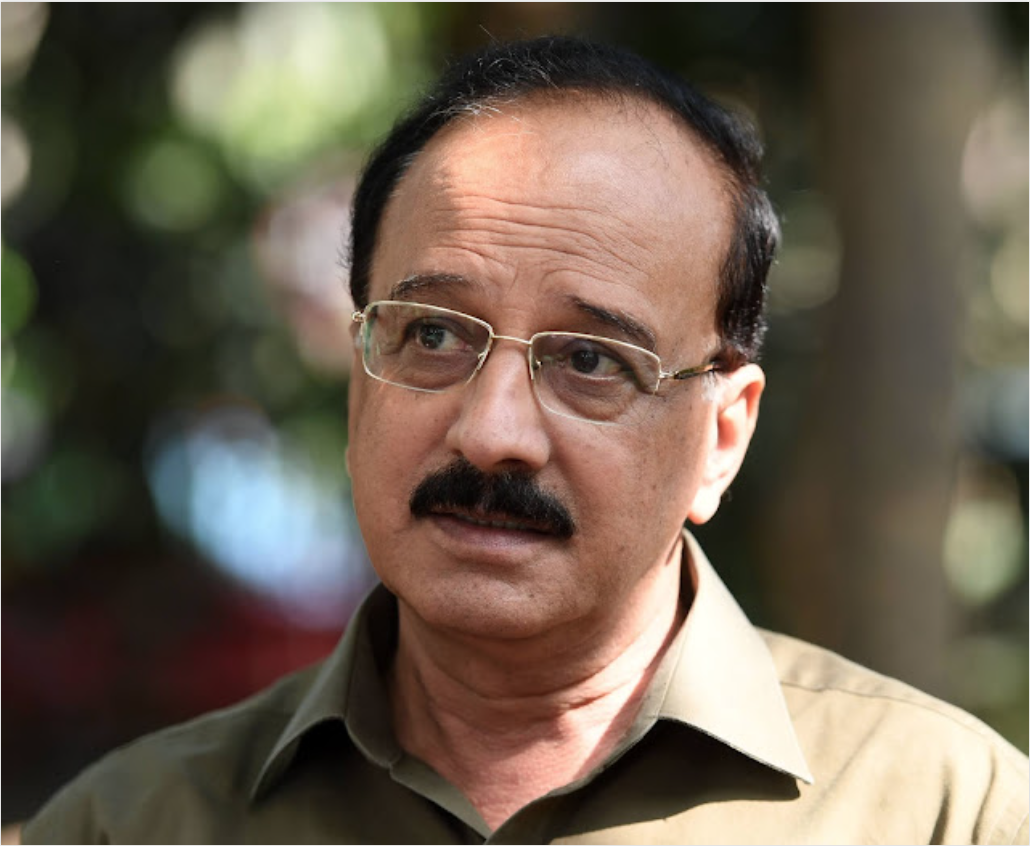
Devinder Sharma is an award-winning journalist, writer, thinker, and researcher known for his views on food and trade policy. Trained as an agricultural scientist (he holds a Master’s in Plant Breeding & Genetics), Sharma wrote for the Indian Express, and then quit active journalism to research on policy issues concerning sustainable agriculture, biodiversity and intellectual property rights, environment and development, food security and poverty, biotechnology and hunger, and the implications of the free trade paradigm for developing countries. He has been awarded with the honorary degree of Professor at Large by the CSK Himachal Pradesh Agricultural University, Palampur (India), and also has been a Visiting Fellow to the International Rice Research Institute, in the Philippines; Visiting Fellow at the School of Development Studies at the University of East Anglia, Norwich (UK); and a Visiting Fellow at the University of Cambridge (UK). Sharma is associated with numerous national and international organizations, civil society groups and farmers organisations. He also on the board of half a dozen national and international organizations, and is also a member of the CGIAR’s Central Advisory Service on Intellectual Property Rights.
ZNetwork is funded solely through the generosity of its readers.
Donate




