


Source: Independent Media Institute
On December 13, the United Nations high commissioner for human rights released a powerful statement that criticized India’s new citizenship law. This “fundamentally discriminatory” Citizenship (Amendment) Act of 2019 would expedite citizenship for persecuted religious minorities from India’s neighboring countries. But in the list of those minorities, it names only Hindus, Sikhs, Buddhists, Jains, Parsis and Christians. It does not mention Muslims, despite the fact that there have been several important cases of Muslims being persecuted in Pakistan (the Ahmadis), in Afghanistan (the Hazaras), and in Myanmar (the Rohingya). The UN said that not only does this law violate India’s obligations to conventions, treaties, and compacts that it has signed at the global level, but also that it is in violation of its own constitution.
India’s ruling Bharatiya Janata Party (BJP) led by Prime Minister Narendra Modi put this bill before both the lower and upper houses of India’s Parliament. Apart from the Left and some regional parties, opposition in the lower house (the Lok Sabha) was weak; in the upper house (the Rajya Sabha), the bill passed by a slim margin – 125 votes to 105.
Protests against the Citizenship Amendment Act (CAA) are now ongoing in every part of India, with a cross-section of society outraged by the religious implications of this law. There are 200 million Muslim citizens of India, almost 15% of the population; this bill sends a clear message that they should see themselves as second-class citizens. There is no other interpretation of the BJP’s agenda here.
The BJP government was particularly ruthless against protests at two major universities – Jamia Millia Islamia in New Delhi and Aligarh Muslim University in Uttar Pradesh – both historically Muslim universities. The police have been extraordinarily violent against student protests during the past several months, but this was at another level. At Jamia, the police beat unarmed students, chased them into their dormitories and continued to beat them, and fired teargas into the library. There is video evidence of policemen burning buses, assaulting journalists, and creating the conditions of a full-scale police-driven riot; in Aligarh, there is video evidence of police damaging students’ motorcycles.
Brinda Karat of the Communist Party of India (Marxist), who went to Jamia during the attack, said, “The police action is unacceptable.” Jamia, she said, must be “freed of police presence and action be taken against those responsible.” The Delhi Police have announced that they “will investigate” the violence, although Deputy Commissioner of Police M S Randhawa seemed to suggest that all the violence came from the students, none from the police. Senior advocate Indira Jaising appeared before the Supreme Court on Monday to urge the bench – headed by Chief Justice S A Bobde – to take up the case, since the violence “is a very serious human-rights violation all over the country.”
As if on cue, the BJP government hastily shut down Internet access in India’s northeast, and in parts of the country where the protests have been most virulent. Last year, India led all other countries in Internet shutdowns. Overall, 67% of all shutdowns of the Internet took place in India; this year, already, 63% of all shutdowns have been in India. The Internet in Jammu and Kashmir has now been off for 136 days (between August 4 and December 17); there is no sign that it will be restored. Indeed, the suffocation of J&K continues unabated. The Kashmir Chamber of Commerce says Kashmiri businesses have lost more than US$1.4 billion in this period.
Several state governments have said they would not fulfill the provisions of the new Citizenship Amendment Act, since they argue that it is unconstitutional. The Supreme Court of India will soon discuss this bill. In Kerala, the Left Democratic Front’s Chief Minister Pinarayi Vijayan said, “We are accountable only to the ideals of the Constitution of India, not to the fundamentalist ideology of the RSS-BJP.” (The Rashtriya Swayamsevak Sangh is fascist movement that is behind the BJP.)
The Left parties have called for demonstrations on Thursday across the country against the Citizenship Act.
Austerity
International Monetary Fund chief economist Gita Gopinath is in India this week. She said the slowdown of the Indian economy had surprised many, “including us here at the IMF.” India’s GDP growth has slowed for the sixth consecutive quarter. All the noises made by the BJP government about “Make in India” are silenced by the slump in manufacturing and the low domestic consumption.
Not surprisingly, the IMF urges the Modi government to push ahead with its “structural reforms,” which include what is so euphemistically called “labor … market reforms” and “fiscal consolidation.” Labor-market reform means that the government should erase protections for workers, and regulations of businesses; fiscal consolidation means that the government must cut spending to lower public-debt levels. This means less earning power for the majority of the population, and lower government spending to create social programs for the public.
What the IMF proposes is what the BJP government wants to do: push a much deeper austerity agenda in India.
This is precisely what students and workers, farmers and youth have argued against in protest upon protest.
The BJP government pushed for a 150% rise in hostel fees for the flagship university in Delhi, Jawaharlal Nehru University (JNU). This astronomical increase would force at least half the postgraduate students to leave their studies. A #FeesMustFall protest dynamic opened up across the country in solidarity with JNU, it being clear to the students that what happens at JNU will spread outward. The police violence against unarmed students was shocking. It was equally outrageous that the intelligence services visited the home in Sopat, J&K, of a former student leader, Aejaz Ahmad Rather, and said to his family chillingly, “A bullet never asks for an address.”
Farmer, peasant, and trade-union organizations have been consistently on the march against the Modi government’s various economic policies. In the past five months, the price of onions – a good indicator of food inflation – spiked by 253%. Rather than fix the endemic internal problems in the domestic onion market, a demand of farmer and peasant organizations, the BJP government has loosened rules for the import of onions, a demand of the big traders.
BJP policy is not made to benefit the working class and peasantry. It is made on behalf of the big businesses. It is almost as if the BJP-IMF slogan is “Save the Billionaires.” Little wonder that the farmer, peasant and trade-union federations have announced a major general strike for January 8, 2020. It is expected that hundreds of millions of workers and peasants will be on the streets on that day. Their charter of demands is a direct assault on the BJP-IMF austerity policies.
The first bullets
The temperature in India is very high. The BJP government feels that it has a mandate to push through a hard-right agenda, both in economic and social policy. It has received backing for this from the IMF (in terms of labor-market reform and bank reform) and from its hard-right partners across the world (in terms of its citizenship and anti-immigration policies).
But the government faces stiff resistance that seems unwilling to abate. As night fell over Jamia, and the fires burned out, Chandrasekhar Azad, the leader of the Bhim Army – a social movement in nearby Uttar Pradesh – gave a powerful speech. He said that Muslims are an integral part of India, and that if the state fires on Muslim students, “we will take the first bullets.” This is the mood. It is something that the BJP and the RSS and the IMF need to consider.
This article was produced by Globetrotter, a project of the Independent Media Institute, which provided it to Asia Times.

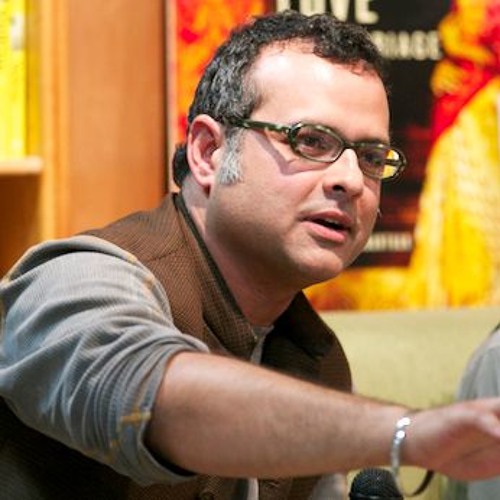
Vijay Prashad is an Indian historian, editor, and journalist. He is a writing fellow and chief correspondent at Globetrotter. He is an editor of LeftWord Books and the director of Tricontinental: Institute for Social Research. He is a senior non-resident fellow at Chongyang Institute for Financial Studies, Renmin University of China. He has written more than 20 books, including The Darker Nations and The Poorer Nations. His latest books are Struggle Makes Us Human: Learning from Movements for Socialism and (with Noam Chomsky) The Withdrawal: Iraq, Libya, Afghanistan, and the Fragility of U.S. Power. Tings Chak is the art director and a researcher at Tricontinental: Institute for Social Research and lead author of the study “Serve the People: The Eradication of Extreme Poverty in China.” She is also a member of Dongsheng, an international collective of researchers interested in Chinese politics and society.
ZNetwork is funded solely through the generosity of its readers.
Donate





1 Comment
Once again the IMF’s austerity measures are creating worse conditions in a country. Also, I am trying to learn more about Indian history and politics, not easy, and the BJT And RSS team up with the IMF in horrible ways.