


In late November, Areeb Majeed returned to his home in western India after a brief sojourn among the legions of the Islamic State group. Majeed, 22, had gone to Iraq on pilgrimage with three friends in late May after apparently making contact with the Islamic State group (IS, formerly known as ISIS) online.
From Baghdad, the young men went to Fallujah and then to Mosul. Training led to fighting, which led to injury. Majeed then crossed into Turkey, and was repatriated to India. He is now reported to be in the hands of the Indian intelligence services.
News of Majeed’s stint in IS increased fear of its reach into the subcontinent. But there was no Indian cell involved in his recruitment and there seems to be no wish by the group to gain a foothold here.
Arab focus
The Islamic State group seems only interested in the Arab world. In his address in November the group’s leader, Abu Bakr al-Baghdadi, accepted the bayah [“allegiance”] of groups from Algeria, Egypt, Saudi Arabia, Libya, and Yemen.
He did not acknowledge bayah from groups in Chechnya or the Philippines. Non-Arabs are welcomed by the Islamic State group to join the fight in the Middle East, but the group appears uninterested in fomenting any kind of terrorist activity in their homelands.
The territorial ambitions of IS differentiate it from al-Qaeda. Capture of land is the spirit of the “Caliph”, not terrorism against the West. India appears on the Islamic State group’s map, as does Andalucia – but these claims are pipe dreams.
Al-Qaeda, on the other hand, has an agenda for places such as India. In September, it created the Qaedat al-Jihad for the Indian subcontinent, whose emir, Asim Umar, was believed to report to the leader of the Afghan Taliban, Mullah Omar.
What is the stated purpose of Qaedat al-Jihad? To defend “the vulnerable in the Indian subcontinent, in Burma, Bangladesh, Assam, Gujarat, Ahmedabad and Kashmir”.
That list is significant. It indicates places where Muslim populations are oppressed: whether the Rohingya of the borderlands of Burma and Bangladesh or the Muslims of Gujarat and the state’s largest city, Ahmadabad.
Al-Qaeda openly proclaims its aims of violent action in India. But this has been largely bluster. It played no role in the 2008 Mumbai attack, which was largely orchestrated by Lashkar-e-Taiba, a Pakistan-based group. It has since tried to infiltrate various Indian Muslim organisations to little avail. Attempts to stir up the genuine grievances of Muslims into violence from Burma to Gujarat have been in vain.
No sectarian rift
One of the main reasons why IS will not have an easy time in India is that, unlike al-Qaeda, it is anti-Shia. No declaration of Baghdadi comes without fulminations against the rafidah – “the rejecters” – and the group regularly massacres Shia prisoners in the most gruesome manner.
India is the country with the second-largest Shia population after Iran – nearly all of Iran’s 80 million population is Shia, while India’s Shia number about 50 million, a quarter of the country’s Muslim population. Pakistan, by contrast, is home to 20 million Shia.
One has to look hard for evidence of Sunni-Shia tension in India – save for the first such attack on an Ashoura festival in Lucknow in 1908, and then the 1969 riot in that city.
The lack of fertile soil for anti-Shia sentiment makes India a poor recruiting ground for the Islamic State group. One of the dangers, however, is that the audacity of the group’s conquest, and its skill with the internet, will draw young men and women into its web.
It is once inside that web that they might absorb the group’s loathsome form of Salafi sectarianism. Salafism has already threatened old Sufi traditions, which had been one of the engines of progressive Islam in India. What impact IS would have on the theology and ideology of young Muslims in the subcontinent is yet to be seen.
It can only be said that the right-wing Hindutva party in power in Delhi is hardly a tonic for comfort among India’s Muslims. Pushed one way by Hindutva, young Muslims might very well be pulled toward the Islamic State group.
The answer to this threat should not be more surveillance and harassment of Indian Muslim youth. It is precisely the opposite: a more robust national culture that embraces differences.

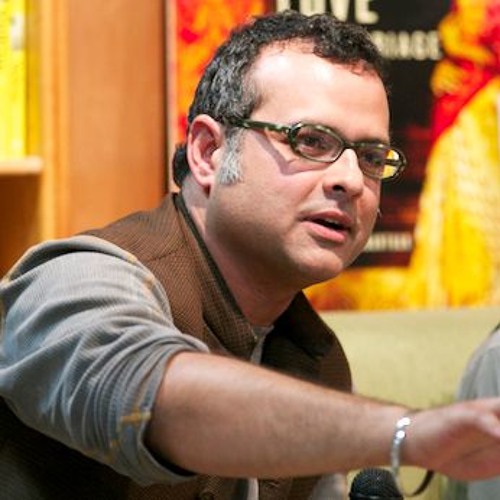
Vijay Prashad is an Indian historian, editor, and journalist. He is a writing fellow and chief correspondent at Globetrotter. He is an editor of LeftWord Books and the director of Tricontinental: Institute for Social Research. He is a senior non-resident fellow at Chongyang Institute for Financial Studies, Renmin University of China. He has written more than 20 books, including The Darker Nations and The Poorer Nations. His latest books are Struggle Makes Us Human: Learning from Movements for Socialism and (with Noam Chomsky) The Withdrawal: Iraq, Libya, Afghanistan, and the Fragility of U.S. Power. Tings Chak is the art director and a researcher at Tricontinental: Institute for Social Research and lead author of the study “Serve the People: The Eradication of Extreme Poverty in China.” She is also a member of Dongsheng, an international collective of researchers interested in Chinese politics and society.
ZNetwork is funded solely through the generosity of its readers.
Donate




