


Good Times for Happy and Affluent White Folks
The current recession does not weigh very heavily on Iowa City in Johnson County, Iowa. Iowa City was recently named a “top small metropolitan area” in three career-related areas by Forbes Magazine. It was No. 5 in “Best Places to Begin a Career,” No. 5 for “Best Places for Business and Careers,” and No, 13 for “Top College Towns for Jobs.”
Consistent with these rankings, Iowa City has the second lost lowest official small city unemployment rate in the nation – 3.7 percent, behind Bismarck, North Dakota According to DaLayne Williamson, Business Services Director of the Iowa City Area Development Group, “it’s important to be aware that Iowa City is continuing to receive these accolades even in the economic times we’re in.” During the last fiscal year, its main economic anchor, the University of Iowa, received a record-setting $430 million in grants and other external funding, including $216 million from U.S. Department of Public Health and Human Services for the university’s gigantic Colleges of Medicine and Public Health.
Local citizens, most of them employed by the university, including its giant medical complex, flock in the thousands to the community’s twice-a-week farmers’ market and the city’s annual spring Jazz Fest. They support a profitable, ever-more pricey local natural foods co-operative along with an inordinate number of gourmet coffee shops, small bookstores, health clubs, and massage therapy and yoga enterprises. Young families and smiling toddlers and infants are widely evident in and around the downtown and its shining commercial bar- and restaurant-lined “Ped Mall” on weekends and early summer evenings.
The very predominantly Caucasian town (86% white, 6% Asian, 4% black, and 3% “Hispanic”) is dotted and ringed with delightful, leafy residential sections containing tasteful oak-filled homes. In the Iowa City coffee houses in May, you can often hear professors and students discussing upcoming trips to Europe. Volvos, Saabs, Audis, and upper-end Hondas and Toyotas fill the downtown coop’s parking lots.

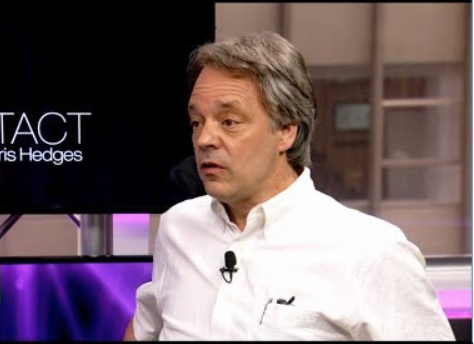
Paul Street is an independent radical-democratic policy researcher, journalist, historian, author and speaker based in Iowa City, Iowa, and Chicago, Illinois. He is the author of more than ten books and numerous essays. Street has taught U.S. history at numerous of Chicago-area colleges and universities. He was the Director of Research and Vice President for Research and Planning at the Chicago Urban League (from 2000 through 2005), where he published a highly influential grant-funded study: The Vicious Circle: Race, Prison, Jobs and Community in Chicago, Illinois, and the Nation (October 2002).
ZNetwork is funded solely through the generosity of its readers.
Donate




