


David Smilde is a sociology professor who lives part-time in Venezuela and is sometimes quoted in the corporate media. The quotes he has supplied contribute to a remarkable propaganda campaign that the international media has been waging against the Venezuelan government for well over a decade. Below I’ll explain how Smilde tried to downplay how outrageously one-sided the international media’s Venezuela coverage has been.
Ever since 2001, when the late Hugo Chavez denounced the U.S. invasion of Afghanistan, Venezuela has been relentlessly demonized. A key part of the propaganda campaign has been to depict Venezuela’s media as closed to anti-government views. Relatively liberal sources, like Smilde, play an important role in the campaign. Raging neocon types are never enough.
How successful has the propaganda campaign been? Consider that Bernie Sanders very recently called Hugo Chavez a “dead communist dictator.” Sanders may have lied to fend off “accusations” that he was sympathetic toward the Venezuelan government. It’s also possible that Sanders simply developed a stunningly ignorant view by relying on U.S. media coverage of Venezuela. Either way, his remark is symptomatic of how closed the U.S. media is to any dissent from the U.S. government’s view of Venezuela. Coverage in the English language corporate media around the world has followed the U.S. approach. Sanders is about as liberal as a “serious” presidential candidate can get in the United States – not a politician who would rely on the Fox News end of the media spectrum to get “informed”.
In a statement released in 2010, Amnesty International – another liberal source – made the totally outlandish claim that Globovision, a private Venezuelan broadcaster, was “the only TV station whose license has not been revoked in recent years because of its editorial line.” To my knowledge, Amnesty never retracted that falsehood. As I noted in this piece, the Carter Center published data about political coverage on Venezuelan TV in 2013 that demolished the lies that the international press and prominent NGOs like Amnesty had been spreading for many years.
Mind you, the Carter Center researchers did not denounce the international media’s propaganda campaign against Venezuela but their data spoke volumes. With the exception of Globovision (the third largest private broadcaster which was lopsidedly anti-government at the time and has since become balanced) the coverage of the big private broadcasters in Venezuela was shown to be balanced between pro and anti-government views and – this is crucial – the big private broadcasters had a combined audience share for news about three times larger than the state media’s. The anti-government views regularly expressed on the “balanced” Venezuelan TV stations are not mildly critical of the government but vehemently so. I provided numerous specific examples in my article. Additionally, during years of very strong economic growth and rapid poverty reduction, the opposition has received 37-44 percent of the vote in presidential elections, a level of support that indicates a very strong media presence. The lies the international press have told about the Venezuelan media are easily comparable to the whoppers spread about WMD in Iraq.
But in a recent conversation I had with Smilde on Twitter, he claimed that “most” of international media deviates from the U.S. government’s general script about Venezuela “some of the time.” He specifically said that in March of this year – after Obama’s executive order declaring Venezuela an “extraordinary threat” to the United States – there were examples of dissent. I asked him to supply one example that he thought best supported his claim. He replied “you can do your own homework.” Well I did the homework the professor suggested.
Presumably one of those examples of dissent that Smilde had in mind was a New York Times article that quoted him saying of Obama’s executive order, “The optics of this are really just awful … It was a strategic mistake. I think the Maduro government is going to get a lot of play out of this.” According to the article, “Mr. Smilde said that the greater damage could come in a lack of support for American-led attempts to pressure Venezuela to ease up on the opposition.”
If that kind of feeble critique were cited to show that the Venezuelan media gave voice to government critics it would be laughed at – and rightfully so. These tactical quibbles do nothing to challenge key assumptions (i.e. lies) that dominate US media coverage: that the Venezuelan opposition is powerless, voiceless and oppressed, and that the U.S. government and segments of the opposition pose no threat to democracy in Venezuela.
Quoting “officials in Washington” the article also said that “declaring Venezuela a national security threat was largely a formality required by law in order to carry out sanctions.” So we are told that in U.S. law an “extraordinary threat” or a “national emergency” need not have any basis in fact. It may be completely fraudulent and simply needs to be “declared.” This view is conveyed without challenge, much less ridicule, in the New York Times article. It’s not hard to imagine that fierce objections would be expressed if “extraordinary threats” and “national emergencies” were declared – even real ones – to enact policies that the corporate elites in the U.S. strongly opposed.
Another revealing example of “dissent” is a March 13 editorial by the Pittsburgh Post-Gazette which said that the “real problem with Obama’s sanctions, if the United States really wants to oust Maduro, is they provide a nationalistic lifeline for the embattled Venezuelan, at a time when his regime may be sinking of its own weight.” Venezuela’s democratic government is labelled a “regime” so the editors do not reject Obama’s right to “oust” it. Only Obama’s tactics are criticized. It goes without saying that the U.S. government is never described as a “regime” no matter how terrible its human rights record at home and abroad. If the U.S. media were as open to real dissent as Venezuela’s, these imperial assumptions would be regularly challenged.
I wonder if Smilde thought of himself as boldly dissenting from the US government when he told the Washington Post in April, “I think this summit [of the Americas] will amount to a real test regarding the region’s commitment to Venezuela. Will they circle the wagons and prioritize regional solidarity and autonomy despite Venezuela’s democratic shortcomings?”
The U.S. supported a coup that ousted Hugo Chavez for two days in 2002. That coup was applauded by the liberal New York Times editors with even more enthusiasm than the Bush Administration. U.S. troops directly perpetrated a coup in Haiti in 2004 against its democratically elected president. Obama’s administration helped the 2009 coup in Honduras succeed. If the USA did not have grave “democratic shortcomings” – among them a corporate media that thoroughly stifles public debate – then U.S. citizens would stop their government from undermining democracy in the region. If only the United States had TV or print media that allowed as much real dissent as Venezuela’s.

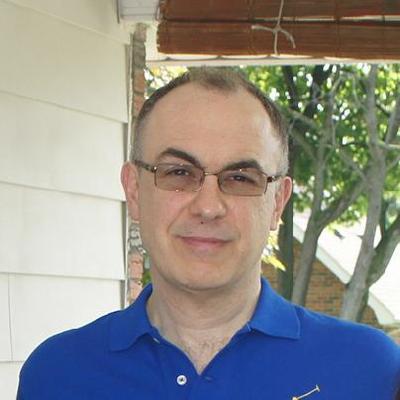
Joe Emersberger is co-author of “Extraordinary Threat: The US Empire, the Media, and Twenty Years of Coup Attempts in Venezuela.”
ZNetwork is funded solely through the generosity of its readers.
Donate




