


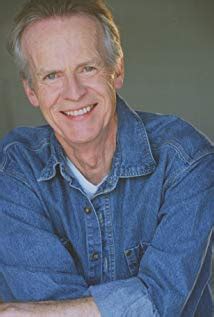
I’m an actor in the U.S. film and television industry. I’ve been around for more than 40 years. Recently, I was invited to audition for a new Netflix television series with the working title “Sycamore.” The appointment sheet informed me that I would be trying out for the role of Martin Wexler, a series regular character described as an American politician, living in New York — “approachable, distinguished, practiced, and elusive.”
I was intrigued by the role, and I was preparing, with some enthusiasm, to make a “self-tape” — a home video recording of my audition performance, which I would then submit to the casting directors. The casting directors, I hoped, would then show my video to the producers of the series. They, in turn, might give me the job.
While I was preparing my audition, I noticed the last two lines at the bottom of the appointment sheet:
Start Date: Sept 2019
Location: NY & Tel Aviv
I decided to do a little research in the Hollywood trade papers, and discovered that “Sycamore” had to be the new working title of a series announced in 2018 as “Hit and Run.” It was further revealed that “Sycamore/Hit and Run” will be a co-production of U.S. and Israeli companies. Two of the creative executive producers of the new series, Avi Issacharoff and Lior Raz, are also the creator-producers of the Israeli Netflix series “Fauda.”
“Fauda” is an action-adventure drama set in Israel and the Occupied Territories. I was aware that the show had been criticized for its portrayal of Palestinians and for its tendency to justify Israel’s human rights abuses.
Mitchell Abidor reviewed the series in Jewish Currents. He wrote, “Fauda, in its second season, is clearly not, as its creators have pretended, a humanizing portrayal of Palestinians, but rather is quite clearly aimed at solidifying an Israeli image of them as cowardly beasts who must be dealt with by any means necessary.”
I watched the show myself and noticed there was a missing narrative element: “Fauda” doesn’t give its international audience the historical context of the conquest of Palestine, which the Palestinian people continue to resist with a range of strategies and methods.
“Sycamore/Hit and Run” may or may not be as offensive as “Fauda,” but there is an equally important issue here: Israeli production companies like those of Issacharoff and Raz stand to benefit enormously from their alliances with their American partners and Netflix. In addition to substantial revenue for the companies and the Israeli economy, the Israeli government will benefit from the prestige of creative partnerships with Hollywood. These show business relationships matter, politically. The Israeli Foreign Ministry runs the “Brand Israel” campaign to use culture, entertainment and technology to counter Israel’s negative image in the world as a racist state that systematically violates human rights.
I have supported the Academic and Cultural Boycott of Israel since the 2014 Israeli War on Gaza. (That astonishing display of high- and low-tech cruelty, I believe, opened the eyes of many Americans.) The Academic and Cultural Boycott is part of a larger movement on behalf of the human rights and self-determination of the Palestinian people. The overall campaign is known as Boycott, Divestment, Sanctions (BDS) and originated within Palestinian civil society.
I’ve come to think of Israel as a European settler-colonial state, which practices apartheid in order to control the Indigenous population it has conquered militarily. In this respect, Israel is similar to the previously apartheid state of South Africa, where white European colonists had conquered the Indigenous Black African population and occupied their land.
In the same way that human rights activists boycotted the South African regime to abolish apartheid, many now are boycotting Israel to pressure its government to end its own practice of apartheid and its other constant, daily, gross violations of the human rights of the people of Palestine.
I believe the Academic and Cultural Boycott of Israel is of special importance, and I admire the professors and artists who have refused to lecture or to perform in Israel. Through their refusal, they have denied Israel the legitimacy and the prestige it seeks in the world community. I have been encouraged by intellectuals and artists like Stephen Hawking and Lorde, who have honored the boycott.
I haven’t been employed for a year and a half. So, with considerable reluctance, but inspired by the example of so many others, I chose not to participate in the whitewashing of Israel’s image. I did not submit a video audition to the casting directors.
I’m not a high-profile performer. My refusal to collaborate with Israeli producers will have a negligible effect on this expensive and ambitious project. My decision is just one individual’s act of conscience in solidarity with the Palestinian people — and with dissident Israelis who envision a better future for both peoples.
I decided on a small act of resistance. I take some comfort in knowing that I’m not alone. And I’m optimistic that others in our industry will seriously consider withholding their talent and their moral support from a regime that abuses the dispossessed, impoverished — but still resistant — people under its control.

ZNetwork is funded solely through the generosity of its readers.
Donate




