


Jean Bricmont’s concept “humanitarian imperialism” succinctly captures a dilemma that has faced Western leaders and the Western intellectual community since the collapse of the Soviet Union. From the origins of the Cold War, there was a reflexive justification for every resort to force and terror, subversion and economic strangulation: the acts were undertaken in defense against what John F. Kennedy called “the monolithic and ruthless conspiracy” based in the Kremlin (or sometimes in Beijing), a force of unmitigated evil dedicated to extending its brutal sway over the entire world. The formula covered just about every imaginable case of intervention, no matter what the facts might be. But with the Soviet Union gone, either the policies would have to change, or new justifications would have to be devised. It became clear very quickly which course would be followed, casting new light on what had come before, and on the institutional basis of policy.
The end of the Cold War unleashed an impressive flow of rhetoric assuring the world that the West would now be free to pursue its traditional dedication to freedom, democracy, justice, and human rights unhampered by superpower rivalry, though there were some—called “realists” in international relations theory—who warned that in “granting idealism a near exclusive hold on our foreign policy,” we may be going too far and might harm our interests.1 Such notions as “humanitarian intervention” and “the responsibility to protect” soon came to be salient features of Western discourse on policy, commonly described as establishing a “new norm” in international affairs.
The millennium ended with an extraordinary display of self-congratulation on the part of Western intellectuals, awe-struck at the sight of the “idealistic new world bent on ending inhumanity,” which had entered a “noble phase” in its foreign policy with a “saintly glow” as for the first time in history a state is dedicated to “principles and values,” acting from “altruism” and “moral fervor” alone as the leader of the “enlightened states,” hence free to use force where its leaders “believe it to be just”—only a small sample of a deluge from respected liberal voices.2
Several questions immediately come to mind. First, how does the self-image conform to the historical record prior to the end of the Cold War? If it does not, then what reason would there be to expect a sudden dedication to “granting idealism a near exclusive hold on our foreign policy,” or any hold at all? And how in fact did policies change with the superpower enemy gone? A prior question is whether such considerations should even arise.
There are two views about the significance of the historical record. The attitude of those who celebrate the “emerging norms” is expressed clearly by one of their most distinguished scholar/advocates, international relations professor Thomas Weiss: critical examination of the record, he writes, is nothing more than “sound-bites and invectives about Washington’s historically evil foreign policy,” hence “easy to ignore.”3
A conflicting stance is that policy decisions substantially flow from institutional structures, and since these remain stable, examination of the record provides valuable insight into the “emerging norms” and the contemporary world. That is the stance that Bricmont adopts in his study of “the ideology of human rights,” and that I will adopt here.
There is no space for a review of the record, but just to illustrate, let us keep to the Kennedy administration, the left-liberal extreme of the political spectrum, with an unusually large component of liberal intellectuals in policy-making positions. During these years, the standard formula was invoked to justify the invasion of South Vietnam in 1962, laying the basis for one of the great crimes of the twentieth century.
By then the U.S.-imposed client regime could no longer control the indigenous resistance evoked by massive state terror, which had killed tens of thousands of people. Kennedy therefore sent the U.S. Air Force to begin regular bombing of South Vietnam, authorized napalm and chemical warfare to destroy crops and ground cover, and initiated the programs that drove millions of South Vietnamese peasants to urban slums or to camps where they were surrounded by barbed wire to “protect” them from the South Vietnamese resistance forces that they were supporting, as Washington knew. All in defense against the two Great Satans, Russia and China, or the “Sino-Soviet axis.”4
In the traditional domains of U.S. power, the same formula led to Kennedy’s shift of the mission of the Latin American military from “hemispheric defense”—a holdover from the Second World War—to “internal security.” The consequences were immediate. In the words of Charles Maechling—who led U.S. counterinsurgency and internal defense planning through the Kennedy and early Johnson years—U.S. policy shifted from toleration “of the rapacity and cruelty of the Latin American military” to “direct complicity” in their crimes, to U.S. support for “the methods of Heinrich Himmler’s extermination squads.”
One critical case was the Kennedy administration’s preparation of the military coup in Brazil to overthrow the mildly social democratic Goulart government. The planned coup took place shortly after Kennedy’s assassination, establishing the first of a series of vicious National Security States and setting off a plague of repression throughout the continent that lasted through Reagan’s terrorist wars that devastated Central America in the 1980s. With the same justification, Kennedy’s 1962 military mission to Colombia advised the government to resort to “paramilitary, sabotage and/or terrorist activities against known communist proponents,” actions that “should be backed by the United States.” In the Latin American context, the phrase “known communist proponents” referred to labor leaders, priests organizing peasants, human rights activists, in fact anyone committed to social change in violent and repressive societies.
These principles were quickly incorporated into the training and practices of the military. The respected president of the Colombian Permanent Committee for Human Rights, former Minister of Foreign Affairs Alfredo Vásquez Carrizosa, wrote that the Kennedy administration “took great pains to transform our regular armies into counterinsurgency brigades, accepting the new strategy of the death squads,” ushering in
what is known in Latin America as the National Security Doctrine,…not defense against an external enemy, but a way to make the military establishment the masters of the game [with] the right to combat the internal enemy, as set forth in the Brazilian doctrine, the Argentine doctrine, the Uruguayan doctrine, and the Colombian doctrine: it is the right to fight and to exterminate social workers, trade unionists, men and women who are not supportive of the establishment, and who are assumed to be communist extremists. And this could mean anyone, including human rights activists such as myself.
In 2002, an Amnesty International mission to protect human rights defenders worldwide began with a visit to Colombia, chosen because of its extreme record of state-backed violence against these courageous activists, as well as labor leaders, more of whom were killed in Colombia than in the rest of the world combined, not to speak of campesinos, indigenous people, and Afro-Colombians, the most tragic victims. As a member of the delegation, I was able to meet with a group of human rights activists in Vásquez Carrizosa’s heavily guarded home in Bogotá, hearing their painful reports and later taking testimonials in the field, a shattering experience.
The same formula sufficed for the campaign of subversion and violence that placed newly independent Guyana under the rule of the cruel dictator Forbes Burnham. It was also invoked to justify Kennedy’s campaigns against Cuba after the failed Bay of Pigs invasion. In his biography of Robert Kennedy, the eminent liberal historian and Kennedy advisor Arthur Schlesinger writes that the task of bringing “the terrors of the earth” to Cuba was assigned by the president to his brother, Robert Kennedy, who took it as his highest priority. The terrorist campaign continued at least through the 1990s, though in later years the U.S. government did not carry out the terrorist operations itself but only provided support for them and a haven for terrorists and their commanders, among them the notorious Orlando Bosch and joining him recently, Luis Posada Carilles. Commentators have been polite enough not to remind us of the Bush Doctrine: “those who harbor terrorists are as guilty as the terrorists themselves” and must be treated accordingly, by bombing and invasion; a doctrine that has “unilaterally revoked the sovereignty of states that provide sanctuary to terrorists,” Harvard international affairs specialist Graham Allison observes, and has “already become a de facto rule of international relations”—with the usual exceptions.
Internal documents of the Kennedy-Johnson years reveal that a leading concern in the case of Cuba was its “successful defiance” of U.S. policies tracing back to the Monroe Doctrine of 1823, which declared (but could not yet implement) U.S. control over the hemisphere. It was feared that Cuba’s “successful defiance,” particularly if accompanied by successful independent development, might encourage others suffering from comparable conditions to pursue a similar path, the rational version of the domino theory that is a persistent feature of policy formation. For that reason, the documentary record reveals, it was necessary to punish the civilian population severely until they overthrew the offending government.
This is a bare sample of a few years of intervention under the most liberal U.S. administration, justified to the public in defensive terms. The broader record is much the same. With similar pretexts, the Russian dictatorship justified its harsh control of its Eastern European dungeon.
The reasons for intervention, subversion, terror, and repression are not obscure. They are summarized accurately by Patrice McSherry in the most careful scholarly study of Operation Condor, the international terrorist operation established with U.S. backing in Pinochet’s Chile: “the Latin American militaries, normally acting with the support of the U.S. government, overthrew civilian governments and destroyed other centers of democratic power in their societies (parties, unions, universities, and constitutionalist sectors of the armed forces) precisely when the class orientation of the state was about to change or was in the process of change, shifting state power to non-elite social sectors…Preventing such transformations of the state was a key objective of Latin American elites, and U.S. officials considered it a vital national security interest as well.”5
It is easy to demonstrate that what are termed “national security interests” have only an incidental relation to the security of the nation, though they have a very close relation to the interests of dominant sectors within the imperial state, and to the general state interest of ensuring obedience.
The United States is an unusually open society. Hence there is no difficulty documenting the leading principles of global strategy since the Second World War. Even before the United States entered the war, high-level planners and analysts concluded that in the postwar world the United States should seek “to hold unquestioned power,” acting to ensure the “limitation of any exercise of sovereignty” by states that might interfere with its global designs. They recognized further that “the foremost requirement” to secure these ends was “the rapid fulfillment of a program of complete rearmament,” then as now a central component of “an integrated policy to achieve military and economic supremacy for the United States.” At the time, these ambitions were limited to “the non-German world,” which was to be organized under the U.S. aegis as a “Grand Area,” including the Western hemisphere, the former British Empire, and the Far East. As Russia beat back the Nazi armies after Stalingrad, and it became increasingly clear that Germany would be defeated, the plans were extended to include as much of Eurasia as possible.
A more extreme version of the largely invariant grand strategy is that no challenge can be tolerated to the “power, position, and prestige of the United States,” so the American Society of International Law was instructed by the prominent liberal statesman Dean Acheson, one of the main architects of the postwar world. He was speaking in 1963, shortly after the missile crisis brought the world to the brink of nuclear war. There are few basic changes in the guiding conceptions as we proceed to the Bush II doctrine, which elicited unusual mainstream protest, not because of its basic content, but because of its brazen style and arrogance, as was pointed out by Clinton’s secretary of state Madeleine Albright, who was well aware of Clinton’s similar doctrine.
The collapse of the “monolithic and ruthless conspiracy” led to a change of tactics, but not fundamental policy. That was clearly understood by policy analysts. Dimitri Simes, senior associate at the Carnegie Endowment for International Peace, observed that Gorbachev’s initiatives would “liberate American foreign policy from the straightjacket imposed by superpower hostility.”6 He identified three major components of “liberation.” First, the United States would be able to shift NATO costs to its European competitors, one way to avert the traditional concern that Europe might seek an independent path. Second, the United States can end “the manipulation of America by third world nations.” The manipulation of the rich by the undeserving poor has always been a serious problem, particularly acute with regard to Latin America, which in the preceding five years had transferred some $150 billion to the industrial West in addition to $100 billion of capital flight, amounting to twenty-five times the total value of the Alliance for Progress and fifteen times the Marshall Plan.
This huge hemorrhage is part of a complicated system whereby Western banks and Latin American elites enrich themselves at the expense of the general population of Latin America, who are then saddled with the “debt crisis” that results from these manipulations.
But thanks to Gorbachev’s capitulation the United States can now resist “unwarranted third world demands for assistance” and take a stronger stand when confronting “defiant third world debtors.”
The third and most significant component of “liberation,” Simes continues, is that the decline in the “Soviet threat…makes military power more useful as a United States foreign policy instrument…against those who contemplate challenging important American interests.” America’s hands will now be “untied” and Washington can benefit from “greater reliance on military force in a crisis.”
The Bush I administration, then in office, at once made clear its understanding of the end of the Soviet threat. A few months after the fall of the Berlin Wall, the administration released a new National Security Strategy. On the domestic front, it called for strengthening “the defense industrial base,” creating incentives “to invest in new facilities and equipment as well as in research and development.” The phase “defense industrial base” is a euphemism referring to the high-tech economy, which relies crucially on the dynamic state sector to socialize cost and risk and eventually privatize profit—sometimes decades later, as in the case of computers and the Internet. The government understands well that the U.S. economy is remote from the free market model that is hailed in doctrine and imposed on those who are too weak to resist, a traditional theme of economic history, recently reviewed insightfully by international economist Ha-Joon Chang.7
In the international domain, the Bush I National Security Strategy recognized that “the more likely demands for the use of our military forces may not involve the Soviet Union and may be in the Third World, where new capabilities and approaches may be required.” The United States must concentrate attention on “lower-order threats like terrorism, subversion, insurgency, and drug trafficking [which] are menacing the United States, its citizenry, and its interests in new ways.” “Forces will have to accommodate to the austere environment, immature basing structure, and significant ranges often encountered in the Third World.” “Training and research and development” will have to be “better attuned to the needs of low-intensity conflict,” crucially, counterinsurgency in the third world. With the Soviet Union gone from the scene, the world “has now evolved from a ‘weapon rich environment’ [Russia] to a ‘target rich environment’ [the South].” The United States will face “increasingly capable Third World Threats,” military planners elaborated.
Consequently, the National Security Strategy explained, the United States must maintain a huge military system and the ability to project power quickly worldwide, with primary reliance on nuclear weapons, which, Clinton planners explained, “cast a shadow over any crisis or conflict” and permit free use of conventional forces. The reason is no longer the vanished Soviet threat, but rather “the growing technological sophistication of Third World conflicts.” That is particularly true in the Middle East, where the “threats to our interests” that have required direct military engagement “could not be laid at the Kremlin’s door,” contrary to decades of pretense, no longer useful with the Soviet Union gone. In reality, the “threat to our interests” had always been indigenous nationalism. The fact was sometimes acknowledged, as when Robert Komer, the architect of President Carter’s Rapid Deployment Force (later Central Command), aimed primarily at the Middle East, testified before Congress in 1980 that its most likely role was not to resist a (highly implausible) Soviet attack, but to deal with indigenous and regional unrest, in particular, the “radical nationalism” that has always been a primary concern, worldwide.
The term “radical” falls into the same category as “known Communist proponent.” It does not mean radical. Rather, it means not under our control. Thus Iraq at the time was not radical. On the contrary, Saddam continued to be a favored friend and ally well after he had carried out his most horrendous atrocities (Halabja, al-Anfal, and others) and after the end of the war with Iran, for which he had received substantial support from the Reagan administration, among others. In keeping with these warm relations, in 1989 President Bush invited Iraqi nuclear engineers to the United States for advanced training in nuclear weapons development, and in early 1990, sent a high-level Senatorial delegation to Iraq to convey his personal greetings to his friend Saddam. The delegation was led by Senate majority leader Bob Dole, later Republican presidential candidate, and included other prominent Senators. They brought Bush’s personal greetings, advised Saddam that he should disregard criticisms he might hear from some segments of the irresponsible American press, and assured him that the government would do what it could to end these unfortunate practices.
A few months later Saddam invaded Kuwait, disregarding orders, or perhaps misunderstanding ambiguous signals from the State Department. That was a real crime, and he instantly switched from respected friend to evil incarnate.
It is instructive to consider the reaction to Saddam’s invasion of Kuwait, both the rhetorical outrage and the military response, a devastating blow to Iraqi civilian society that left the tyranny firmly in place. The events and their interpretation reveal a good deal about the continuities of policy after the collapse of the Soviet Union and about the intellectual and moral culture that sustains policy decisions.
Saddam’s invasion of Kuwait in August 1990 was the second case of post-Cold War aggression. The first was Bush’s invasion of Panama a few weeks after the fall of the Berlin Wall, in November 1989. The Panama invasion was scarcely more than a footnote to a long and sordid history, but it differed from earlier exercises in some respects.
A basic difference was explained by Elliott Abrams, then a high official responsible for Near East and North African Affairs, now charged with “promoting democracy” under Bush II, particularly in the Middle East. Echoing Simes, Abrams observed that “developments in Moscow have lessened the prospect for a small operation to escalate into a superpower conflict.”8 The resort to force, as in Panama, was more feasible than before, thanks to the disappearance of the Soviet deterrent. Similar reasoning applied to the reaction to Iraq’s invasion of Kuwait. With the Soviet deterrent in place, the United States and Britain would have been unlikely to risk placing huge forces in the desert and carrying out the military operations in the manner they did.
The goal of the Panama invasion was to kidnap Manuel Noriega, a petty thug who was brought to Florida and sentenced for narcotrafficking and other crimes that were mostly committed when he was on the CIA payroll. But he had become disobedient—for example, failing to support Washington’s terrorist war against Nicaragua with sufficient enthusiasm—so he had to go. The Soviet threat could no longer be invoked in the standard fashion, so the action was depicted as defense of the United States from Hispanic narcotrafficking, which was overwhelmingly in the domain of Washington’s Colombian allies. While presiding over the invasion, President Bush announced new loans to Iraq to achieve the “goal of increasing U.S. exports and put us in a better position to deal with Iraq regarding its human rights record”—so the State Department replied to the few inquiries from Congress, apparently without irony. The media wisely chose silence.
Victorious aggressors do not investigate their crimes, so the toll of Bush’s Panama invasion is not known with any precision. It appears, however, that it was considerably more deadly than Saddam’s invasion of Kuwait a few months later. According to Panamanian human rights groups, the U.S. bombing of the El Chorillo slums and other civilian targets killed several thousand poor people, far more than the estimated toll of the invasion of Kuwait. The matter is of no interest in the West, but Panamanians have not forgotten. In December 2007, Panama once again declared a Day of Mourning to commemorate the U.S. invasion; it scarcely merited a flicker of an eyelid in the United States.
Also gone from history is the fact that Washington’s greatest fear when Saddam invaded Kuwait was that he would imitate the U.S. invasion of Panama. Colin Powell, then chairman of the Joint Chiefs of Staff, warned that Saddam “will withdraw, [putting] his puppet in. Everyone in the Arab world will be happy.” In contrast, when Washington partially withdrew from Panama after putting its puppet in, Latin Americans were far from happy.
The invasion aroused great anger throughout the region, so much so that the new regime was expelled from the Group of Eight Latin American democracies as a country under military occupation. Washington was well aware, Latin American scholar Stephen Ropp observed, “that removing the mantle of United States protection would quickly result in a civilian or military overthrow of Endara and his supporters”—that is, the regime of bankers, businessmen, and narcotraffickers installed by Bush’s invasion.
Even that government’s own Human Rights Commission charged four years later that the right to self-determination and sovereignty of the Panamanian people continues to be violated by the “state of occupation by a foreign army.” Fear that Saddam would mimic the invasion of Panama appears to be the main reason why Washington blocked diplomacy and insisted on war, with almost complete media cooperation—and, as is often the case, in violation of public opinion, which on the eve of the invasion, overwhelmingly supported a regional conference to settle the confrontation along with other outstanding Middle East issues. That was essentially Saddam’s proposal at the time, though only those who read fringe dissident publications or conducted their own research projects could have been aware of that.
Washington’s concern for human rights in Iraq was dramatically revealed, once again, shortly after the invasion, when Bush authorized Saddam to crush a Shi’ite rebellion in the South that would probably have overthrown him. Official reasoning was outlined by Thomas Friedman, then chief diplomatic correspondent of the New York Times. Washington hoped for “the best of all worlds,” Friedman explained: “an iron-fisted Iraqi junta without Saddam Hussein” that would restore the status quo ante when Saddam’s “iron fist…held Iraq together, much to the satisfaction of the American allies Turkey and Saudi Arabia”—and, of course, the boss in Washington. But this happy outcome proved unfeasible, so the masters of the region had to settle for second best: the same “iron fist” they had been fortifying all along. Veteran Times Middle East correspondent Alan Cowell added that the rebels failed because “very few people outside Iraq wanted them to win”: The United States and “its Arab coalition partners” came to “a strikingly unanimous view [that] whatever the sins of the Iraqi leader, he offered the West and the region a better hope for his country’s stability than did those who have suffered his repression.”
The term “stability” is used here in its standard technical meaning: subordination to Washington’s will. There is no contradiction, for example, when liberal commentator James Chace, former editor of Foreign Affairs, explains that the United States sought to “destabilize a freely elected Marxist government in Chile” because “we were determined to seek stability” (under the Pinochet dictatorship).
With the Soviet pretext gone, the record of criminal intervention continued much as before. One useful index is military aid. As is well known in scholarship, U.S. aid “has tended to flow disproportionately to Latin American governments which torture their citizens,…to the hemisphere’s relatively egregious violators of fundamental human rights.” That includes military aid, is independent of need, and runs through the Carter period.9 More wide-ranging studies by economist Edward Herman found a similar correlation worldwide, also suggesting a plausible explanation. He found that aid, not surprisingly, is correlated with improvement in the investment climate.
Such improvement is often achieved by murdering priests and union leaders, massacring peasants trying to organize, blowing up the independent press, and so on. The result is a secondary correlation between aid and egregious violation of human rights. It would be wrong, then, to conclude that U.S. leaders (like their counterparts elsewhere) prefer torture; rather, it has little weight in comparison with more important values. These studies precede the Reagan years, when the questions were not worth posing because the correlations were so overwhelmingly obvious.
The pattern continued after the Cold War. Outside of Israel and Egypt, a separate category, the leading recipient of U.S. aid as the Cold War ended was El Salvador, which, along with Guatemala, was the site of the most extreme terrorist violence of the horrifying Reagan years in Central America, almost enti

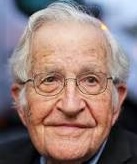
Noam Chomsky (born on December 7, 1928, in Philadelphia, Pennsylvania) is an American linguist, philosopher, cognitive scientist, historical essayist, social critic, and political activist. Sometimes called "the father of modern linguistics", Chomsky is also a major figure in analytic philosophy and one of the founders of the field of cognitive science. He is a Laureate Professor of Linguistics at the University of Arizona and an Institute Professor Emeritus at the Massachusetts Institute of Technology (MIT), and is the author of more than 150 books. He has written and lectured widely on linguistics, philosophy, intellectual history, contemporary issues, and particularly international affairs and U.S. foreign policy. Chomsky has been a writer for Z projects since their earliest inception, and is a tireless supporter of our operations.
ZNetwork is funded solely through the generosity of its readers.
Donate




