


The attack took place in sight of al-Deira Hotel, the main watering hole of international journalists. Many of these reporters – such as the Guardian’s Peter Beaumont – had a front seat on this attack. “Even from a distance of 200m,” Beaumont wrote a few hours after the killing, “it was obvious that three of them were children.”
The Israeli army said not long after the attack that the target was “Hamas terrorist operatives. The reported civilian casualties from this strike are a tragic outcome”.
On 11 June this year, Peter Lerner of the Israeli army reported that the Israeli military advocate general had concluded that Israeli jets “aimed at figures who were understood to be militants from Hamas’s naval forces”.
As a consequence of this judgment, the military advocate general “ordered that the investigation file be closed without any further legal proceedings”.
A few days later, on 14 June, Israel’s military released a 277-page report that denied any wrongdoing by Israeli troops or planners. “Harm to the civilian population also occurred,” the report admitted, but this was seen as “the result of unfortunate – yet lawful – incidental effects of legitimate military action in the vicinity of civilians and their surroundings”.
The Gaza Strip is one of the most densely populated zones on earth. But the official figure – 10,000 people per square mile – does not count that large tracts of land that have been rendered uninhabitable by Israel’s “security zone”.
The UN humanitarian office showed in its March report that the Israeli attack killed 2,256 Palestinians, 500 of whom were children.
Israel targeted civilian areas and killed civilians and its report on the beach attack ignores reality. It is comfortable with its view that every Palestinian is a Hamas operative unless proven otherwise.
In early June, the UN secretary general, Ban Ki-moon, decided to remove Israel from a list of states that gravely violate the rights of children. The evidence had been collected in a report on children and armed conflict, but lobbying by the US scuttled mention of Israel.
The efforts of UN special representative on children and armed conflict, Leila Zerrougi, were in vain. Raw power played its hand.
The UN’s human rights council is due to report on the 2014 bombing of Gaza. Israel’s flurry of reports is indented to obscure the findings of that body. A previous report for the 2009 bombing – the Goldstone report – was consigned to the morgue. Intense lobbying by the US and Israel effectively disarmed it, and the new one will probably meet the same fate.
There will be no accountability for Israel’s occupation and its wars. None at all.
The only mechanism that is currently effective in calling for accountability is the Boycott Divestment Sanctions movement, now 10 years old.
All the crime, none of the punisment
Israel violates international law and refuses to abide by UN resolutions but that does not threaten its prized place in the West’s imagination – as an outpost of democracy in the Arab East.
Since the UN is not capable of enforcing the law in this case, it is up to the people of the world to shoulder that responsibility. The BDS movement emerges as a substitute for the ineffective international institutions.
Israel’s political leadership is aware of the danger to its “brand” if the boycott movement continues to grow at this rate. The idea of Israel is now associated with both the killing of children and the refusal to take responsibility for that murder.
It is not enough to accuse all the critics of Israel for being anti-Semitic. That canard has lost its steam. Too few people are bullied by it. Too many look at the facts and see an occupied people who deserve justice.
What that justice would look like is not easy to surmise. Israel’s violations of the Fourth Geneva Convention, such as through the settlement activity, has changed the facts on the ground. Israel has made peace impossible.
A combination of the intractable dreams and struggles of the Palestinians and the boycott movement strive to revive the idea of peace. It is the only way to honour those four boys on that beach.

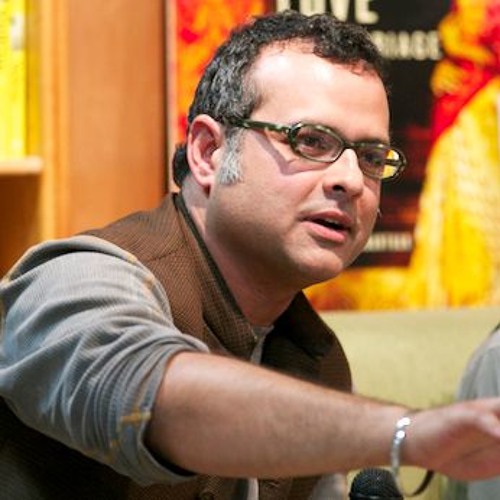
Vijay Prashad is an Indian historian, editor, and journalist. He is a writing fellow and chief correspondent at Globetrotter. He is an editor of LeftWord Books and the director of Tricontinental: Institute for Social Research. He is a senior non-resident fellow at Chongyang Institute for Financial Studies, Renmin University of China. He has written more than 20 books, including The Darker Nations and The Poorer Nations. His latest books are Struggle Makes Us Human: Learning from Movements for Socialism and (with Noam Chomsky) The Withdrawal: Iraq, Libya, Afghanistan, and the Fragility of U.S. Power. Tings Chak is the art director and a researcher at Tricontinental: Institute for Social Research and lead author of the study “Serve the People: The Eradication of Extreme Poverty in China.” She is also a member of Dongsheng, an international collective of researchers interested in Chinese politics and society.
ZNetwork is funded solely through the generosity of its readers.
Donate




