


Source: Foreign Policy in Focus
The Battle of Seattle in late November 1999 is, for me, memorable in many ways.
For one, I still remember being given a good beating by a policewoman when I tried to prevent her buddies from hauling off the irrepressible Medea Benjamin, then the director of Global Exchange, from a sit-in at the entrance to the Seattle Convention Center. I was lucky to escape serious injury.
But for me the main takeaway from Seattle was that it takes action to make the truth true.
In the decade prior to Seattle, there were a lot of studies, including United Nations reports, that questioned the claim that globalization and free market policies were leading to sustained growth and prosperity. Instead, the data showed that globalization and pro-market policies were promoting more inequality and more poverty and consolidating economic stagnation, especially in the Global South.
However, these figures remained “factoids” rather than “facts” in the eyes of academics, the press, and policymakers, who dutifully repeated the neoliberal mantra that economic liberalization promoted growth and prosperity. The orthodox view, repeated ad nauseam in the classroom, the media, and policy circles, was that the critics of globalization like me were Luddites — modern versions of the people who smashed machines at the advent of the Industrial Revolution.
Then we had Seattle.
It was not just a World Trade Organization ministerial that collapsed, but also a creed that had been widely believed to be true. After Seattle, the press began to talk about the “dark side of globalization” — about the inequalities and poverty being created by globalization.
After that, we had the spectacular defections from the globalist camp, such as financier George Soros, Nobel laureate Joseph Stiglitz, and “Dr. Shock Therapy” himself, the economist Jeffrey Sachs.
Then came the widely publicized findings of two independent studies — one by American University Professor Robin Broad in the Review of International Political Economy and the other by a panel of neoclassical economists headed by Princeton’s Angus Deaton and former IMF chief economist Ken Rogoff — showing that the World Bank Research Department, the source of most assertions that globalization and trade liberalization were leading to lower rates of poverty and inequality, had been deliberately distorting its data and making unwarranted claims.
Way before the financial crisis broke out in 2008, the credibility of neoliberalism and the promise of globalization had been severely eroded. What made the difference? Not so much research or debate, but action.
It took the militant mobilization of masses of people and the spectacular collapse of a WTO ministerial to translate factoids into facts — into truth. What proved decisive was the conjunction of the massive protests with the refusal of developing country delegates at the Sheraton Convention Center to accept any more forced liberalization of their economies.
Truth is not just ‘”there.” Truth is completed, made real, and ratified by action.
I hate having to bring up the name of Magellan, but allow me in this instance. Like Magellan’s circumnavigation of the earth in relation to the theory of the earth as a sphere, Seattle was a world-historic event that made the truth true — and consigned to the dustbin of history flat earthers like Thomas Friedman and a whole generation of neoliberal economists and policymakers.
Of course, neoliberalism continues to be the economic and elite policy preference of choice, but it’s because economists and technocrats know nothing else. Their careers are vested in it. To borrow from Yeats, they are without conviction — but they are dangerous. Neoliberalism is like the engineer who’s been shot dead by the outlaws but his dead hand remains on the throttle of the train, speeding it towards destruction.

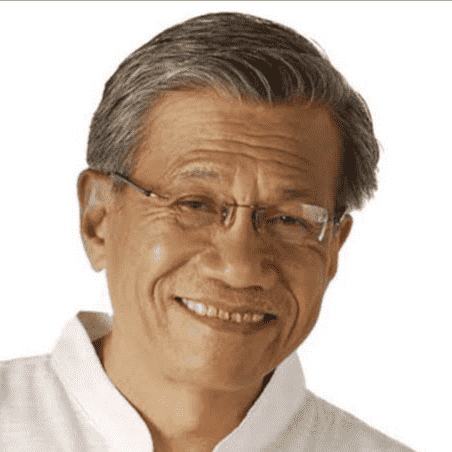
Walden Bello is currently the International Adjunct Professor of sociology at the State University of New York at Binghamton and Co-Chairperson of the Bangkok-based research and advocacy institute Focus on the Global South. He is the author or co-author of 25 books, including Counterrevolution: The Global Rise of the Far Right (Nova Scotia: Fernwood, 2019), Paper Dragons: China and the Next Crash (London: Bloomsbury/Zed, 2019), Food Wars (London: Verso, 2009) and Capitalism’s Last Stand? (London: Zed, 2013).
ZNetwork is funded solely through the generosity of its readers.
Donate




