Source: Jacobin
As Vladimir Putin’s brutal invasion of Ukraine continues, Russia’s other neighbors are looking on nervously. Norway shares a northern land and marine border with Russia. Historically the two have had tensions over competing territorial claims in the oil-, gas-, and animal-rich Barents Sea. The past decade, however, has seen them cooperate more closely in exploring and exploiting the region’s resources — especially oil, gas, and fish. Now, in the context of Russian belligerence, a fierce debate is developing in Norway about the country’s economic entanglement with some of Putin’s closest allies, and how best to help bring an end to his war.

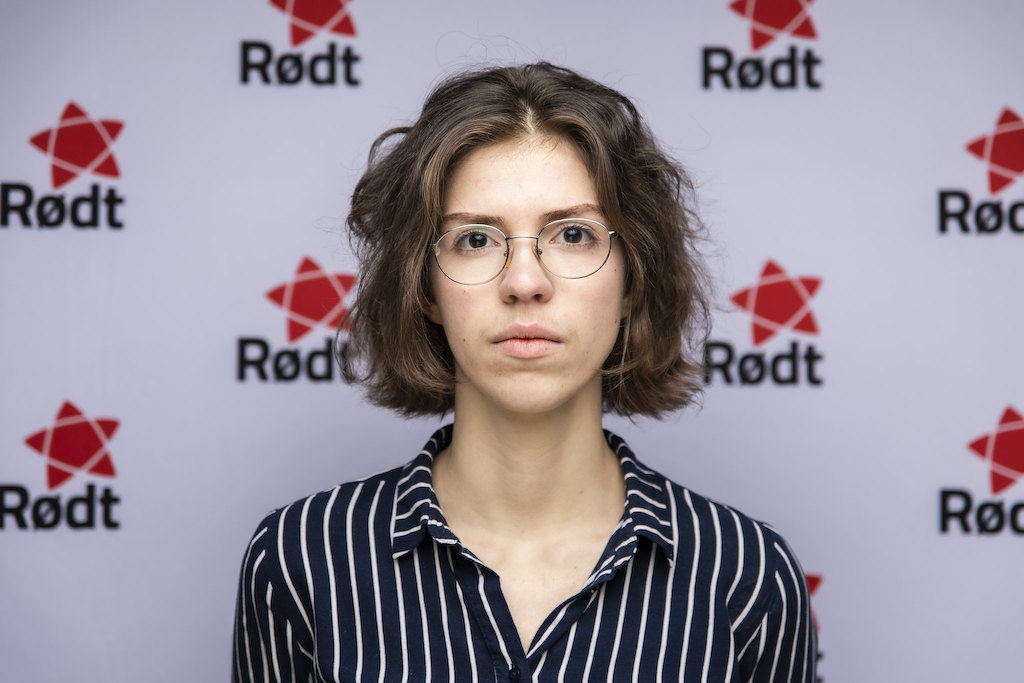
The left-wing Rødt Party’s support has more than doubled since last September’s election — it’s now sitting at about 10.3 percent. Its eight parliamentarians have been bold antiwar and anti-oligarch participants in the debate and their interventions in the Storting are supported and shaped by antiwar movements on the streets. Jacobin sat down to talk with Alberte Bekkhus, the leader of the party’s youth organization, Rød Ungdom, about solidarity with Ukrainian victims of the conflict, rattling Putin’s wealthy support base, splitting ordinary Russians from the elite, and socialist opposition to war.

CDPutin’s rule and his war are enabled by the political and economic support he has from the capitalist elite in Russia. Norway has played a role in enriching these billionaires. But Rødt wants to drive a wedge between Putin and this support base. What are you demanding?
ABThere are things Norway has done that must change. For starters, Norway should no longer be a safe harbor for oligarchic wealth. We should strike at the economic interests of Putin’s allies by seizing their superyachts that are currently lying in Norwegian ports.

We’re also demanding that the government throws all Russian oligarchs out of Norwegian oil and gas. This aims to end the invasion by targeting the circle around Putin, without harming ordinary Russians. It’s a good thing that Norway’s sovereign wealth fund is now under pressure and people are talking about this. But Putin’s Russia hasn’t exactly been a perfect democratic country for the past ten years — and yet we’ve granted them gas and oil exploration licenses and highly lucrative fishing rights during this period. The Norwegian government has prioritized profits over both peoples’ lives and what’s right. We demand higher standards than this.

Our rules around company ownership and transparency also need to change. The last government scandalously set the minimum declaration threshold at 25 percent — so if you own 24 percent of a large company you don’t have to be open about it. Our laws make it easy for rich oligarchs to hide their money here. We’re demanding the tightening of these transparency rules — we need to know which capitalists own what — and not just the Russian ones. This will take us one step closer to a democratic society.

CDAs well as welcoming Ukrainian refugees, Rødt has called for (non–war criminal) Russian soldiers who desert the army to be given a safe haven in Norway. What’s the rationale behind this demand?
ABNo ordinary people win in war. It’s been heartbreaking seeing innocent Ukrainians having to flee over the past two weeks, and heartbreaking to watch the videos of young, crying Russian men sent to Ukraine. They’ve been lied to, coerced, and given no choice by Putin but to go to a war that ordinary Russians don’t want and that will cost countless lives.

We believe this demand is one of the things that can stop Putin. If there are no soldiers there’s no war. Morale in the Russian army isn’t good — ordinary Russian soldiers need to know they don’t have to participate. Norway can undermine Putin’s war by becoming a safe haven for deserters. This is hugely important to save lives and score an important win against Putin’s war.

CDA recent column called you “Putin’s Norwegian followers” for critically discussing Norway’s NATO membership. Right-wing politician Sylvi Listhaug declared that “this is not just another issue we can disagree with each other about.” Why do you think it’s still important to discuss the broader context in times of war?
ABA democratic society needs debate about what’s right and what isn’t. But suddenly we’re being given a false ultimatum: support Putin or support NATO. I don’t accept that choice. People call us “Putin’s followers” because we’ve been critical of NATO and Norway’s role in it. It’s very frustrating. Putin’s current imperialistic aggression doesn’t legitimize NATO’s past invasions elsewhere in the world, or Norway’s involvement in them. It’s an issue we can discuss and disagree on. It’s a disingenuous tactic for them to focus on our criticism of the alliance — and totally disproportionate given the pressing needs of the moment.
CDYes, it seems strange — all these Norwegian establishment figures accusing small opposition voices of being pro-Putin when they’re the ones who’ve worked most closely with him and his oligarchs over the past decade.
ABPoliticians are going out of their way to attack us instead of focusing on the important points in common. For example, at the moment everyone from Rødt to the right-wing populist Progress Party agree we should take in Ukrainian refugees. That’s a great thing — they should be spending their political capital on making sure our counties are ready to care for these refugees, and also on supporting the Russian pro-peace movement.

The antiwar activists in Russia are amazing. There were huge demonstrations on Sunday — at least forty-five hundred more people were thrown in jail. Why aren’t we concretely talking about how we can support them? We need to contribute to their struggle and organizations with real solidarity between ordinary people. This also relates to our demand about sheltering deserters — not just speaking out against war but concretely helping soldiers to refuse to participate. This needs to happen.

CDWhy is it important to have an antiwar movement that doesn’t just cheerlead whatever current military leaders are saying?
ABBecause wars are horrible no matter who the aggressor is. They’re crimes against humanity. Wars don’t have winners and losers, even if on paper someone “wins.” War means lost lives, ruined cities, instability, chaos, and murder. War is never something to cheer on.

It’s inspiring to see people all over the world stand together in unison against Russia’s invasion. We are against Putin’s war, and we were against the wars in Libya, Iraq, and Afghanistan. I’m very happy now to see both centrists and right-wingers defending international law and standing strong against Russia’s breaches of it. My invitation to them is to be consistent: come to the demonstrations the next time NATO invades a country in the Middle East in breach of international law.

CDAs a result of Putin’s invasion, we’re seeing a lot of arguments in the global media to expand military spending, to more or less endlessly prepare for endless war. Rødt Youth has specifically demanded “a future without war and militarization.” What kind of struggle is necessary to achieve such a future?
ABEvery generation has had its issues. But our generation has grown up in this neoliberal hellscape against a backdrop of wars, economic crises, terrorist attacks, two years of a pandemic, and the growing threat of man-made climate change and catastrophe. We cannot adopt the narrative that from now on it’s just war and crisis. That is not a future we can accept.

Look at the movement against the war in Vietnam. The two conflicts aren’t the same, of course, but we need a similar kind of global movement. The struggle that is needed can’t just be some critical politicians. It needs to be people throughout the whole world standing together demanding an end to war.

It has to be international and collective. How we gather and organize people is a real question — but we’ve seen it happen before. We know that people organizing on this scale can force change. It’s absolutely possible. We just need to be tough enough to stand strong when it’s difficult, especially when the rhetoric is “war, war, and more war.”

CDAre these kind of antiwar demands resonating in Norway?
ABOn Saturday, we participated in the demonstration against Russia’s invasion. It helps when the demonstration is not just in Norway but at exactly the same time is going on in the rest of the world. Not just fighting for yourself as an individual but fighting together with hundreds of thousands of others. This sort of solidarity can resonate, but with the media endlessly beating the drums of war it’s easy to feel hopeless and isolated.

People are understandably afraid — it’s stressful and chaotic. But we’re part of a growing movement inside and outside of Parliament, getting more visible, spreading an anti-capitalist, pro-peace, and pro-equality message, reaching new people everyday. We’re fighting for a socialist future, without war and in tune with the earth. This might seem like an idealistic future, but in the grim establishment vision of “endless war” there’s no future at all.

Chris Dite is a teacher and union member.


ZNetwork is funded solely through the generosity of its readers.

Donate
Donate
Leave A Reply

Subscribe

All the latest from Z, directly to your inbox.

Institute for Social and Cultural Communications, Inc. is a 501(c)3 non-profit.

Our EIN# is #22-2959506. Your donation is tax-deductible to the extent allowable by law.

We do not accept funding from advertising or corporate sponsors.  We rely on donors like you to do our work.

ZNetwork: Left News, Analysis, Vision & Strategy

Subscribe

All the latest from Z, directly to your inbox.

THE WIND CRIES FREEDOM

The Wind Cries Freedom, the new book from Z co-founder Michael Albert, is a sweeping oral history of a future American revolution.

Through thirty interconnected chapters, it draws out the strategies, failures, turning points, and hard-won wisdom of a movement that called itself the Revolutionary Participatory Society. These are not the polished memoirs of politicians: they are the unfiltered accounts of people who organized in neighborhoods, hospitals, universities, stadiums, courthouses, and places of worship, and kept a shared vision alive through cynicism and exhaustion.

The result is speculative political fiction that reads like history: messy, human, and quietly hopeful in the way that only real experience and long thought can produce.

Get your copy and peruse more features on the book’s website below.

“Read it, argue with it, but don’t look away. The future it recalls is one we must still fight to deserve.”

Yanis Varoufakis

“The most unusual and intriguing combination of prophecy, manifesto, and movement building manual that I have ever encountered.”

Bill Fletcher Junior

“This work fills a huge gap in our social movement literature.”

Cynthia Peters

You've just read your article on Z this month.

DOES Z'S SURVIVAL MATTER?

You keep coming back for a reason: serious political analysis, movement reporting, and debate beyond the priorities of corporate media. Today, Z is in a precarious financial position. If Z is part of how you understand the world, help keep it going. The readers who give monthly are the reason this work survives between fundraisers.

Z is in a precarious financial position. If it’s part of how you understand the world, help keep it going.

Number of donors710
Our goal1,000

Sustainers at $9/month or more receive the digital Z Magazine.

Already a sustainer? Click here and we won’t ask again. Thank you!

Your reading count is stored only in your browser and is never sent to us.

Sound is muted by default.  Tap 🔊 for the full experience

CRITICAL ACTION

Critical Action is a longtime friend of Z and a music and storytelling project grounded in liberation, solidarity, and resistance to authoritarian power. Through music, narrative, and multimedia, the project engages the same political realities and movement traditions that guide and motivate Z’s work.

If this project resonates with you, you can learn more about it and find ways to support the work using the link below.

Z is in the most precarious financial position in its history.

Z is a place to think beyond the limits of the present.

For decades, Z has brought together political analysis, movement reporting, debate, and visions of a different future from writers and activists around the world. That work is more than journalism. It is movement infrastructure: movements need places to develop ideas, test arguments, learn from experience, and imagine what comes next.

In the first two days of this fundraiser, 19 donors and 8 new monthly sustainers stepped up. Help us reach 1,000 donors who keep Z independent, for everyone.

For decades, Z has published the analysis, debate, and visions movements need, free of paywalls, ads, and billionaire owners. If that work should continue, Z needs your support now.

Number of donors710
Our goal1,000

Sustainers at $9/month or more receive the digital Z Magazine.

Subscribe

Join the Z Community – receive event invites, announcements, a Weekly Digest, and opportunities to engage.

Exit mobile version

