


Can labor sustain its forward momentum under Trump? The first big test came last Monday, when Whole Foods workers in Philadelphia voted on whether to unionize with the United Food and Commercial Workers (UFCW). Many in the labor movement were expecting a loss, since MAGA is now in office and since management — headed by Trump’s new billionaire buddy Jeff Bezos — went scorched earth against the nascent union effort. But a multiracial crew of young, self-organized, left-leaning workers proved the skeptics wrong, as so often has been the case since 2021.
Despite intense management intimidation, workers voted for the union 130-100. Given that Trump’s chaotic power grabs dominated the headlines last week, it would be easy to underestimate the momentousness of the result: this was only the second time American workers have ever defeated Amazon in a union election. (The first was the Amazon Labor Union’s April 2022 win at the JFK8 warehouse on Staten Island.) By beating Bezos, these Whole Foods workers have given the labor movement a much needed shot in the arm.
To find out how these young workers took on the most powerful corporation in the world, I spoke with Ed Dupree, an eight-year Whole Foods employee who helped lead the drive.
Q: Can you describe the moment when you realized you’d won the election?
We were crammed into a small conference room to watch the votes get counted — just a handful of us lead organizers and UFCW reps — alongside nearly every level of management from our store, corporate, and even global. I think the Whole Foods vice president and someone else from higher up were there too. Watching them get increasingly nervous as more votes came in was an incredible feeling.
When the final votes were counted, it was an overwhelming moment. As soon as it became clear we’d won, a few of us — me, my buddy Mace, another organizer Jack, and one or two others — left the office and headed down to one of our coolers on the main floor to celebrate.
We were high-fiving and cheering and one of my co-workers actually started crying. After so much stress — being harassed, seeing our coworkers turned against us — winning felt like a thread of positivity in the face of so much negativity in the company and in the country. It was an incredible high.
Q: Can you share a little about your background and the main reasons you all unionized?
A: I’ve been working at Whole Foods for eight years in the produce department. I’m just a regular team member — I work the sales floor, handling receiving, breaking down pallets, and staging products.
As far as our issues, the main thing everyone felt strongly about was getting better pay, benefits, health care, and workplace protections, particularly for older employees and those with disabilities. And putting an end to coworkers getting harassed so much.
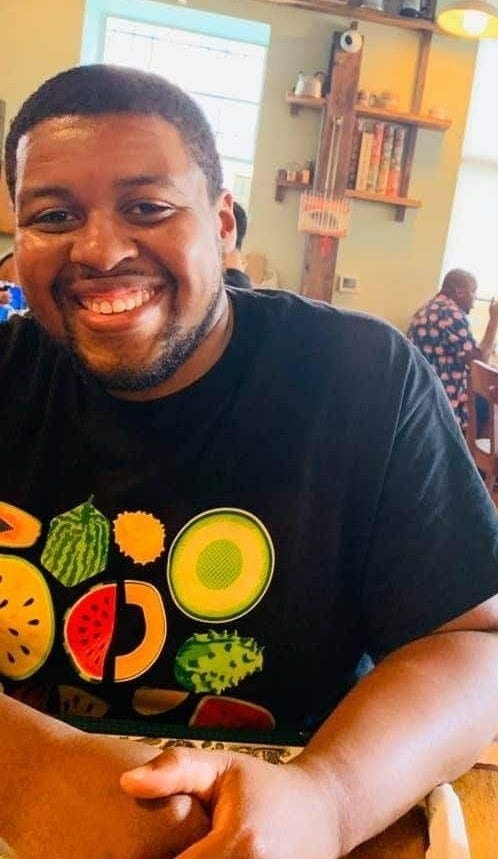
Worker leader Ed Dupree
Q: How did the organizing drive begin?
A: It started when a longtime coworker of mine mentioned a new hire, Ben, who had only been there for two weeks but was already talking about forming a union. Since I’d been involved in a previous union campaign during the pandemic and often talked about labor issues, my coworker suggested I go talk to him.
At first, I was skeptical. I thought, “Who is this guy? He’s coming in way too hot. Is he a plant from the company?” But when I finally spoke with Ben, I realized he was serious and sincere. And I thought, “Hell yeah, let’s do this.”
That was about two years ago. We started talking to coworkers, many of whom already knew me because I’d been around for a long time. Some of them had also been part of our previous attempt to unionize. With them, it was just about reconnecting and seeing how they felt about organizing again.
Then we started by having conversations more broadly with other co-workers, hearing what their main issues were and gauging their interest in forming a union. We created a system to track support — rating the support of our co-workers, with ones being core organizers involved in our organizing committee and fours being totally anti-union. Initially, we had about 15-20 percent support, but within a few months, we were up to 30 percent. Ben was great with charts, with stuff like Excel, while I was better at talking to people.
Q: Since you were organizing before affiliating with an established union, how did you know what to do?
A: I had done some door-knocking for the Bernie 2020 campaign and local political campaigns. I’ve also read some labor history — Eugene Debs, the Industrial Workers of the World, that sort of thing. Also, Ben is in Philly Democratic Socialists of America and knew some EWOC [Emergency Workplace Organizing Committee] guys. So EWOC gave five of us at the store a training in organizing fundamentals: they gave us good feedback and resources, organizing pointers, and a good baseline understanding of how to talk to people who weren’t already on board, all that.
Q: Was it difficult to convince people to support the union?
A: Not at first, since I already knew so many people at work, we were cool. The hardest part was talking to employees I didn’t know well. Our store has high turnover, and about 10-15 percent of the workforce just sees it as a real temporary job. When I’d talk to them, at first, a bunch would be like “What are you talking about, bro?”
But once we hit around 30 percent support, we started working with the UFCW, and they really wanted us to get at least 70 percent signing cards before filing for a union election. We didn’t get exactly there, but by the time we did eventually file, we had almost 60 percent support. So it took a lot of conversations with people, and lots of the time we’d have to double back to folks we weren’t as confident about.
Q: It seems like management went really hard to stop you all. What did that look like?
At first, management didn’t take us seriously. But by October [2024], when they realized how much support we had, things changed. The good thing for us was that by that time we’d already canvassed over 50 percent of the store.
For a while in November they tried the “velvet glove” approach—they were really sweet, offering candy, constantly asking us how we were doing. Then in late December and early January, they cranked it up to eleven. Ever since, it’s been wild, just super intense union-busting. They held [captive audience] team “chats,” where they’d tell us the most insane anti-union bullshit you could ever imagine. Just flagrant lies.
They also got rid of most of our team leads [managers] and brought in new ones from other stores and from out of state to intimidate us. They brought in some lady from Florida to union bust, she’d always be surveilling me and dead-on staring at me during my shift, as I’m literally just stacking apples.
One of the most egregious things they did was fire a strong union supporter on a bogus pretext even though he was a model employee. They also started writing people up for tiny infractions, they bribed anti-union employees, and they set up a big-ass TV near our time clock just to play anti-union propaganda. In the lead up to the vote, they started pulling people straight from the sales floor into the team leads office to tell us to vote No.
Q: Were you personally scared?
A: I always understood the risks, so I wasn’t scared—more just baffled by how ridiculous some of their union-busting tactics were. These guys are clowns, honestly it was kind of surreal. But also they targeted Ben way more than they targeted me. I think part of that was because I’d been there so long and had lots of strong relationships with coworkers. But I also do low-key think it was a bit of a racist thing — I’m a big black dude, and they didn’t seem to want to confront me directly. So they didn’t fuck with me, but they would fuck with Ben. They tried to smear him, there was lots of character assassination and spreading rumors that he was a paid UFCW plant. But he wouldn’t let them scare him.
Q: Do you see this as part of a larger national effort to unionize Whole Foods?
A: Definitely. We took a lot of inspiration from what Starbucks has done. And we saw the need for militancy from UAW folks like Shawn Fain as well as what the Teamsters did at UPS to get strike ready. That all gave us an understanding of the scale we need to be operating on to get a first contract, and it influenced our decision to go with UFCW instead of going independent.
We know it’s going to take more than just our store, but winning this vote has been inspiring for others, and we’re ready to support them. Some Whole Foods stores were already organizing before last Monday, and ever since then, we’ve had a bunch more people reach out to us over our Instagram account. We’re talking to all of them, to give them an understanding of what we did to win, and also what to expect from management — to inoculate them against all the bullshit that they’ll throw at them.
We know what management is going to do. And now there are a lot of Whole Foods workers that want to do what we’re doing.
Q: With Trump now in office, do you think the movement can sustain itself? Lots of progressives seem to have fallen into despair.
Like you mentioned, people are at a point of despair and uncertainty, with a lot of negativity surrounding them. It’s important to remind them that while the government and electoral politics matter, real power comes from working-class people organizing — starting in their own workplaces. At work we have collective power, so that’s where we need to start turning things around.
Even with a piss-poor NLRB [National Labor Relations Board] coming into office, history has shown that workers have organized under far worse conditions, when there was no NLRB at all and when labor organizers were being killed left and right. Despite the challenges, people need hope, and the best place to find it is in your coworkers, the people you spend 20, 30, or 40 hours a week alongside.
Even in difficult and chaotic times, workplace organizing doesn’t stop. The Amazon union effort began during Trump’s first term, and the Starbucks union movement emerged during the pandemic, right? We need to remind people that workplace organizing continues no matter who’s in office and no matter how chaotic things get. Unionization is the best way we can empower ourselves and our coworkers: even when things seem bleak, we can reclaim our influence over our lives and make a real impact. We’ve shown at our store how this can happen. And anybody else can do it too.


An eight-year Whole Foods employee who helped lead the drive to unionize in Philidelphia.
ZNetwork is funded solely through the generosity of its readers.
Donate




