

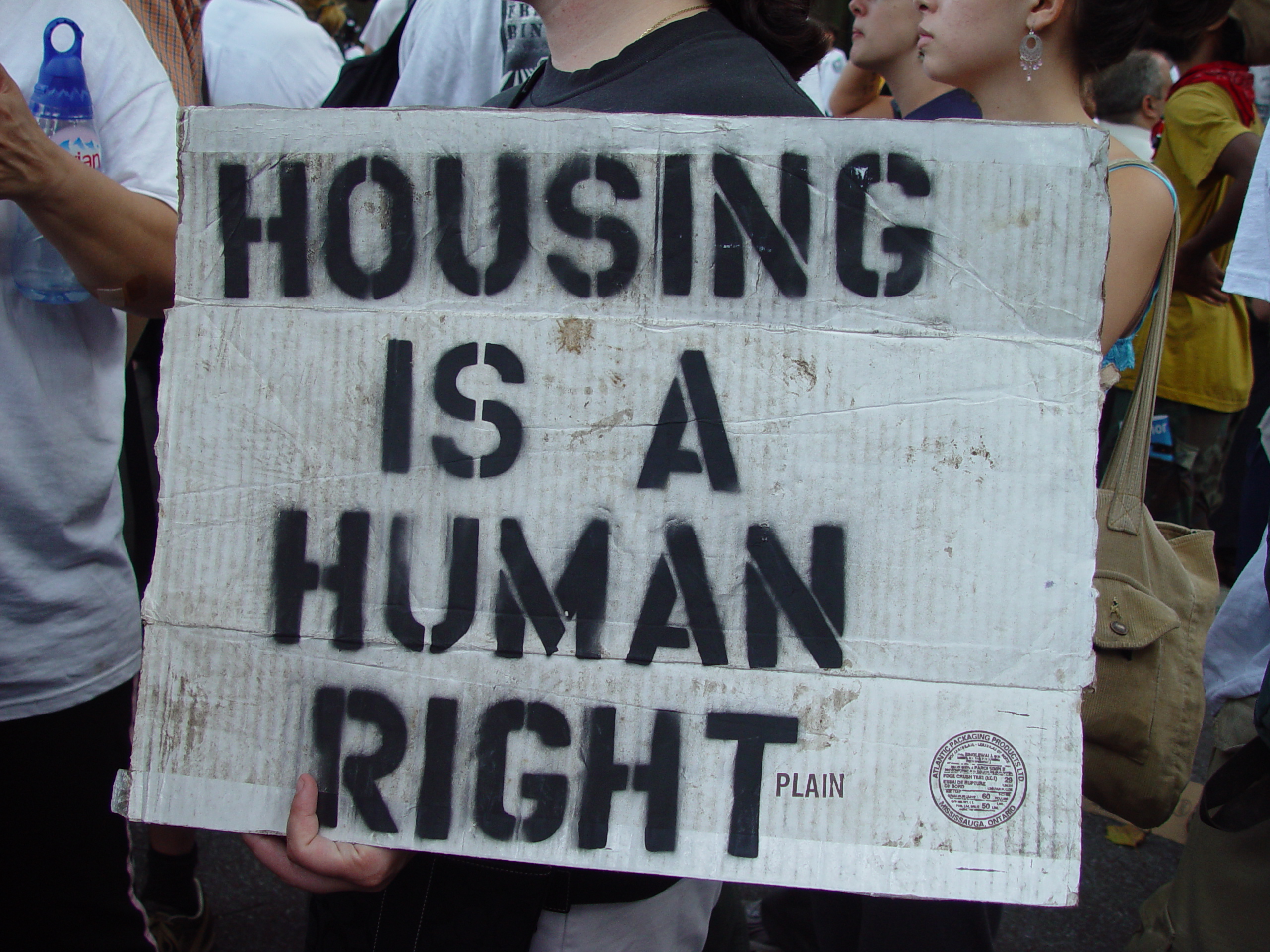
Too many of us have to depend on sheer good luck to make it—especially when it comes to putting a roof over our heads.
We grow up hearing that hard work alone will lift us above the hardships we’re born into. But many of us also watched as our parents worked two and three jobs, relied on extended family to watch us, and still struggled to afford stable housing. Far too many of us are living that same struggle ourselves.
It’s not that we aren’t resourceful. My grandmother, who barely scraped by with factory work and countless odd jobs, pulled together with neighbors who supported each other through a mutual aid network. Thanks to her resourcefulness, our community, and luck, we had someplace to call home. That gave my mother the chance to become the first one in our family to go to college. I followed in her footsteps to attend graduate school.
In the world’s wealthiest nation, should we really have to rely solely on working people sharing their meager resources among themselves? To eradicate poverty and housing instability, we’re going to need more than that.
We made it work. But I’ve learned through generational poverty that the lack of affordable housing is one of the biggest obstacles to thriving. I learned even more through my work with Healthy Families, a national, research-backed program.
I conducted home visits with low-income mothers, addressing maternal health, birth outcomes, and child development. Their poverty was different from what I grew up with. Many of these mothers were immigrants with language barriers and no access to the extended networks, mutual aid, or stable housing that I had.
Evictions were rampant. I saw conditions that you wouldn’t believe existed in the richest country in the world.
I’m a strong believer in mutual aid. But in the world’s wealthiest nation, should we really have to rely solely on working people sharing their meager resources among themselves? To eradicate poverty and housing instability, we’re going to need more than that.
Nationally, a worker would need an hourly wage of at least $28.58 to afford a modest two-bedroom rental—or nearly $24 an hour for just one bedroom. The federal minimum wage is $7.25 per hour. Almost half of low-income renters spend over 30% of their incomes on housing alone.
Building on my mother and grandmother’s work in mutual aid, I’ve found community engagement to be invaluable—not only to connect families to housing, but also to organize our collective voices to push lawmakers toward solutions.
Solutions like building more affordable housing, more public housing, and more housing in general. Guaranteeing workers a living wage for their hard work. Making sure we have a strong social safety net so families can survive lean times.
Unfortunately, housing policy often takes human rights and the need for community out of the policy process. It focuses on zoning, commerce, profit-maximization, and “protecting” wealthy communities from low-income neighbors. This does a disservice to the rich sense of community affordable housing can create.
Housing should be seen as a human right and a community builder, not a wealth builder. It should be a way to lift us all up rather than segregate us and perpetuate the cycle of poverty.
The more we separate ourselves from our fellow humans, the more damage we do to all of us as a society. My mother and grandmother taught me that. I bet yours did too. So let’s work together to make the dream of housing for all a reality.
ZNetwork is funded solely through the generosity of its readers.
Donate
