



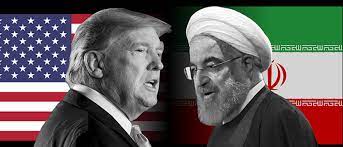
Negotiators hashing out a revived Iran nuclear deal said Monday they believe they’re close to reaching an agreement to impose limits on Tehran’s uranium enrichment, a promising development that came over four years after then-U.S. President Donald Trump unilaterally abrogated the landmark accord.
An unnamed senior official at the Ministry of Foreign Affairs of the Islamic Republic of Iran told Iranian state media Monday that “relative advances were made on a number of issues” during the current round of talks in Vienna aimed at resurrecting the Joint Comprehensive Plan of Action (JCPOA).
“We stand five minutes or five seconds from the finish line,” Russian Ambassador Mikhail Ulyanov told reporters outside Vienna’s Palais Coburg on Monday, four days into the current negotiations.
Ulyanov added that “three or four issues” that are “sensitive for Iranians and Americans” remain to be resolved, adding that he “cannot give guarantees, but the impression is that we are moving in the right direction.”
A U.S. State Department official told Reuters that the United States is ready to “quickly conclude a deal” but that it remains to be seen if Iran’s “actions match its words.”
Lead European Union negotiator Enrique Mora said he is “absolutely” hopeful that a new deal will be worked out.
“We are advancing, and I expect we will close the negotiations soon,” he told Iranian state media.
European Commission Vice President Josep Borrell tweeted that a “final text” of a new deal was presented after “what can be negotiated was negotiated.”
One sticking point has been Trump’s designation of Iran’s elite Islamic Revolutionary Guard Corps as a terrorist organization, a decision U.S. President Joe Biden has said his administration will not reverse.
Other areas of contention include the reinstallation of cameras used to monitor Iranian compliance with the JCPOA and a small amount of enriched uranium that, due to high radioactivity, cannot be removed from Iran as required under the agreement.
Since Trump abandoned the JCPOA—which was signed in 2015 during the administration of then-U.S. President Barack Obama by China, France, Germany, Iran, Russia, the United Kingdom, and the United States—Tehran has been operating advanced centrifuges and rapidly stockpiling enriched uranium.
Under the JCPOA, Iran agreed to limit uranium enrichment and accept inspections of its nuclear sites in return for an easing of some of the economic sanctions that critics say are killing people and crippling the country’s economy. A revived deal would allow Iran to freely export its oil and regain access to around $100 billion in frozen assets.
According to Data for Progress polling published last week, two-thirds of U.S. voters—including 82% of Democrats, 65% of Independents, and 56% of Republicans—support a new agreement to limit Iran’s nuclear program. The same survey found that 83% of likely voters prefer diplomacy over war as a means of dealing with Iran over its nuclear program.
In other nuclear arms-related news, Reuters reports Russia’s foreign ministry on Monday informed the United States that Moscow will not allow U.S. officials to inspect Russian nukes under the Measures for the Further Reduction and Limitation of Strategic Offensive Arms, also known as the New START Treaty, a bilateral agreement signed in 2011 during the Obama administration.
While the move comes as the U.S. government pours billions of dollars into arming Ukrainians fighting off Russian invaders, the ministry cited “unilateral advantages” for the United States it said “effectively deprive the Russian Federation of the right to conduct inspections on American territory” as the reason for the policy shift.
ZNetwork is funded solely through the generosity of its readers.
Donate

