


After a 109-day hunger strike, Patricia Troncoso forced Michelle Bachelet’s insensitive government to yield and allow her weekend passes and completion of her sentence at a work-study center. Two other prisoners will reap the same benefits.
"From here, I want to encourage you to continue defending us from this predatory economic system that is seeking to pillage the little bit of nature we have left, and it is inhumane, because any economic project in our Mapuche territory is considered more valuable than we are, and immoral because the only human goals it leaves us are money and consumerism." Thus begins Patricia Troncoso’s letter of Jan. 22, written from a hospital in the southern city of Chillán, after the 106th day of her hunger strike1.
Patricia is one of five Mapuche prisoners who launched a hunger strike on Oct. 12, 2007. The other four, Jaime Marileo, Juan Millalen, José Huenchunao, and Héctor Llaitul, abandoned their effort at various times in December, due to poor health. Patricia, however, decided to persevere, because the Mapuche are clearly aware that they have no other way of asserting their rights besides this sort of action, even if they risk dying.
This Mapuche leader is accused of having set fire to 100 hectares [250 acres] of land belonging to the Forestal Mininco Company. She was sentenced to 10 years in prison because the controversial anti-terrorism law inherited from the Augusto Pinochet dictatorship (1973-1990) was applied to her case. The strikers demand barring the application of this law to resolve social conflicts and the demilitarization of their communities. For the first time since the end of the dictatorship, the Mapuche struggle is garnering sympathy and support throughout Chile and the world.
A New Wave of Mobilizations
Historian Víctor Toledo Llancaqueo maintains that the Mapuche movement that emerged in the 1980s in the final stages of the Pinochet dictatorship "has been the protagonist in at least three broad rights-based mobilization cycles"2. The objective of the first, which occurred during the dictatorship, was to defend communal lands.
Then, at the beginning of the transition to democracy, in 1989, the Nueva Imperial Pact was signed, in which the Democratic Concertation committed its coalition to supporting a new indigenous law in exchange for Mapuche renunciation of further mobilizations. Many feared, says Toledo, a repeat of the massive land seizures that occurred from 1970 to 1973 during the Salvador Allende government.
In response to the cooptation implied in this agreement, the "Consejo de Todas las Tierras," or "All Lands Council," was born in 1990, demanded autonomy and political participation, and organized symbolic land seizures. In 1992, the government detained 70 communal activists, denouncing them as "criminals," and 144 Mapuche were prosecuted by the judicial system for "trespassing" and "unlawful assembly." The process was rife with defects and considered a legal aberration.
Around 1997, a new cycle began with the outbreak of multiple conflicts that affected large forestry and energy companies. The state, the companies’ unconditional ally, saw its indigenous policy unravel when the two federal assistance agencies, the National Corporation for Indigenous Development [Corporación Nacional de Desarrollo Indígena] and Indigenous Land and Water Fund [Fondo de Tierras y Aguas Indígenas] collapsed because they could not meet community demands. Lacking a policy and unwilling to concede rights, the government hardened its repression.
The 1997 Ralco case, regarding a hydroelectric megaproject on Mapuche lands along the Upper Bío-Bío River, turned into a watershed rift when the government broke the law in order to initiate the project. "The Ralco dam raised a political borderline between the Mapuche and the state," says Toledo. That same year, the Lumaco case, which involved two million hectares [almost five million acres] of non-native tree plantations and a cellulose plant, became "an enclave that transformed geography and power in the south of the country, altering the environment and impoverishing the regions."
Seeing no legal channels available, the Mapuche are forced to mobilize, and the movement strengthens and deploys its own cultural, artistic, and media initiatives. New territorial organizations arise, such as the Arauko Malleko Coordinator and Nankucheo de Lumaco Association. The result of the mobilization was the recovery of lands to such an extent that state funds for community land purchases increased from $5 million dollars in 1995 to more than $30 million in 2001 under the government of Ricardo Lagos.
Once again, the response to this new wave of mobilizations was the criminalization of protest. Trials began under the Military Justice System in 2000, and by the end of 2001, Law 18314, known as the Anti-terrorism Law, was applied amidst the climate generated by the Sept. 11, 2001 attacks in the United States. Repression was combined with intelligence work and the cooptation of the indigenous intelligentsia.
Between November 2001 and October 2003, 209 Mapuche were prosecuted in the Araucanía Region alone, while hundreds more were arrested in demonstrations, beaten, and abused. According to Toledo, this constituted a veritable "dirty war." In all, more than 400 Mapuche have been prosecuted since the Democratic Concertation took control of the government in 1990.
In November 2004, the Mapuche won a legal battle in an area where they had previously harvested only defeats. One of the pillars for the "criminalization of protest" crumbled when a defense strategy showed that "terrorism" involves not damages to property, but rather, "contempt for human life or jeopardizing constitutional order." The methods the communities used, such as lighting fires and throwing objects, could not be considered terrorism. The accused were acquitted.
Strike and Solidarity
The hunger strike, whose purpose was to free the generation of leaders who had participated in the cycle of protest that started in 1997, involved 18 Mapuche prisoners still being treated as terrorists by the state. Patricia Troncoso belongs to that generation of Mapuche who went to the cities to study and returned to their communities out of a sense of commitment to their people.
The hunger strike, during which the prisoners ingest only liquids, included as one of its demands the demilitarization of communities. A recent press release from one of the most important social organizations in Chile, the National Association of Rural and Indigenous Women, ANAMURI [Asociación National de Mujeres Rurales e Indígenas], states [to Michelle Bachelet]: "We are deeply disturbed by the indifference of the government that you lead, which has established truly state-based terrorism in Mapuche territories, thereby generating an atmosphere of war similar or worse than what we lived under the dictatorship."3
After Jan. 3, 2008, the mobilization intensified in Chile and throughout the world when police killed Mapuche activist Matías Catrileo, who was participating in the peaceful occupation of a plantation. His death caused an indignation that spread beyond Mapuche territory. A delegation made up of 10 human rights organizations traveled to southern Chile to check on human rights violations and the militarization of Mapuche communities in that area.
Backing the Mapuche cause are Catholic and evangelical churches, the CUT labor union, feminist, gay, and lesbian movements, human rights groups, neighborhood and area associations, groups of historians, anthropologists, students, and a wide net of base supporters, including some members of congress. In the cities, peaceful demonstrations are brutally suppressed by the Carabinero police.
ANAMURI reflects the reality of the situation in its letter, without the slightest exaggeration: "Actions by justice and police operatives, in particular, are typical of a system of perverse, sexist, patriarchal domination that is broadly insensitive and subordinated to the interests of capital." ANAMURI asks the president to avert Patricia’s death in order to "avoid a stigma for the government run by a woman who has fought for human rights for decades in our country."
The successful outcome of the hunger strike was announced by the president of the Episcopal Conference, Alejandro Goic. A letter from the government agreed that the concessions Troncoso had requested for herself and for Juan Bautista Millalen and Florencio Jaime Marileo, would be granted starting in March.
The success of the longest strike in Chilean history is due, first and foremost, to the ethical conviction and courage of the Mapuche people and to individuals like Troncoso. Other undeniable factors include the broad solidarity received by movements in Chile, especially gender solidarity. The Catholic Church played a role highlighting the Bishop of Chillán, Carlos Pellegrín, who said: "As long as these injustices persist, the Mapuche will be hurt, therefore, this is a debt that must be settled, and this is the appropriate moment, now that we are in a democracy."
A new chapter now unfolds in the long Mapuche battle. As has often happened in the history of the oppressed, the courage of a few men and women succeeds in demolishing the walls of indifference and opening the gates through which solidarity will walk—which is, as poet Pablo Neruda wrote, "the tenderness of the people."
End Notes
At www.mapuexpress.net.
Víctor Toledo Llancaqueo, "Prima ratio. Movilización mapuche y política penal", OSAL Magazine, Issue 22, Buenos Aires, September, 2007.
"Open letter to Bachelet," ANAMURI, January 23, 2008.
Translated for the Americas Program by Lezlie L. Shackell.
Raúl Zibechi is an international analyst for Brecha, a weekly journal in Montevideo, Uruguay, professor and researcher on social movements at the Multiversidad Franciscana de América Latina, and adviser to social groups. He is a monthly contributor to the Americas Policy Program (www.americaspolicy.org).
For More Information
Mapuche Websites:
www.mapuexpress.net
www.mapuche-nation.org
www.azkintuwe.org
http://redchem.entodaspartes.org
www.tribunadelbiobio.org

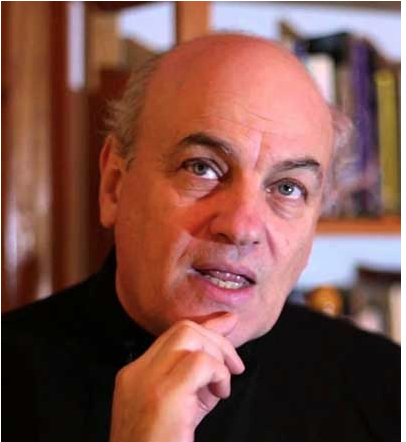
Raúl Zibechi (born January 25, 1952, in Montevideo, Uruguay) is a radio and print journalist, writer, researcher, militant, and political theorist. Between 1969-1973, as a student, he was a militant of the Frente Estudiantil Revolucionario (FER). In the '80s he began to publish in left newspapers and magazines. He focuses on social movements in Latin America and their relationships. As a popular educator he conducts workshops with social groups, particularly in urban peripheries and with peasants. He has published 18 books, almost all about concrete experiences of social movements. Three of his books have been translated into English: Dispersing power, Territories in resistance and The New Brazil (AK Press). He publishes regularly in La Jornada (Mexico), Gara (Spain) and other alternative media.
ZNetwork is funded solely through the generosity of its readers.
Donate




