


Labels are central to the politics of media. And no label has been more powerful than “terrorist.”
A single standard of language should accompany a consistent standard of human rights, which the world desperately needs. “If thought corrupts language,” George Orwell wrote, “language can also corrupt thought. A bad usage can spread by tradition and imitation, even among people who should and do know better.”
No amount of rhetoric from its defenders and apologists can change the reality that Hamas engaged in mass murder. What Hamas horrifically did to more than 1,000 Israeli civilians of all ages two weeks ago meets the dictionary definition of terrorism.
And no amount of rhetoric can change the reality that the Israeli government has engaged in mass murder during the last two weeks. What Israel’s military is horrifically doing in Gaza, already killing several thousand Palestinian civilians of all ages, also meets the definition of terrorism.
But U.S. media outlets dodge being evenhanded with the “terrorist” label — applying it to organized Palestinian killers of Israelis and not to organized Israeli killers of Palestinians.
The routine media bias does not in any way mitigate the horrendous crimes committed by Hamas in Israel. And that media bias does not in any way mitigate the horrendous crimes that are being committed — on an even larger scale, increasing daily — by the Israeli government in Gaza.
By any consistent standard, if referring to Hamas as a terrorist organization, then the same description fits the Israeli government. But such balanced candor is absolutely intolerable in the mainstream media and politics of the United States. It would be too honest. Too real.
Terrorists and their defenders always have excuses when tactics include ruthlessly killing civilians. But we’re choking on a nonstop supply of smoke-blowing rhetoric — what Orwell called political language “designed to make lies sound truthful and murder respectable.”
Some have contended that the word “terrorist” should be excluded from news accounts because it can be subjective. Although ignored or derided soon after 9/11, Reuters news service explained its policy this way: “Throughout this difficult time we have strictly adhered to our 150-year-old tradition of factual, unbiased reporting and upheld our long-standing policy against the use of emotive terms, including the words ‘terrorist’ or ‘freedom fighter.’ We do not characterize the subjects of news stories but instead report their actions, identity or background.”
But that media stance is an outlier. We seem to be stuck with the “terrorist” word. Ending the routinely slanted, selective use of the “t” word would be a real improvement; more realistically, we should recognize and reject its flagrantly skewed usage. It functions in sync with an array of tilted reporting patterns.
Since the latest Israeli assault on Gaza began, U.S. news outlets have constantly used euphemistic words like “strike,” “hammer,” “pressure” and “retaliate” to blur the real meaning of what it has meant to human beings when a very densely populated area is attacked with thousands of large bombs. Vivid reporting has occurred at times, but the overwhelming bulk of coverage of the Israeli government’s wide-ranging terrorism has been abstracted in ways that coverage of the Hamas terrorism has not been.
One factor that makes the blurring easier: The Hamas atrocities were mostly up close, with the murderers and murdered often facing each other, whereas the Israeli atrocities have been committed from high in the air, as if above it all. While international media outlets like Al Jazeera English and the U.S.-based program Democracy Now! have consistently provided extraordinary, high-quality, heart-rending reportage about the carnage and terror in Gaza as well as in Israel, such humanely equitable reporting has been extremely rare in mainline U.S. media outlets.
Americans have been acculturated to assume, consciously or not, that killing people with high-tech weaponry from the air is a civilized way to go about the business of war, if the U.S. or its allies are doing it, in sharp contrast to low-tech efforts of adversaries. This is an outlook from a privileged vantage point, far from those on the receiving end of “sophisticated” firepower coming from, or backed by, the U.S. government.
Apologists for Israel point out that Hamas targets civilians and Israel does not. That is a distinction without a difference for the people killed, maimed and terrorized by the Israeli military — commanded by leaders who know damn well that Palestinian civilians will be massacred. The cover story of not “targeting” civilians is a comfortable rationalization for the slaughter of civilians while righteously denying the reality.
Overall — given the extreme pro-Israel, anti-Palestinian spin of U.S. mass media — evenhanded use of the “terrorist” label is highly unlikely. But we should strive to challenge the biases at work and the deadly consequences.

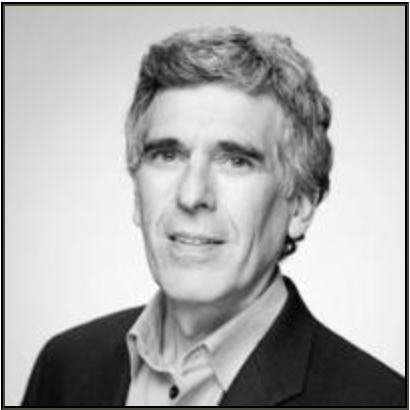
Norman Solomon is the national director of RootsAction.org and executive director of the Institute for Public Accuracy. The paperback edition of his latest book, War Made Invisible: How America Hides the Human Toll of Its Military Machine, includes an afterword about the Gaza war.
ZNetwork is funded solely through the generosity of its readers.
Donate




