


[Over an extended period ZNet has been publishing excerpts of chapters from Robin Hahnel’s latest book, Green Economics: Confronting the Ecological Crisis, available from M.E. Sharpe. Excerpts published here are not the full chapters which are made available inside the book. More information about the book and links to purchase it are below. Or, if you want, first, go to previous excerpts: Introduction / Chapter 1 / 2 / 3 / 4 / 5 / 6 / 7 / 8 / 9]
Unfortunately, there is no grand synthesis for analyzing economics and the environment. There are useful insights from mainstream economics when its theories are properly interpreted, and ecological economics and several other heterodox schools of economic thought provide important ideas as well. However, every theoretical framework for analyzing the relations between our economic activities and the natural environment remains incomplete and flawed. As a result, there is no single place to turn for someone seeking to understand what is necessary to protect the environment in ways that are effective and fair. Green Economics does not pretend to provide the grand synthesis that, unfortunately, still lies beyond our reach. However, those who struggle to protect the environment can ill afford to wait for a grand synthesis. Green Economics gathers together useful insights available from many sources and dispels debilitating myths independent of origin….
The three brief sections that follow in this introduction offer a glimpse of where mainstream economics can be helpful, where mainstream economics can be misleading, and where heterodox ideas can provide important insights but also create unnecessary confusion.
What If 250 Years Ago . . .
. . . Americans had put a price on carbon?…. Significant mispricing, combined with path dependency goes a long way toward explaining why “king coal” won out over solar power in the United States, leading us in 2007 to produce 48.5 percent of our electricity by burning coal but only .015 percent from solar thermal and photovoltaic sources.
When You Ask the Wrong Question . . .
. . . you get the wrong answer…. This is why mainstream environmental economic modelers can erroneously conclude that taking strong measures now to avert climate change is not “cost-effective,” while climate scientists warn us correctly that failure to reduce greenhouse gas emissions immediately and dramatically would be tomfoolery. When people feel safe and secure, it makes sense to weigh the costs and benefits of doing a little more or less of something. And if some outcomes are unlikely to occur, it makes good sense to ignore these improbable outcomes provided their consequences do not dwarf those of more probable outcomes. In effect, this is what mainstream economic climate modelers do when they estimate the benefits of avoiding the effects of only mild to moderate climate change, which is most likely, discount those benefits since they will occur many decades in the future, and then conclude that the discounted benefits do not warrant the cost of significant emissions reductions in the present. They have answered the wrong question. They have ignored the main fact, which is that absent any serious response we run an unacceptable risk of inducing cataclysmic climate change, and until we are safe we can ill afford to be weighing pros and cons of tolerating a little more or less mild climate change. Climate scientists have answered the right question, which is: “How much do we have to reduce emissions now to reduce the risk of cataclysmic climate change to an acceptable level so we can feel reasonably safe?”
Growth of What?
Economists have long worshipped at the altar of economic growth. If economists had a motto, it would likely be “A rising tide raises all boats.” Not long ago a dissident group of ecological economists issued a blunt challenge to this conventional wisdom: “Infinite growth on a finite planet is impossible.” It was a showstopper, although the cast in the mainstream economics show paid it little attention…. Ecological economists have done a great service by issuing their bold challenge. However, it is important to ask “growth of what” when considering this issue. Much time has been wasted because people have been talking past each other and talking about the growth of very different things. What ecological economists call throughput and insist correctly cannot continue to grow is not the same as the gross domestic product that mainstream economists talk about growing. In the shouting match that has ensued, important issues that we need to explore have been pushed into the background.
Green Economics: Confronting the Ecological Crisis by Robin Hahnel is available from M.E. Sharpe.
To purchase the print edition please click here.
To order 180-day online access from the Sharpe E-text Center click here.
Coming soon from Google eBookstore and Barnesandnoble.com.

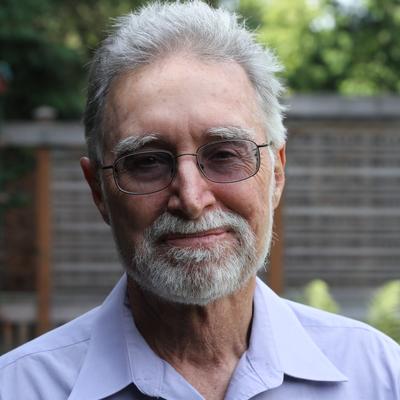
Robin Hahnel is a radical economist and political activist. He is Professor Emeritus at American University in Washington, D.C. where he taught in the Economics Department from 1976 – 2008. He is currently a visiting professor in economics at Portland State University in Portland, Oregon, where he resides with his family. His work in economic theory is informed by the work of Thorstein Veblen, John Maynard Keynes, Karl Polanyi, Pierro Straffa, Joan Robinson, and Amartya Sen among others. He is best known as co-creator, along with Michael Albert, of a radical alternative to capitalism known as participatory economics, (or parecon for short). His more recent work is focused on economic justice and democracy, and the global financial and ecological crisis. Politically he considers himself a proud product of the New Left and is sympathetic to libertarian socialism. He has been active in many social movements and organizations over forty years, beginning with the Harvard and MIT SDS chapters and the Boston area anti-Vietnam war movement in the 1960s.
ZNetwork is funded solely through the generosity of its readers.
Donate




