


The International Labour Organisation’s World Employment Social Outlook for 2015 suggests that the employment situation is going to be very bleak in the next year. In 2014, the global unemployment number was at 201 million. The ILO predicts that this will rise by three million in 2015, and then by an additional eight million in the next four years. Starkly, “The youth unemployment rate is practically three times higher than is the case for their adult counterparts.”
Oxfam’s new report suggests that the top 1 percent of the world’s population owns half of the world’s wealth. This was already noted in a Credit Suisse report, and had been the subject of Thomas Piketty’s celebrated Capital.
Dramatically, Oxfam shows that the wealth of the richest eighty people doubled between 2009 and 2014, and now equals the total wealth of the bottom half of the world’s population.
We live in a more unequal world, with growth rates at sluggish levels and fewer job prospects for the unemployed.
Jobs or jihad.
A few months ago, in the borderlands between Syria and Lebanon I met a group of al-Nusra Front fighters. One of them interested me – he was a young man from Tripoli, Lebanon, with an interest in engineering. Why did you join these fighters, I asked him earnestly? If I had a job, he said, I wouldn’t do jihad. Much the same kind of reaction came in Iraq’s Anbar province, where a combination of alienation and joblessness continues to push people into the arms of the most ferocious and dangerous political formations.
The ILO is not unaware of the social consequences of the ‘Great Divides’ in our planet.
“Social unrest is particularly acute in countries and regions where male youth unemployment is high or rising rapidly,” says the study. “These tendencies are compounded in countries where educated young people cannot find satisfactory opportunities – as in the case of many Middle Eastern and North African countries.”
The unemployment rate in the Arab world is now higher than it was in 2010-11, when joblessness was one of the spurs of the Arab Spring uprisings. Slogans such as ‘aish, hurreya, ‘adalah egtema’eyah, karama insaniyah (Bread, Freedom, Social Justice, Human Dignity) tore through the air. They took their measurement from the bleak social conditions – and the political stranglehold both in local and international terms that prevented any forward movement. Those voices have been smothered. The social conditions that produced them remain.
Escape
The elites at Davos have no answers to these problems. Oxfam’s report presents a nine-point plan to exit the crisis.
Make governments work for citizens and tackle extreme inequality.
- Promote women’s economic equality and women’s rights.
- Share the tax burden fairly to level the playing field.
- Close international tax loopholes and fill holes in tax governance.
- Achieve universal free public services by 2020.
- Change the global system for research and development and pricing of medicines so that everyone has access to appropriate and affordable medicines.
- Implement a universal social protection floor.
- Target development finance at reducing inequality and poverty, and strengthening the compact between citizens and their government.
This Oxfam list emerges firmly out of a social democratic tradition. It calls for the use of the hoarded social wealth to be used for social gain. These gains would produce a society that is not only happier but also with increased purchasing power – the impetus for a more socially oriented growth trajectory.
While this list is humane and even necessary, the social forces able to seriously push for this list are few. Oxfam’s report contains an important section on the lobbying efforts of the rich to maintain the current policies. Money buys political influence and prevents any reasonable discussion on inequality and joblessness. It is far easier to sequester the social wealth, stand aghast when social unrest intensifies, and then use armed forces to sow ferment in the already devastated lives of the world’s people.
The Nusra Front attracts young men whose dissatisfaction with this world is shared by young women. But they do not walk in the same road. The difference between the dynamic of Tahrir and the dynamic of extremism is that the former attracted men and women, young and old, drawing from the deep well of discontent to produce new dreams for a future. The latter, these narrow confines of jihadism, have a much less generous vision of the present and the future.
The allies of jihadism are not so much the people, but the shining elites of Davos – both thrive in this current disorder. Power suffocated the Tahrir dynamic from al-Hawija (Iraq) to Rabaa al-Adawiya (Egypt). They could not let it thrive. The forces of Tahrir are aliens to the present; they live and struggle here to produce a future. It might seem impossible now, but so do most good things.

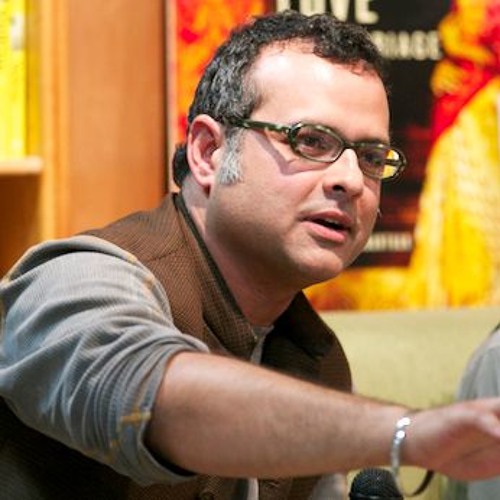
Vijay Prashad is an Indian historian, editor, and journalist. He is a writing fellow and chief correspondent at Globetrotter. He is an editor of LeftWord Books and the director of Tricontinental: Institute for Social Research. He is a senior non-resident fellow at Chongyang Institute for Financial Studies, Renmin University of China. He has written more than 20 books, including The Darker Nations and The Poorer Nations. His latest books are Struggle Makes Us Human: Learning from Movements for Socialism and (with Noam Chomsky) The Withdrawal: Iraq, Libya, Afghanistan, and the Fragility of U.S. Power. Tings Chak is the art director and a researcher at Tricontinental: Institute for Social Research and lead author of the study “Serve the People: The Eradication of Extreme Poverty in China.” She is also a member of Dongsheng, an international collective of researchers interested in Chinese politics and society.
ZNetwork is funded solely through the generosity of its readers.
Donate




