


He told his 3,000-strong audience that the Obama administration now understood that Israel’s prime minister, Binyamin Netanyahu, was not serious about a two-state solution.McDonough received loud applause for this line: “An occupation that has lasted for almost 50 years must end, and the Palestinian people must have the right to live and govern themselves in their own sovereign state.”
It says a great deal about US amnesia on Palestine that this line was seen as a departure from established policy.
McDonough’s statement was in line with the November 1967 UN resolution 242 – to move Israeli forces back to the borders of June 4, 1967. When confronted by the resolution, the then US secretary of state, Dean Rusk, wrote that it was acceptable to the US but would lead to a “tangle with the Israelis”.
This will not change. Any anticipation that the US will not wield its veto to defend Israel’s actions – especially its illegal actions – is rooted in fantasy.
Too many incidents come to mind to illustrate the US rush to protect Israel at international organisations. There is a pattern of US disparagement of any UN investigation into Israeli war crimes or Israeli violations of UN resolutions. Whereas the recent US ambassadors to the UN – Susan Rice and Samantha Powers – are self-declared champions of the “responsibility to protect” doctrine and of human rights, they have stood on the side of the aggressors and violators of human rights when it comes to Palestine.
Throughout the 2014 Israeli attack on Gaza, Power could only express her concern about “the rocket attacks by Hamas” and defend “Israel’s right to defend itself”. At no point did she speak of the violence against the Palestinians.
These statements by Power came at the same time as UN officials in Gaza reported targeted attacks on UN institutions – including schools and hospitals. There was no US criticism of the harsh violence visited upon families, with the death and mutilation of children passing without comment.
On the contrary, the US mission to the UN did its best to assist the Israeli ambassador, Ron Prosor, in his disinformation campaign. US pressure to prevent an investigation of war crimes in Gaza remains intense, with every expectation that the commission will not be able to do its work.
In February of this year, the initial chairman of the commission of inquiry, William Schabas, was pressed to resign for his comments about the Israeli occupation. The commission now has two members – the new chairwoman, Mary McGowan Davis, and Doudou Diene. On March 23, the new chairwoman complained that Israel has not answered any letters that requested permission to enter the Occupied Territories to conduct their investigation.
Unable to do its work properly, the commission will find it difficult to produce the kind of forensic report needed to frame charges. There is no UN Security Council pressure on Israel to allow this high-level UN panel to enter the Occupied Territories – as there was no pressure to force Israel to let the Goldstone Commission to do its work in 2009.
Palestine’s Children
During the Israeli bombing of Gaza, the UN special representative for children, Leila Zerrougui, made a series of strong statements. On July 30, 2014, Zerrougui said: “There are no safe places for the children of Gaza.”
She pointed out that there were too many children among the dead civilians, too many injured, too many damaged by the dislocation and uncertainty. “The children,” she said, “are bearing the brunt of the conflict.”
When the war ended, Zerrougui pointed out that Israel’s bombing had destroyed 244 schools, of which 75 were run by the UN refugee agency, UNRWA.
Zerrougui told a security council meeting: “We have witnessed more powerful combat in the current operation than in the two previous campaigns together. I am appalled by the fact that since the beginning of July, over 500 Palestinian children have been killed and at least 3106 have been injured by the Israeli military – two-thirds of them being under the age of 12 and one third paralysed for life.”
In 2007, Unicef led a working group in the Occupied Territories to monitor violations against children’s rights. The group included al-Mezan Centre for Human Rights, Save the Children, Defence for Children International-Palestine, B’Tselem, Palestinian Centre for Human Rights, War Child Holland, and a host of UN agencies.
After the 2014 war, this working group began collecting information on children harmed in the Gaza war, basing their investigation on UN resolution 1612 of 2005.
This information is to be sent to the office of Zerrougui, whose annual report on children and armed conflict lists state and non-state actors that have violated the rights of children through conflict. The data shows that Israel should be added to the list in Zerrougui’s report, due in June.
Every indication exists that Kunugi and other heads of UN agencies in Gaza and the region are eager to put additional pressure on Israel. But the political equation is against them, as was evident when they cancelled the February 13 meeting.
Zerrougui’s office said that no final decision has been made about who to place on the list of state and non-state actors who violate children’s rights in conflict.
If Israel is added to that list it would sit beside Boko Haram, the Islamic State group and the Taliban. Farhan Haq at the UN secretary-general’s office said that the “decision on listing or de-listing nations belongs to the secretary-general, Ban Ki-moon.”
There will be no final decision before June.
What will Ban do?
On the surface, the cancellation of the February meeting in Jerusalem implies that Israel has the upper- hand here. Despite McDonough’s speech at J-Street, there is no indication that the US would not shield Israel, yet again, from criticism.
Nonetheless, there is a silver lining here.
On 5 March and 7 April, Israel’s ambassador, Prosor, sent strong letters to the UN secretary-general asking for the removal of Rima Khalaf, the head of the UN Economic and Social Commission for West Asia (ESCWA).
Prosor’s vitriolic letter responded to ESCWA’s report on Arab integration, which criticised Israel for its ethno-nationalism. He accused her of “demonising Israel” and demanded her resignation.
Khalaf was up for reappointment, and could quite easily have been asked to step aside. But Ban renewed her term, and – according to UN officials – told her he has “full confidence” in her work.
Would Ban be able to act on behalf of the fact-based assessments of his own staff, as he did with Khalaf, or would he bend to the Israel’s US firewall? One hopes for the former, but should be prepared for the latter.

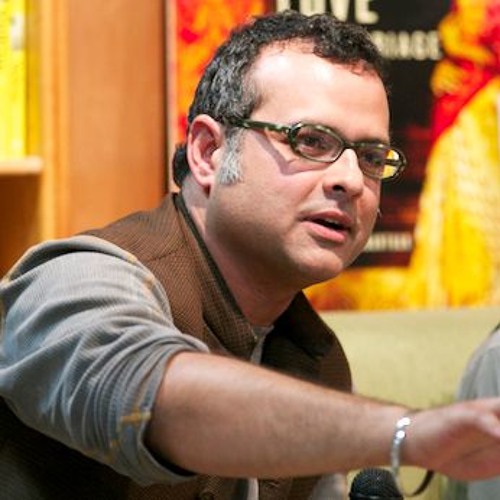
Vijay Prashad is an Indian historian, editor, and journalist. He is a writing fellow and chief correspondent at Globetrotter. He is an editor of LeftWord Books and the director of Tricontinental: Institute for Social Research. He is a senior non-resident fellow at Chongyang Institute for Financial Studies, Renmin University of China. He has written more than 20 books, including The Darker Nations and The Poorer Nations. His latest books are Struggle Makes Us Human: Learning from Movements for Socialism and (with Noam Chomsky) The Withdrawal: Iraq, Libya, Afghanistan, and the Fragility of U.S. Power. Tings Chak is the art director and a researcher at Tricontinental: Institute for Social Research and lead author of the study “Serve the People: The Eradication of Extreme Poverty in China.” She is also a member of Dongsheng, an international collective of researchers interested in Chinese politics and society.
ZNetwork is funded solely through the generosity of its readers.
Donate





1 Comment
Concerning the information that is to be sent to the UN office of Zerrougui, whose annual report on children and armed conflict lists state and non-state actors which have violated the rights of children through conflict.in which the data demonstrates that Israel should be added to the list in Zerrougui’s report, due in June, Un Secreary General Ban Ki Moon must demonstrate the moral courage and political will to act upon the the fact-based assessments of his own staff, as he did with the re-appointment of Rima Khalaf, as the head of the UN Economic and Social Commission for West Asia (ESCWA), rather than capitulate to the pressure of Israel and the US that the UN should not add Israel to the list. Ban Ki Moon and the UN must do so and stand firm in order to preserve the UN’s moral legitimacy, stature, and reputation. In doing so, the UN would become strengthened as a global force and vehicle for world peace, justice, and dignity.