

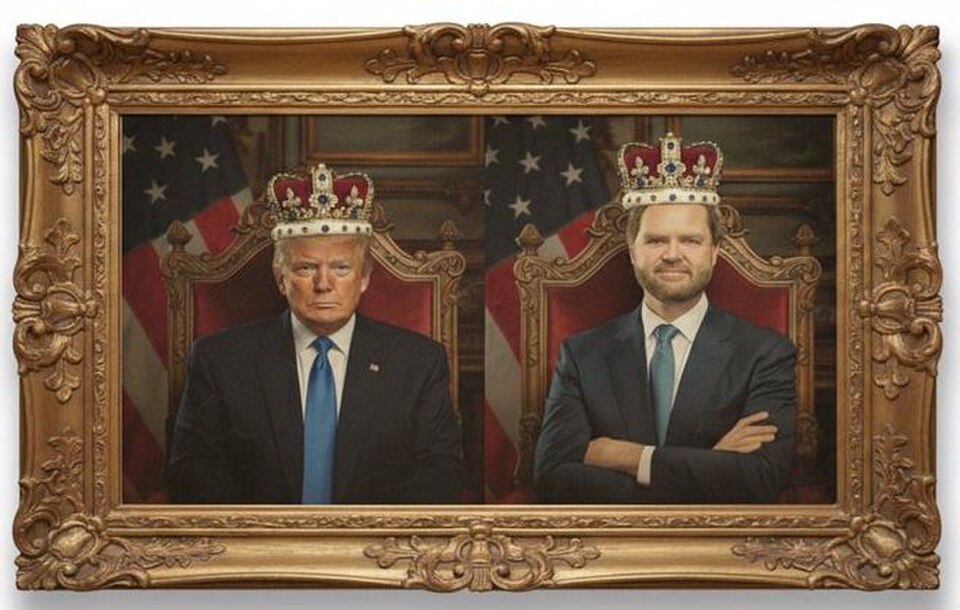
The Political Economy of Familial Power Reproduction in Peripheral Rentier Capitalism
Why do some republics, without formally abandoning their constitutions, gradually develop the political logic of hereditary rule? How do institutions built around elections, republicanism, and the rule of law begcome mechanisms for reproducing power within a family or a narrow circle of political, military, and economic elites?
This article argues that the emergence of what can be called “hidden monarchy” is not primarily the result of individual ambition, cultural traditions, or institutional weakness alone. Rather, it is rooted in a specific political economy: the combination of rentier capitalism, neo-patrimonial state structures, weak independent class organizations, and the subordinate position of peripheral states within the global capitalist system.
In sections of the global periphery, the republican form remains intact while the substance of political power increasingly follows a hereditary logic. The state becomes the central instrument for organizing rent accumulation, distributing privileges, and maintaining dominant class coalitions. Under these conditions, the personalization and familial reproduction of power become mechanisms for preserving existing economic and political arrangements.
The phenomenon is not universal among peripheral states, nor is it historically inevitable. Rather, it represents a structural tendency that emerges under particular conditions: concentrated economic rents, militarized political structures, weak social institutions, and dependency within the global capitalist order.
Introduction
Why do some republics gradually transform into systems governed by hereditary political logic without ever formally becoming monarchies? How do institutions that appear to be based on elections, republican legitimacy, and constitutional procedures become mechanisms for transferring power within a ruling family or a restricted network of elites?
These questions cannot be answered solely through explanations based on political culture, the personality of individual rulers, or the absence of democratic institutions. The roots of this transformation must be examined through the political economy of the state, the structure of class relations, and the position of these societies within global capitalism.
In parts of the global periphery, particularly among rentier, militarized, and neo-patrimonial states, the republican form has gradually become hollowed out from within. These systems retain constitutions, elections, and formal republican institutions, but the actual organization of power increasingly operates through networks of personal loyalty, family connections, military influence, and economic privilege.
This article refers to this phenomenon as “hidden monarchy”: a political form in which republican institutions remain formally present while the underlying logic of power increasingly resembles hereditary rule. “Hidden monarchy” is used here as a Weberian ideal type for analytical purposes.
This process should not be generalized to all peripheral societies. Countries such as India, Brazil, Chile, Uruguay, South Africa, and Indonesia continue to experience political transitions largely through republican institutions, despite their own social inequalities and crises. Hidden monarchy is therefore not an inevitable destiny of peripheral capitalism, but a structural tendency within a specific group of states where rentier economies, concentrated coercive institutions, weak independent class organizations, and external dependency create favorable conditions.
The central argument is that familial reproduction of political power emerges from a broader political-economic structure in which the state becomes the primary instrument for organizing rent accumulation, distributing privileges, and preserving dominant coalitions.
Literature Review and Theoretical Positioning
Previous scholarship has examined similar phenomena through concepts such as Personalist Regimes (Geddes, 1999), Neopatrimonialism (Bratton & van de Walle, 1997; Erdmann & Engel, 2007), Sultanism (Chehabi & Linz, 1998), Competitive Authoritarianism (Levitsky & Way, 2010), and studies on dynastic politics in authoritarian contexts (Herb, 1999; Brownlee, 2007). These works have provided valuable insights into the personalization of power and the blending of traditional authority with modern state institutions.
However, they have less systematically explained the specific process of hollowing out republican institutions from within and the familial reproduction of power as an integrated outcome of rentier political economy in the periphery. The concept of “hidden monarchy” seeks to fill this gap by offering a political economy framework that links rentier accumulation (Mahdavy, 1970; Beblawi & Luciani, 1987), neo-patrimonial governance, and the dynamics of peripheral capitalism within the global system.
Theoretical Framework: Rentier States, Neo-Patrimonialism, and Peripheral Capitalism
The analytical model can be summarized as follows:Rentier economy → Financial independence of the state from society → Weakened accountability → Concentration of personal loyalty networks → Personalization of power → Familial/dynastic reproduction (hidden monarchy).
- Rentier State (condition): Primary revenues from external rents rather than domestic taxation.
- Neo-patrimonialism (organizational form): Modern institutions coexisting with personal, familial, and loyalty-based authority.
- Hidden Monarchy (political outcome): Republican facade with hereditary logic of power.
This framework draws inspiration from the relative autonomy of the state in Poulantzas, Gramsci’s concepts of passive revolution and Caesarism, and Marx’s observations on the Asiatic mode of production as a historical root in certain regions (used cautiously).
Difference with Classical Monarchies
In classical monarchies (e.g., Persian Gulf states), succession is overt, legally codified, and legitimated by tradition or religion. In hidden monarchies, succession occurs within a formally republican framework through elections, constitutional maneuvers, or elite consensus. This creates a distinct form of legitimacy while sharing the concentration of power and rent control.
Case Studies
Classic Cases
Syria: Hafez al-Assad transformed the Ba’ath Republic into a dynastic system. Power transferred to Bashar al-Assad within formal institutions, but real authority remained with the family and loyal security networks. The civil war reinforced this structure.
Azerbaijan: Oil rents enabled the transfer from Heydar Aliyev to Ilham Aliyev. The republican form persists, but power, media, and economy are controlled by family-linked networks.
Togo and Gabon: Long-term familial rule in resource-rich African states exemplifies the rentier-neopatrimonial pathway.
Transitional/Incomplete Case
Iran: The Islamic Republic combines elected bodies with powerful unelected institutions. The leadership apparatus functions as a coordinating center for military, security, religious, and economic networks, including foundations and the IRGC. The IRGC acts as both a security and major economic actor. Discussions around succession reflect the strengthening of familial and network-based logic within a republican shell, though full hereditary transfer has not yet occurred. Elected institutions operate within limits set by deeper power structures.
Exceptional Case
North Korea: This deviates from the classic rentier model. It relies on a highly centralized party-military command economy, ideological control, and limited external rents. The three-generational transfer of power demonstrates strong patrimonial logic in a totalitarian structure. It serves as a boundary case highlighting both the broader applicability and limits of the rentier-centered framework.
Why Does This Occur Less Frequently in the Capitalist Core?
In advanced capitalist economies, powerful private capital enjoys autonomy, accumulation occurs through production and innovation, and institutions (courts, media, unions, professional military) maintain relative independence. These factors limit complete familial capture of the state. The contrast stems from uneven development in global capitalism, not cultural superiority.
Imperialism and the Preference for Stability over Democracy
Imperial powers often prioritize geopolitical stability, energy security, and investment protection over democratization when dealing with rentier and authoritarian regimes. This selectively reinforces hidden monarchies that align with core interests, though imperialism is not the root cause — domestic political economy remains primary.
Conclusion
Hidden monarchy should not be understood merely as a deviation from republicanism or the consequence of individual rulers’ ambitions. It represents the political expression of a specific economic structure: one in which the state becomes the primary mechanism for organizing rent accumulation, distributing privileges, and maintaining dominant class coalitions.
The republic survives as a legal form, but the underlying logic of power increasingly approaches that of monarchy.
From a Marxist perspective, challenging these structures requires more than replacing rulers or holding elections. It demands reducing dependence on extractive rents, strengthening productive economies, building independent working-class organizations, and transforming the social relations that sustain concentrated power.
Without independent organizations of workers and subordinate classes, democratic institutions remain vulnerable to capture by ruling elites.
Ultimately, hidden monarchy is one possible political form of peripheral rentier capitalism. Understanding it requires analyzing the relationship between the state, class power, and the unequal structure of global capitalism. Only through such an analysis can we grasp why some republics gradually become monarchies in everything but name — and why overcoming this tendency requires transforming the material foundations that produce it.
References(Beblawi, H., & Luciani, G. (1987). The Rentier State. Croom Helm; Bratton, M., & van de Walle, N. (1997). Democratic Experiments in Africa; Chehabi, H. E., & Linz, J. J. (1998). Sultanistic Regimes; Geddes, B. (1999). What Do We Know About Democratization?; Levitsky, S., & Way, L. (2010). Competitive Authoritarianism; Mahdavy, H. (1970). The Patterns and Problems of Economic Development in Rentier States; others as cited in the full bibliography.)
ZNetwork is funded solely through the generosity of its readers.
Donate




