


The United States and its allies continue to bomb northern Iraq and Syria. The purported target is the Islamic State (IS), whose territory stretches across the borders of the two countries. The Syrian Kurdish city of Kobane, a few 100 metres from the Turkish border, remains a key battleground of the current war. Kurdish fighters from the People’s Protection Units (YPG), supported by fighters from the Kurdish Workers’ Party (PKK), have been courageously holding the city against the superior firepower of IS fighters. U.S. aircraft have struck near Kobane, halting the advance of IS fighters temporarily. The U.S. Pentagon’s Rear Admiral James Kirby said air power is very limited and the air strikes “are not going to save” Kobane.
Turkish tanks remain on the Turkish side of the border. They refuse to allow YPG and PKK reinforcements to cross into Kobane. A town with little strategic value has nonetheless come to represent the fortitude of the Kurdish resistance against the IS on the one hand, and of Kurdish aspirations for autonomy on the other. ‘Diren Kobane’ (Save Kobane) is the slogan of Kurdish people across the region. Protests of Kurdish groups and the Turkish Left across Turkey were met with police force, whose actions killed over 30 people. Rather than come to the aid of the Kurdish fighters, the fighter jets of the Turkish air force bombed PKK positions in southeastern Turkey. In a flippant tone, Turkey’s President Recep Tayyip Erdog˘an said, “Hey world, when a terrorist organisation like IS emerges, you all speak out. But why do you not condemn PKK as a terrorist organisation?” The otherwise fruitful “Imrali Process” to end the insurgency by the PKK inside Turkey has now ended with these air strikes and Turkish intransigence on Kobane.
No clear political agenda
When U.S. President Barack Obama said that there is no strategy for the U.S. fight against IS in Syria, he was correct. The U.S. has no clear political agenda. Nor does the United Nations. The appointment of Staffan de Mistura to replace the highly accomplished Lakhdar Brahimi was an indicator that the U.N. had lost faith in the political process for Syria. As one former U.N. official told me, “de Mistura has a reputation for glad-handling, not for results.”
Even Mr. De Mistura broke the wall of diplomacy, comparing the situation in Kobane to the Bosnian city of Srebrenica, home of the 1995 killings. Mr. De Mistura called upon Turkey to open its borders to reinforce the fighters. With no easy political direction, the U.S. turned to a military solution — aerial bombing. But military solutions do not necessarily clarify the political complexity. Indeed, they seem to have made the politics unresolvable.
Three immediate political nudges might help move the confusion to clarity. It is unlikely that these would be adopted. Nonetheless, they could seed the germination of a short-term political process.
The first is Turkey and NATO. On September 10, Mr. Obama said IS is a threat to the U.S. According to Articles 5 and 6 of the Charter of NATO, a threat to one of the NATO members activates the members of the alliance to defensive action. Turkey is a member of NATO.
At a NATO council meeting, Turkey needs to be formally asked to take action to defend Kobane — and to degrade IS. NATO’s Secretary General Jens Stoltenberg said at a press conference on October 14 that NATO would come to the aid of Turkey if IS attacks across the border. But there was no mention of the declared threat to the U.S. by IS — the basis for the U.S. bombing raids in Iraq and Syria. At a NATO Council meeting, Turkey would be forced to clarify its position on IS. The U.S. would also have to clarify its bombings in Syria on behalf of the groups that Turkey is currently bombing in its southeast.
The second is Syria and the moderate opposition. The emir of Qatar went to Saudi Arabia to begin a process to resolve their differences over the next leader of the Syrian opposition. Both have candidates in the fray. Neither is willing to allow the Syrian opposition the freedom to build their political institutions. A former financier of the Syrian opposition, Mouataman al-Baba, told me that there is no chance for the creation of a fighting force for the moderate opposition in Syria. Other former leaders of the Syrian opposition say privately that they believe that the armed phase of their movement is substantially over.
The government of Bashar al-Assad is weakened. Syria, says one former leader, is “in danger of being lost permanently.” Residues of Syrian patriotism remain, and these leaders are eager but afraid to make a public declaration to the following effect — the armed struggle to bring democracy to Syria has failed, the Damascus government is weak and prepared to make concessions, and a united front of Syrians is required to fight the threat from IS.
Such a manoeuvre would remove the illusion that persists in Washington, Paris and London for a moderate armed force to take on both Mr. Assad and IS. That illusion keeps the door open for Saudi and Qatari funds to jihadi groups that are replicas of IS, although they have shut off the cameras to document their own barbarity.
The third is the Arab League. Threatened states such as Jordan and Lebanon could call the Arab League for an emergency session. In 2011, the Gulf Arab states suborned the Arab League to push for a strong resolution against the Libyan government whose troops they said threatened the civilian population of Benghazi. No such enthusiasm has come from the Arab League about the civilian populations of Iraq and Syria, now more than threatened by IS. The ambiguity of the Saudis and the Qataris has not been called to question. It is the case that Jordan and Lebanon would find unlikely allies in the Arab League — such as the United Arab Emirates and Oman — as well as countries such as Egypt and Algeria, who would put pressure on the Gulf Arabs to clarify their intentions.
These three manoeuvres do not themselves indicate a transparent politics. They are simply initiatives that would force the currently muddy political environment to some clarity. Political mendacity threatens to continue this prolonged bleeding of West Asia. The cynicism of leading political figures in the West is breathtaking. U.S. Secretary of State John Kerry admitted, “Kobane is a tragedy” but then said that “it has nothing to do with American strategy in the region.” The integrity of the idea of humanitarian intervention by the West is threadbare. It has demonstrated that when the politics is inconvenient it will not make noises about the responsibility to protect citizens. Other means are needed. Other unconventional ideas are necessary. It is time to refine the politics that otherwise disable any hope for Syria.
(Vijay Prashad is the author of The Poorer Nations: A Possible History of the Global South.)

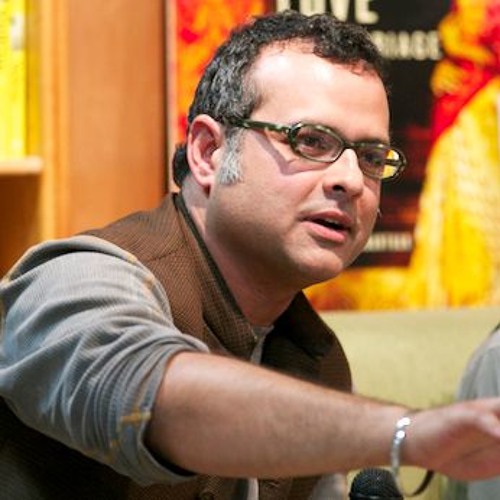
Vijay Prashad is an Indian historian, editor, and journalist. He is a writing fellow and chief correspondent at Globetrotter. He is an editor of LeftWord Books and the director of Tricontinental: Institute for Social Research. He is a senior non-resident fellow at Chongyang Institute for Financial Studies, Renmin University of China. He has written more than 20 books, including The Darker Nations and The Poorer Nations. His latest books are Struggle Makes Us Human: Learning from Movements for Socialism and (with Noam Chomsky) The Withdrawal: Iraq, Libya, Afghanistan, and the Fragility of U.S. Power. Tings Chak is the art director and a researcher at Tricontinental: Institute for Social Research and lead author of the study “Serve the People: The Eradication of Extreme Poverty in China.” She is also a member of Dongsheng, an international collective of researchers interested in Chinese politics and society.
ZNetwork is funded solely through the generosity of its readers.
Donate




