


The most fluid arena in the modern world-system, which is in structural crisis, is arguably the geopolitical arena. No country comes even near to dominating this arena. The last hegemonic power, the United States, has long acted like a helpless giant. It is able to destroy but not to control the situation. It still proclaims rules that others are expected to follow, but it can be and is ignored.
There is now a long list of countries that act as they deem fit despite pressures from other countries to perform in specified ways. A look around the globe will readily confirm the inability of the United States to get its way.
The two countries other than the United States that have the strongest military power are Russia and China. Once, they had to move carefully to avoid the reprimand of the United States. The cold-war rhetoric described two competing geopolitical camps. Reality was different. The rhetoric simply masked the relative effectiveness of U.S. hegemony.
Now it is virtually the other way around. The United States has to move carefully vis-à-vis Russia and China to avoid losing all ability to obtain their co-operation on the geopolitical priorities of the United States.
Look next at the so-called strongest allies of the United States. We can quibble about which one is the “closest” ally, or had been for a long while. Take your pick between Great Britain and Israel or even, some would say, Saudi Arabia. Or make a list of erstwhile reliable partners of the United States, such as Japan and South Korea, Canada, Brazil, and Germany. Call them “number two’s.”
Now look at the behavior of all these countries in the last twenty years. I say “twenty” because the new reality predates the regime of Donald Trump, although he has undoubtedly worsened the ability of the United States to get its way.
Take the situation on the Korean peninsula. The United States wants North Korea to renounce nuclear weapons. This is a regularly repeated objective of the United States. This was true when Bush and Obama were president. It has continued to be true with Trump. The difference is the mode of seeking to achieve this objective. Previously, U.S. actions utilized a degree of diplomacy in addition to sanctions. This reflected the understanding that too many U.S. public threats were self-defeating. Trump believes the opposite. He sees the public threats as the basic weapon in his armory.
However, Trump has different days. On day one he menaces North Korea with devastation. But on day two he makes his primary target Japan and South Korea. Trump says they are providing insufficient financial support for the costs deriving from a continuing armed U.S. presence there. So, in the to and fro between the two U.S. positions, neither Japan nor South Korea have the sense that they are sure to be protected.
Japan and South Korea have dealt with their fears and uncertainty in opposite ways. The current Japanese regime seeks to secure U.S. guarantees by offering total public support of the (shifting) U.S. tactics. It hopes thereby to please the United States sufficiently that Japan will receive the guarantees it wants to have.
The current South Korean regime is using a quite different tactic. It is pursuing very openly closer diplomatic relations with North Korea, very much against U.S. wishes. It hopes thereby to please the North Korean regime sufficiently that North Korea will respond by agreeing not to escalate the conflict.
Whether either of these tactical approaches will stabilize the U.S. position is totally unsure. What is sure is that the United States is not in command. Both Japan and South Korea are quietly pursuing nuclear armaments to strengthen their position since they cannot know what the next day will bring on the U.S. front. The fluidity of the U.S. position weakens further U.S. power because of the reactions it generates.
Or take the even more knotty situation in the so-called Islamic world going from the Maghreb to Indonesia, and particularly in Syria. Each major power in the region (or dealing with the region) has a different prime “enemy” (or enemies). For Saudi Arabia and Israel, it is at the moment Iran. For Iran it is the United States. For Egypt it is the Muslim Brotherhood. For Turkey it is the Kurds. For the Iraqi regime, it is the Sunnis. For Italy, it is Al Qaeda, which is making it impossible to control the flow of migrants. And so on.
How about for the United States? Who knows? That is the nub of fear for everyone else. The United States seems at the moment to have two quite different priorities. On day one, it is North Korean acquiescence with U.S. imperatives. On day two it is ending U.S. involvement in the East Asian region, or at least reducing its financial outlays. As a result, it is increasingly ignored.
We could draw similar pictures for other regions or sub-regions of the world. The key lesson to draw is that the decline of the United States has not been followed by another hegemon. It has simply folded into the overall chaotic zigzagging, the fluidity of which we spoke.
This of course is the great danger. Nuclear accidents, or mistakes, or folly suddenly become what is on top of everyone’s mind, and especially that of the world’s armed forces. How to deal with this danger is the most meaningful short-term geopolitical debate.

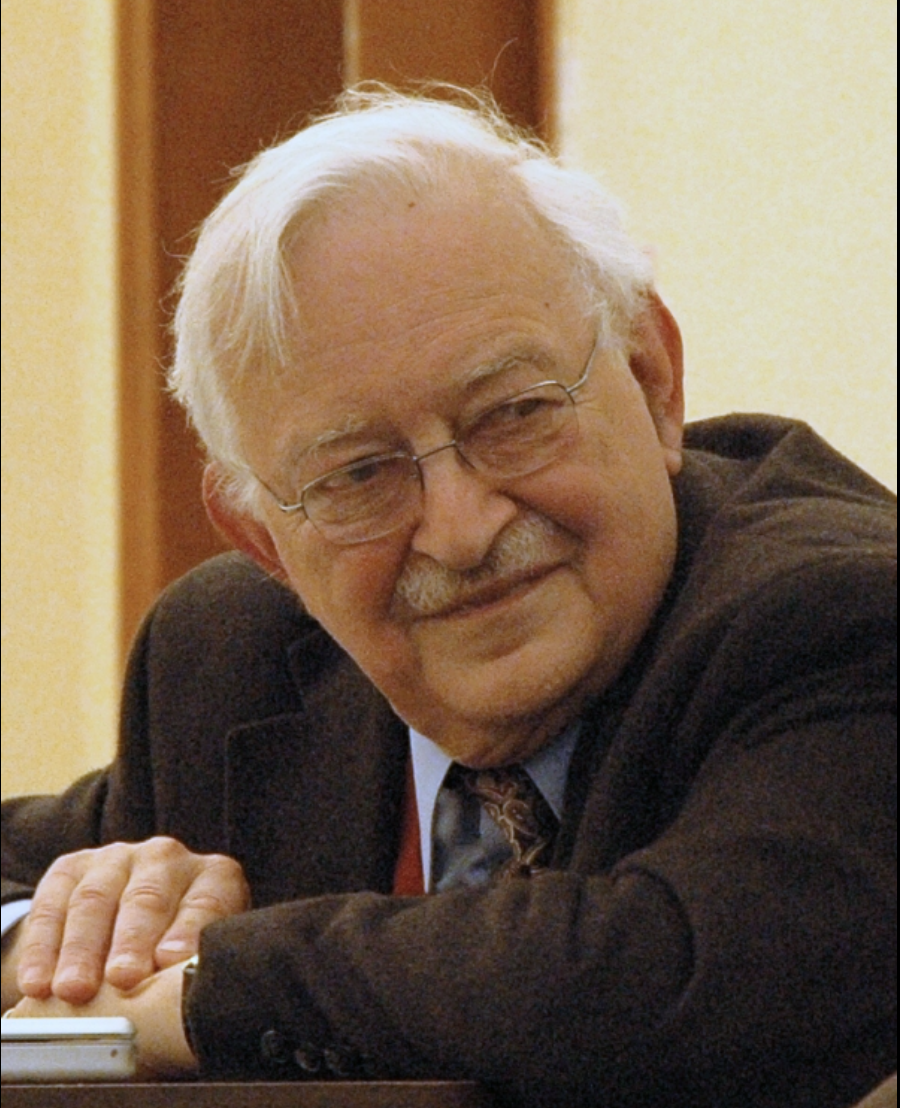
Immanuel Wallerstein (September 28, 1930 – August 31, 2019) was an American sociologist and economic historian. He is perhaps best known for his development of the general approach in sociology which led to the emergence of his world-systems approach. He was a Senior Research Scholar at Yale University from 2000 until his death in 2019, and published bimonthly syndicated commentaries through Agence Global on world affairs from October 1998 to July 2019. He was the 13th president of International Sociological Association (1994–1998). Politically, he considered himself on the "independent left" and was active in a variety of organizations. He argued that we are in the transition from our existing capitalist world-economy to some new system, and that the great political struggle of our time is about which new kind of systemic order will replace our existing one. A new systemic order could be better or worse, depending on our collective ability to push the worldwide decision in one direction or another. He believed that a crucial element in this is a vast debate about the kind of better system we wish to build, and saw the Reimagining Society Project as one of the ways to further this collective debate.
ZNetwork is funded solely through the generosity of its readers.
Donate




