


For many years there have been various “Palestinian Gandhis” leading nonviolent struggles to gain rights while under Israeli occupation. Ayed Morrar led his Budrus villagers to a victory to save their olive groves, their way of life, when the Israeli Defense Force was ordered to push a wall through. Or Mubarak Awad, Palestinian nonviolence leader and founder of Nonviolence International–a man still calling for nonviolent struggle.
There have also been “Israeli John F. Kennedys” leading that country to peace and justice with Palestinians. Think of Israeli Prime Minister Yitzhak Rabin, signed the Oslo Accords to bring a negotiated peace with Yasser Arafat, Palestinian leader. Or two generations of Israelis who work through Peace Now and have been for 55 years.
And yet…
Literally every time gains toward peace, justice, and nonviolence looked promising, someone from the most aggrieved and trauma-warped groups made sure to be spoilers by committing some atrocity and resetting the hate and violence.
A rightwing Israeli assassinated Rabin at a 1995 peace rally, for godsakes. More than 100,000 people, jubilant, came to celebrate peace in Tel Aviv. One embittered hard-right Israeli turned it to grief and tragedy.
Hamas blew up a bus full of innocents in the wake of the Oslo Accords.
To traumatized people, these acts were enough to send them straight back to justified retaliation, a deeper hate, a confirmation that “those ones” were not even human.
Hamas leaders and hate-filled Palestinian journalists have been known to lament that “Hitler didn’t finish the job.”
Israeli school texts have frequently characterized Palestinians as savage beasts.
While a trauma-informed analysis tells us that atrocities tend to replicate more and more frequently and with more ferocity, analysts also know that none of that retributive violence accomplishes peace, nor justice. Palestinian Mohammed Abu-Nimer noted this week:
“Have we not learned the lesson that violence and killing will not lead to peace and security?
Giving people space for freedom to live in dignity and security has been the foundation for peace among humans since they began walking this earth.”
Logic is prized in military strategy. But there is this logic gap that is perennially overcome and overrun by vengeance and the juvenile “He started it!” back and forth.
In the case of Israel and Palestine, can there be a total commitment to nonviolence by one side, a commitment that may overcome the legacies of hate?
It happened in the US Civil Rights movement for a decade, 1955-1965, when southern African Americans practiced strategic, disciplined nonviolent resistance to segregation. Lives were lost, discipline was maintained for a decade, and a long string of significant victories were the result.
Israelis descended from a people who were genocided by the Nazis. Yet no one in Israel or Palestine can claim more suffering and more reason for violent uprising than African Americans, after hundreds of years of chattel slavery, murder at the whims of slave owners or police, and structural racism that produces poverty and misery. And yet the unity and disciplined commitment to nonviolence for a decade was the powerhouse that won again and again.
It happened in Serbia in the late 1990s, when a culture used to horrific genocidal attempts, unspeakable acts of vengeance, and long, long grudges instead committed to a nonviolent uprising that in fact deposed the dictator. He was a dictator who oversaw rape camps, the slaughter of 7500 unarmed Muslim men and boys, and unspeakable torture of innocents. Everyone “knew” that nonviolence was a fool’s errand in the Balkans. Then it won.
What of South Africa, where legions of brilliant political analysts were certain in the 1980s that a bloodbath was inevitable? Instead, the poorest of the poor, youth in townships, joined with moral leaders like Archbishop Desmond Tutu and waged disciplined nonviolent struggle that freed Mandela and ended apartheid without the widely predicted civil war.
Not to mention the women of Liberia, in a most daring and disciplined display of nonviolent power, rose up and ended a godawful civil war of child soldiers, rape, and genocide. No one saw that coming.
So it’s ultimately up to a people. Do we accept that war and violence is inevitable? Do they justify themselves with tales of trauma and atrocity?
Often, yes. But not always. Humans choose. It’s what we do.
Dr. Tom H. Hastings, PeaceVoice Senior Editor, is Coördinator of Conflict Resolution BA/BS degree programs and certificates at Portland State University.

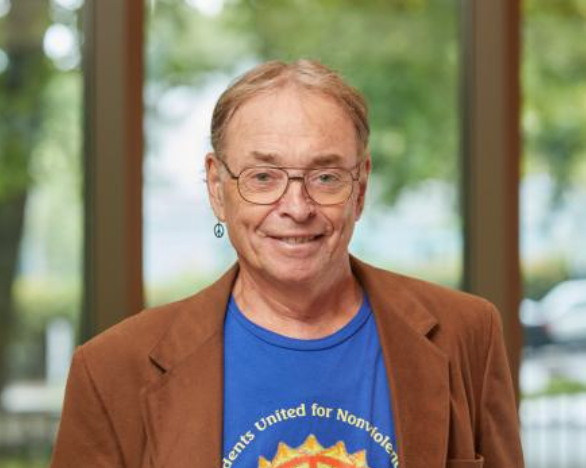
Dr. Tom H. Hastings is Coördinator of Conflict Resolution BA/BS degree programs and certificates at Portland State University, PeaceVoice Senior Editor, and on occasion an expert witness for the defense of civil resisters in court.
ZNetwork is funded solely through the generosity of its readers.
Donate




