


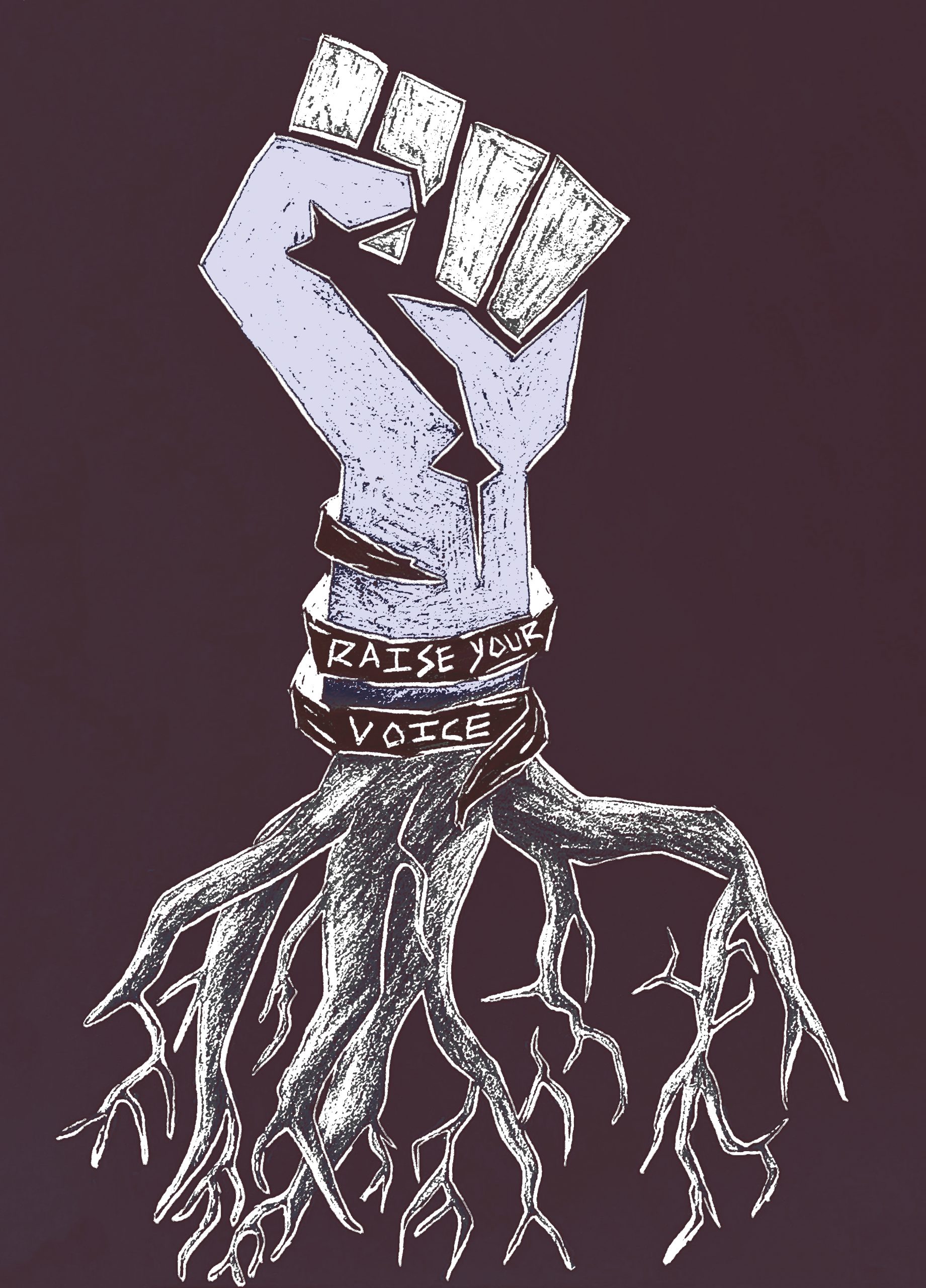
Governments tend to define democracy as narrowly as possible. The story they tell goes as follows. You vote. The majority party takes office. You leave it to govern on your behalf for the next four or five years. If you don’t like one of its policies, you can petition your representative, who will put their own ambitions, party loyalty and pressure from powerful interests aside to ensure that your voice is heard.
We can trust the government to spend our money wisely; to defend minorities against larger or more powerful groups; to resist undemocratic forces such as oligarchs, the media they control and corporate lobby groups. We can trust it to ensure that everyone’s needs are met; that workers are not exploited; that our neighbourhoods and quality of life are not sacrificed to corporate profits. We can trust it not to abuse the political process; not to wage wars of aggression against other nations; not to break the law. There cannot be many people who have lived in the UK – or many other nations – for the past few years and still believe this fairytale.
We have seen what happens if we leave politics to governments. Whether fairly elected or not, they will, without effective public pressure, abuse their power. They will seek to change the political rules to favour their party at the next election. They will subordinate the public interest to the interests of corporations and billionaires. They will hand public money and public assets to court favourites. They will beat up vulnerable groups. They will sacrifice our common future to expediency. And they will impose ever more oppressive laws to bind us.
Trust in governments destroys democracy. Democracy survives only through constant challenge. It requires the endless disruption of the cosy relationship between our representatives and powerful forces: the media, plutocrats, political donors, friends in high places. What challenge and disruption mean, above all, is protest.
Protest is not, as governments like ours seek to portray it, a political luxury. It is the bedrock of democracy. Without it, scarcely any of the democratic rights we now enjoy would exist: the universal franchise; votes for women; civil rights; equality before the law; legal same-sex relationships; progressive taxation; fair conditions of employment; public services and a social safety net. Even the weekend is the result of protest action: in this case strikes by garment workers in the US. A government that cannot tolerate protest is a government that cannot tolerate democracy.
Governments that cannot tolerate democracy are becoming a global norm. In the UK, two policing bills in quick succession seek to shut down all effective forms of protest. They enable the police to stop almost any demonstration on the grounds that it is causing “serious disruption”, a concept drafted so loosely that it could include any kind of noise. They would ban locking on: chaining yourself to railings or other fixtures, that has been a feature of meaningful protest throughout the democratic era. They would ban “interfering” with “key national infrastructure”, which could mean almost anything at all. They greatly expand police stop and search powers, a highly effective deterrent to civic action by black and brown people, who are disproportionately targeted by these powers. And, astonishingly, they can ban named people from engaging in any protest, on grounds that appear entirely arbitrary. These are dictators’ powers.
In the US, state legislatures have been undermining the federal right to protest, empowering the police to use vague, catch-all offences such as “trespass” or “disrupting the peace” to break up demonstrations and arrest the participants. Astonishingly, some proposed laws, in states such as Oklahoma and New Hampshire, have sought to grant immunity to drivers who run over protesters, or to vigilantes who shoot them. In Russia, a new law against “disrespecting the armed forces” has been used to prosecute dissenters making protests as drastic as writing “no to war” in the snow. Similar, draconian laws are being imposed by governments in many other nations.
Why do governments want to ban protest? Because it’s effective. Why do they want us to accept their narrow vision of democracy? Because it leaves us powerless.
The disruptive, annoying and inconvenient protests governments seek to ban broaden the scope of democracy. They permit us to challenge malfeasance and resist oppressive policy throughout the political cycle. They are the motor of political change. And they are the early warning system that draws attention to the huge and crucial issues governments tend to neglect.
Almost everything of importance is disintegrating at astonishing speed: ecosystems, the health system, standards in public life, equality, human rights, terms of employment … It’s happening while elections come and go, representatives speak solemnly in Parliament or Congress, earnest letters are written and polite petitions presented. None of this is enough to save us from planetary and democratic collapse. Business as usual is a threat to life on Earth. Disrupting it is a civic duty; the greatest civic duty of all.
They will continue to demonise us as a threat to the democracy we seek to protect. They will continue to arrest us and to raise the penalties for being a good citizen. And we will continue to come out in defiance, as people have done for centuries, even when faced with extreme state violence and repression. Everything we value depends on it.


George Monbiot is the author of the best selling books Heat: how to stop the planet burning; The Age of Consent: a manifesto for a new world order and Captive State: the corporate takeover of Britain; as well as the investigative travel books Poisoned Arrows, Amazon Watershed and No Man's Land. He writes a weekly column for the Guardian newspaper.
During seven years of investigative journeys in Indonesia, Brazil and East Africa, he was shot at, beaten up by military police, shipwrecked and stung into a poisoned coma by hornets. He came back to work in Britain after being pronounced clinically dead in Lodwar General Hospital in north-western Kenya, having contracted cerebral malaria.
In Britain, he joined the roads protest movement. He was hospitalised by security guards, who drove a metal spike through his foot, smashing the middle bone. He helped to found The Land is Ours, which has occupied land all over the country, including 13 acres of prime real estate in Wandsworth belonging to the Guinness corporation and destined for a giant superstore. The protesters beat Guinness in court, built an eco-village and held onto the land for six months.
He has held visiting fellowships or professorships at the universities of Oxford (environmental policy), Bristol (philosophy), Keele (politics) and East London (environmental science). He is currently visiting professor of planning at Oxford Brookes University. In 1995 Nelson Mandela presented him with a United Nations Global 500 Award for outstanding environmental achievement. He has also won the Lloyds National Screenwriting Prize for his screenplay The Norwegian, a Sony Award for radio production, the Sir Peter Kent Award and the OneWorld National Press Award.
In summer 2007 he was awarded an honorary doctorate by the University of Essex and an honorary fellowship by Cardiff University.
ZNetwork is funded solely through the generosity of its readers.
Donate




