


A new spectre is haunting the world. It is not the spectre of communism, as Marx’s Manifesto famously proclaimed. It is the spectre of fear, which has increasingly become the rationale behind politics. And, as the old proverb says, fear is not a good counselor.
Let us take, for example, the last elections in the Philippines. In a country where the of memory of the Marcos dictatorship are still relatively recent (Marcos was forced by a popular revolution to quit in 1986), people have elected by a large margin as their president Rodrigo Duterte, who made his campaign motto: “Let us kill them all”. He was referring to criminals, thieves, drug dealers and others whom he prosecuted using paramilitary gangs, when he was mayor of Davao City. In his campaign, he said that once president he would kill some of them himself. The outgoing President, Benigno S. Aquino III, tried to stop him, saying that was tantamount to return to the dictatorship of Ferdinando Marcos. He asked the other candidates to unite to defeat Duterte, but nobody agreed.
Despite strong economic growth, the Philippines still has a high level of poverty and unemployment, a raging war in the southern part of the country against insurgents and kidnapping gangs. Polls found that there was a general sense of fear: from those unemployed and looking for work, to those who were already working but were concerned with being able to keep their jobs. It was generally believed that this very sense of uncertainty in the population was an important element in the final vote.
On the other side of the world, in Brazil, President Dilma Roussef, elected less than two years ago by 50 million voters, has been deposed by the Congress. She has not been accused of stealing, (in a giant corruption scandal), but of falsifying the budget, a practice commonly used everywhere. A surveyby a specialized Brazilian firm, found that the hundreds of thousands of people who took to the streets calling for her impeachment, were from the middle class, and they knew that over 50 percent of parliamentary Deputees and Senators voting for her impeachment were under criminal investigation, and for far worse crimes than falsifying a budget. While the glue uniting the demonstrators was to eradicate corruption (though Rousseff has not been accused of this), citizens were upset by the growing economic crisis, which has put Brazil in a dramatic situation, where the government is incapable of facing the crisis.
It is important to know that the Workers Party (PT) under the Presidency of Lula da Silva and Dilma Rousseff, has lifted 30 millions from poverty into middle class. Those millions fear that they will go back to where they come from, and are the large majority of those who have taken to the streets. What is impressive is that another poll found that close to 32 percent of the demonstrators were actually dreaming of the period under the military regime,( 1964-1985) when order was guaranteed.
Looking now at the current situation in the United States,a country that that many consider ‘the’ example of democracy, the last book from two noted social scientists, John Hibbing and Elizabeth Theiss-Morse, “Stealth Democracy”, uses results from a Gallup poll carried out in 1998, and updates it today. Incredibly, a surprising number of Americans dislike the messiness of democracy. Sixty percent of respondents believed that government would “run better if decisions were run like a business”. Thirty-two percent were convinced that the US government would “run better if decisions were left up to successful business people”, 31 percent believed it would run better if decisions were instead left to “non-elected experts”.
Some time ago, the NY Times published the results of a striking poll, where one third of respondents would have accepted a military government, if this were more efficient. The two authors think that those data are a good explanation for Trump’s success. But they also concur that the main support base for Donald Trump comes from people that feel that they have been left behind by the system and have fears for the future.
No wonder: the American middle class has shrunk by less than 50 percent of the adult population, compared with 61 percent at the end of the 1960. The Pew Research Centre, together with the Financial Times, has come to a startling conclusion. Society splinters, as the bedrock of post-war economy is “hollowed out” – the American middle class has shrunk by half. For the first time, those in lower and upper incomes households outnumbered those in the middle class. Just to give an example, the number of adults in the upper two tiers has grown by 7.8 million, while those in the middle class by 3 million. Those in the lower two tiers, increased by 6.8 million. In this trend, the most important wedge has been education. Those with a university education were eight times likelier to live in the upper income tiers, than adults who did not finish high school, and twice as likely as an adult who has only a high school diploma. Therefore, those who cannot afford higher education are now becoming excluded from a successful labour market. Many who work in low paying jobs, do not earn enough for a normal living.
Let us now go to Europe. The only country that has made a study about what is happening to its middle class is Spain: but it is certainly representative of many countries in Europe. Between 2007 and 2013, (the years of the great recession, from which Europe has not yet escapted), the lower class grow from 26,6 percent of the population, to 38.5 percent. A study from the Foundation BBVA has found three essential trends: 1) income per capita and for families has now reverted to levels not seen since the end of the last century; 2) the distribution of income has become worsened, increasing economic inequity; and 3) the unstoppable increase of this inequality combined with the decline in income” has created situations of poverty and social exclusion that, a few years ago, appeared to have disappeared from our society”.
In China, the middle class is frantically trying to place savings abroad; China has lifted 600 million people out of poverty but these same people are obviously worried about slide backwards again. The Chinese economy is in the middle of a change of economic model, from the export to the internal market. This is accompanied by the closure of many inefficient factories and companies, just the beginning of a radical process. Individuals and companies have moved about 1 trillion dollarsout of the country in the last year and a half. Economic insecurity adds to the list of daily worries which include pollution, tainted food and water, millions of faulty vaccines, the lack of a real retirement system, coupled with the lack of medical support. Social media now carry articles on “the anxiety of the middle class”, “will the middle class become the new poor?”. The Financial Times found that 45.5 percent of middle income earners wanted to take at least 10 percent of their savings abroad, and another 29 percent has already done so. In 2014, 76.089 Chinese were awarded permanent residency coupled with solid financial requirements, compared with 4.291 the previous year. In the 2014-15 scholastic year, 304 040 Chinese were studying in the US, compared with 110 000 in 2011-12. Meanwhile, according to official figures, there were over 850 000 public demonstrations last year.
All economists agree that we are entering into a post-industrial world, where the share of labour in value-added to products is going to continue to diminish. Automation will rise from the present 12 percent of industrial production, to 40 percent within ten years. The total number of refugees is now close to 20 million, according to the United Nations and will keep growing. The giant fire in Canada, that almost destroyed an entire town, is one of the many sign of climate change. Newspapers in every country devote growing space to corruption, the Panama Papers, youth unemployment, and to the threat of terrorism, just to quote a few elements that lead people to feel fearful. Therefore, the Trump, the Dutertes, the Le Pens, the Erdogans are a mechanic reaction to fear. But is fear a good counsellor?
Roberto Savio, founder and president emeritus of the Inter Press Service (IPS) news agency and publisher of Other News.

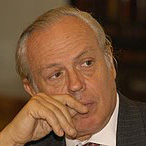
An internationally renowned expert in communications issues, Roberto Savio has founded numerous news and information projects, always with an emphasis on the developing world: Inter Press Service (IPS) news agency, the pioneering Technological Information Pilot System (TIPS), the network of national information systems for Latin America and the Caribbean (ASIN), the Latin American features service ALASEI and the Women’s Feature Service. He is now IPS President Emeritus. Born in Rome, Savio is an Italian/Argentine citizen. He studied Economics at the University of Parma, and post-graduate courses in Development Economics with Gunnar Myrdal, as well as History of Art and International Law in Rome.
ZNetwork is funded solely through the generosity of its readers.
Donate




