


On December 3, 2023, a large number of registered voters in Venezuela voted in a referendum over the Essequibo region that is disputed with neighboring Guyana. Nearly all those who voted answered yes to the five questions. These questions asked the Venezuelan people to affirm the sovereignty of their country over Essequibo. “Today,” said Venezuelan President Nicolas Maduro, “there are no winners or losers.” The only winner, he said, is Venezuela’s sovereignty. The principal loser, Maduro said, is ExxonMobil.
In 2022, ExxonMobil made a profit of $55.7 billion, making it one of the world’s richest and most powerful oil companies. Companies such as ExxonMobil, exercise an inordinate power over the world economy and over countries that have oil reserves. It has tentacles across the world, from Malaysia to Argentina. In his Private Empire: ExxonMobil and American Power (2012), Steve Coll describes how the company is a “corporate state within the American state.” Leaders of ExxonMobil have always had an intimate relationship with the U.S. government: Lee “Iron Ass” Raymond (Chief Executive Officer from 1993 to 2005) was a close personal friend of U.S. Vice President Dick Cheney and helped shape the U.S. government policy on climate change; Rex Tillerson (Raymond’s successor in 2006) left the company in 2017 to become the U.S. Secretary of State under President Donald Trump. Coll describes how ExxonMobil uses U.S. state power to find more and more oil reserves and to ensure that ExxonMobil becomes the beneficiary of those finds.
Walking through the various polling centers in Caracas on the day of the election, it was clear that the people who voted knew exactly what they were voting for: not so much against the people of Guyana, a country with a population of just over 800,000, but they were voting for Venezuelan sovereignty against companies such as ExxonMobil. The atmosphere in this vote—although sometimes inflected with Venezuelan patriotism—was more about the desire to remove the influence of multinational corporations and to allow the peoples of South America to solve their disputes and divide their riches among themselves.
When Venezuela Ejected ExxonMobil
When Hugo Chávez won the election to the presidency of Venezuela in 1998, he said almost immediately that the resources of the country—mostly the oil, which finances the country’s social development—must be in the hands of the people and not oil companies such as ExxonMobil. “El petroleo es nuestro” (the oil is ours), was the slogan of the day. From 2006, Chávez’s government began a cycle of nationalizations, with oil at the center (oil had been nationalized in the 1970s, then privatized again two decades later). Most multinational oil companies accepted the new laws for the regulation of the oil industry, but two refused: ConocoPhillips and ExxonMobil. Both companies demanded tens of billions of dollars in compensation, although the International Center for Settlement of Investment Disputes (ICSID) found in 2014 that Venezuela only needed to pay ExxonMobile $1.6 billion.
Rex Tillerson was furious, according to people who worked at ExxonMobil at that time. In 2017, the Washington Post ran a story that captured Tillerson’s sentiment: “Rex Tillerson got burned in Venezuela. Then he got revenge.” ExxonMobil signed a deal with Guyana to explore for off-shore oil in 1999 but did not start to explore the coastline till March 2015—after the negative verdict came in from the ICSID. ExxonMobil used the full force of a U.S. maximum pressure campaign against Venezuela both to cement its projects in the disputed territory and to undermine Venezuela’s claim to the Essequibo region. This was Tillerson’s revenge.
ExxonMobil’s Bad Deal for Guyana
In 2015, ExxonMobil announced that it had found 295 feet of “high-quality oil-bearing sandstone reservoirs”; this is one of the largest oil finds in recent years. The giant oil company began regular consultation with the Guyanese government, including pledges to finance any and every upfront cost for the oil exploration. When the Production Sharing Agreement between Guyana’s government and ExxonMobil was leaked, it revealed how poorly Guyana fared in the negotiations. ExxonMobil was given 75 percent of the oil revenue toward cost recovery, with the rest shared 50-50 with Guyana; the oil company, in turn, is exempt from any taxes. Article 32 (“Stability of Agreement”) says that the government “shall not amend, modify, rescind, terminate, declare invalid or unenforceable, require renegotiation of, compel replacement or substitution, or otherwise seek to avoid, alter, or limit this Agreement” without the consent of ExxonMobil. This agreement traps all future Guyanese governments in a very poor deal.
Even worse for Guyana is that the deal is made in waters disputed with Venezuela since the 19th century. Mendacity by the British and then the United States created the conditions for a border dispute in the region that had limited problems before the discovery of oil. During the 2000s, Guyana had close fraternal ties with the government of Venezuela. In 2009, under the PetroCaribe scheme, Guyana bought cut-price oil from Venezuela in exchange for rice, a boon for Guyana’s rice industry. The oil-for-rice scheme ended in November 2015, partly due to lower global oil prices. It was clear to observers in both Georgetown and Caracas that the scheme suffered from the rising tensions between the countries over the disputed Essequibo region.
ExxonMobil’s Divide and Rule
The December 3 referendum in Venezuela and the “circles of unity” protest in Guyana suggest a hardening of the stance of both countries. Meanwhile, at the sidelines of the COP-28 meeting, Guyana’s President Irfaan Ali met with Cuba’s President Miguel Díaz-Canel and the Prime Minister of St. Vincent and the Grenadines Ralph Gonsalves to talk about the situation. Ali urged Díaz-Canel to urge Venezuela to maintain a “zone of peace.”
War does not seem to be on the horizon. The United States has withdrawn part of its blockade on Venezuela’s oil industry, allowing Chevron to restart several oil projects in the Orinoco Belt and in Lake Maracaibo. Washington does not have the appetite to deepen its conflict with Venezuela. But ExxonMobil does. Neither the Venezuelan nor the Guyanese people will benefit from ExxonMobil’s political intervention in the region. That is why so many Venezuelans who came to cast their vote on December 3 saw this less as a conflict between Venezuela and Guyana and more as a conflict between ExxonMobil and the people of these two South American countries.
This article was produced by Globetrotter.
Vijay Prashad is an Indian historian, editor, and journalist. He is a writing fellow and chief correspondent at Globetrotter. He is an editor of LeftWord Books and the director of Tricontinental: Institute for Social Research. He has written more than 20 books, including The Darker Nations and The Poorer Nations. His latest books are Struggle Makes Us Human: Learning from Movements for Socialism and (with Noam Chomsky) The Withdrawal: Iraq, Libya, Afghanistan, and the Fragility of U.S. Power.

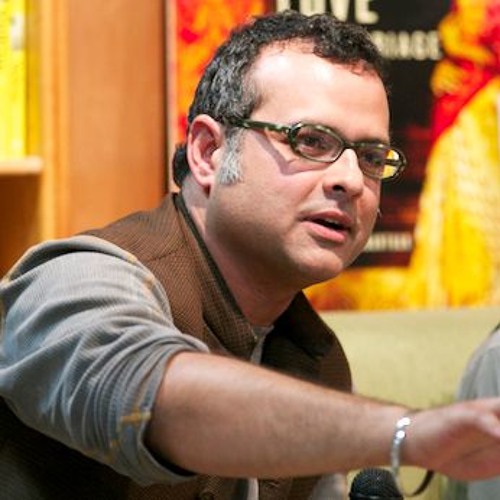
Vijay Prashad is an Indian historian, editor, and journalist. He is a writing fellow and chief correspondent at Globetrotter. He is an editor of LeftWord Books and the director of Tricontinental: Institute for Social Research. He is a senior non-resident fellow at Chongyang Institute for Financial Studies, Renmin University of China. He has written more than 20 books, including The Darker Nations and The Poorer Nations. His latest books are Struggle Makes Us Human: Learning from Movements for Socialism and (with Noam Chomsky) The Withdrawal: Iraq, Libya, Afghanistan, and the Fragility of U.S. Power. Tings Chak is the art director and a researcher at Tricontinental: Institute for Social Research and lead author of the study “Serve the People: The Eradication of Extreme Poverty in China.” She is also a member of Dongsheng, an international collective of researchers interested in Chinese politics and society.
ZNetwork is funded solely through the generosity of its readers.
Donate




