


Ethnicity refers to one of the basic realities of the modern world-system. We are all embedded in one or several groups that have a presumed (if remote) kinship base. These days we tend to refer to such groups as “identities.” Quite often, our feelings of loyalty to such groups become quite impassioned. We seldom recognize how impermanent are the names and boundaries of such groups. What is sure is that our sentiments about our identities, which vary in intensity, are always a very important part of our current political realities.
Let us start with the impermanence of the groupings. The names of the groups are constantly changing. The names we assign to groups of which we claim to be a part are very often different from the names non-members assign to these groups. More important, names disappear, as groups blend into and assume the identity of other groups, often more powerful ones. This is sometimes called “assimilation.” But at the same time, new names are constantly being created, in part by the secession of members of a given group or by their expulsion from the group. This may be because of differing class interests of members of the group.
The very existence of a group can be a matter of great (and impassioned) debate. Are the Crimean Tatars Ukrainians or citizens of Russia? Political leaders in Myanmar insist that there are no Rohingya in the largely Buddhist country. They assert that the Muslim Rohingya are really Bengalis, who therefore are not indigenous to Myanmar/Burma. Golda Meir, then Israel’s Prime Minister, famously denied in the 1970s that there was such a group as the Palestinians. Japanese nationalists oppose recognizing the rights of ethnic Korean persons whose ancestors came or were taken to Japan four generations before.
And in the United States, we are currently debating who is an American. Is only a WASP (White Anglo-Saxon Protestant) a true American? Is a Muslim born in the United States of Afghan legal immigrants a true American? Are Native Americans the true Americans, whose claims to property that was appropriated from them centuries ago pre-empt the rights of those current legally recognized owners?
Why such quarrels about names are important is that they bring with them immediate political consequences. The fundamental reality of the world is that no group anywhere has been in the same locality forever. They all migrated there from somewhere else at some time. In this sense there are no groups with unchallengeable claims to rights. These claims are all based on current narratives about past history. Furthermore, the boundaries of any particular group under discussion have almost certainly changed over time.
So, on what basis can one judge the reasonableness of claims of ethnicity? One way to do this is to support the demands of the least favored groups, the groups that are most currently oppressed. But this of course is hard to do. Those accused of being oppressors deny it vigorously on the basis of quite different historical narratives.
Here is where the passion enters the picture. Passion is not a constant. Groups that have peacefully co-existed and intermarried for a long time can suddenly be ignited to the point that they slaughter each other, and in particular those who are the offspring of an ethnic intermarriage. The so-called purity of one’s genealogy becomes the prime political consideration. Passion begets passion on both sides and we have what we call genocides. And the memory of such genocides becomes itself the subject of an impassioned debate and a justification for further violence.
The whole domain of identities and rights is a very tricky one to navigate. One cannot and should not ignore it. But one needs to analyze realities soberly, discounting the fables that intrude themselves into the narratives, and always trying to support the least powerful, the most immediately oppressed.
Ethnic passions have pervaded the modern world-system since its inception. They seem however to have become more ferocious and to consume more of our political energies in the last thirty years or so. This is probably because we have entered a period of great uncertainty, that of the structural crisis of our capitalist system and therefore the time of the political struggle about the successor system. The uncertainties and unpredictability seem to push many to seek to reinforce their commitments to their identities as a way of coping with the uncertainties. But this also diverts us from seeing what are the basic political decisions that we are facing and what moral choices they imply. Ergo, I say, ethnicity: caveat emptor!

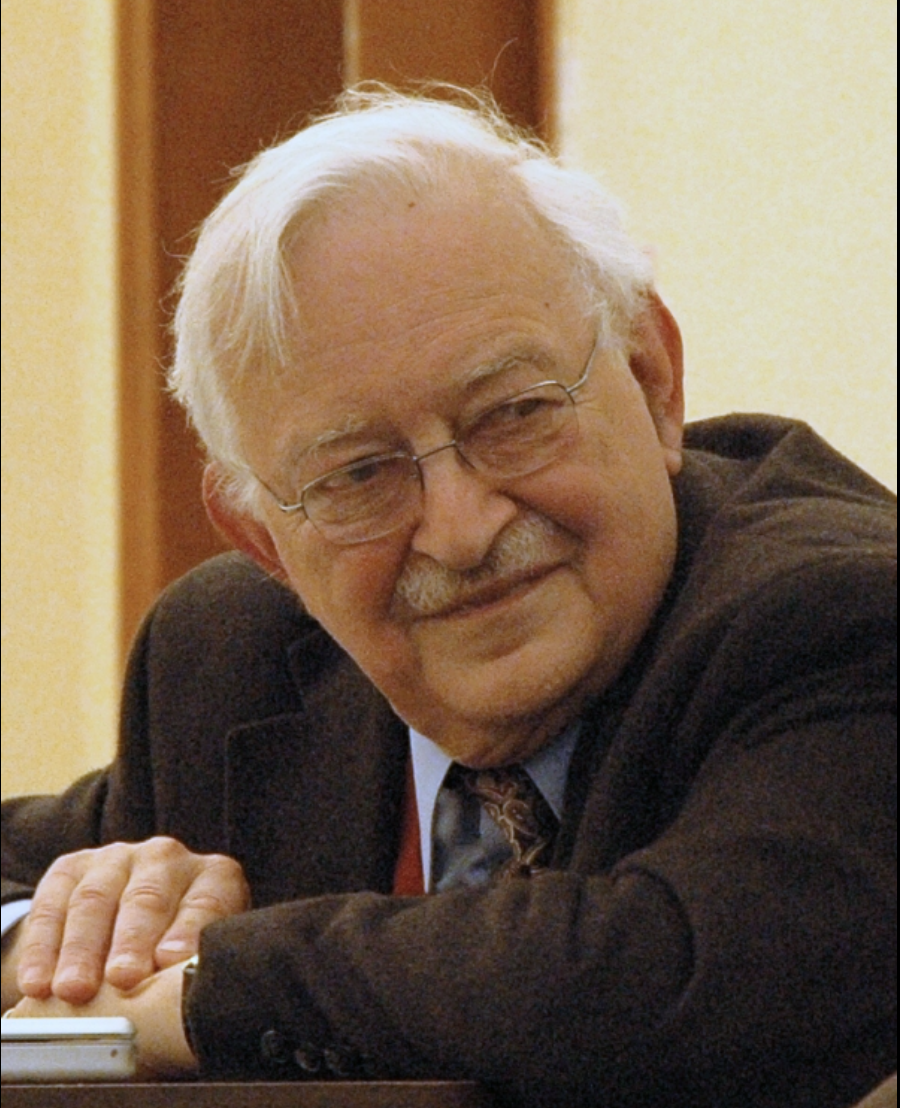
Immanuel Wallerstein (September 28, 1930 – August 31, 2019) was an American sociologist and economic historian. He is perhaps best known for his development of the general approach in sociology which led to the emergence of his world-systems approach. He was a Senior Research Scholar at Yale University from 2000 until his death in 2019, and published bimonthly syndicated commentaries through Agence Global on world affairs from October 1998 to July 2019. He was the 13th president of International Sociological Association (1994–1998). Politically, he considered himself on the "independent left" and was active in a variety of organizations. He argued that we are in the transition from our existing capitalist world-economy to some new system, and that the great political struggle of our time is about which new kind of systemic order will replace our existing one. A new systemic order could be better or worse, depending on our collective ability to push the worldwide decision in one direction or another. He believed that a crucial element in this is a vast debate about the kind of better system we wish to build, and saw the Reimagining Society Project as one of the ways to further this collective debate.
ZNetwork is funded solely through the generosity of its readers.
Donate





1 Comment
A good article in which Immanuel Wallerstein explains the question of ethnicities in a remarkably clear way that all can understand. Over the years, I have come to appreciate more and more his mode of expression – precise, easy to understand, focused and historically sound.