

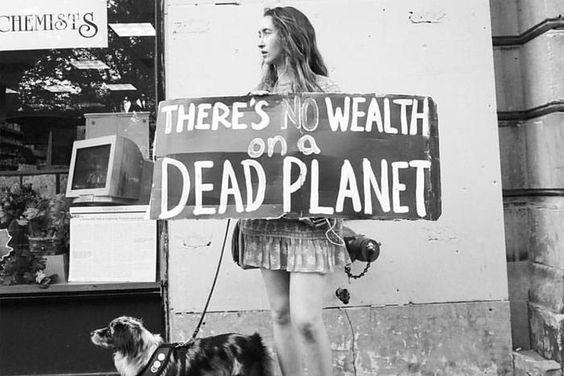
In many cases, ecological movements are the only things protecting Australia’s most vulnerable natural environments from devastation. Following record-breaking climate-induced fires and natural disasters, some of these environments are now at risk of never regenerating.
Despite this, the federal government and state governments around the country are introducing sweeping new anti-protest laws. This new wave of harsh penalties and draconian restrictions on demonstrations began after the catastrophic fires of 2019–2020 and can in part be traced back to a News Corp campaign.
Former Greens senator Scott Ludlam spoke to Jacobin about the anti-environmentalist narrative that has been used to justify this crackdown. “The same people who are the source of this extremely effective campaign of disinformation,” he argues, “are also the source of the carbon emissions responsible for climate change.”
“Privileged” Flood Survivors
In March, the New South Wales (NSW) town of Lismore endured record-breaking floods for the second time in a month. A record-breaking flood at the end of February damaged the sirens that were meant to warn residents when flood levees break. More than a month later, they still hadn’t been repaired.
As a result, the State Emergency Service (SES) resorted to issuing a warning via Twitter. At 10:07 AM on March 30, the NSW SES account tweeted: “! LISMORE LEVEE OVERTOPPING IS IMMINENT ! THE SIRENS WILL NOT SOUND DUE TO MALFUNCTION. EVERYONE MUST GET OUT OF THE CBD IMMEDIATELY.”
The same night, members of the NSW parliament stayed late to debate the Roads and Crimes Legislation Amendment Bill proposed by the state’s conservative Liberal government.
The new legislation was not designed to address the extensive disrepair of roads in NSW, caused by flooding. Mudslides had washed away some roads and bridges all together, while thousands of potholes led to a spike in calls for assistance.
Instead, the new law banned protests in streets, train stations, and other public places. Roads Minister Natalie Ward reportedly introduced the law after a mid-March protest on a bridge made her late for work. According to her, the amendments are supposed to decrease traffic disruptions. The move came after the NSW Liberal government banned indigenous-led street protests in 2020 and 2021, including Black Lives Matter and Invasion Day rallies.
The chairperson of the Aboriginal Legal Services NSW and ACT, Mark Davies, described the new law as “a crackdown on our right to protest.” He continued: “You would be hard pressed to find any win for Aboriginal and Torres Strait Islander peoples’ rights that wasn’t brought about by public protest.”
Davies’ point is an insight into the motivation behind the NSW government’s anti-protest legislative agenda. The urgency with which they passed the new laws was likely a response to activists blockading the Newcastle Port, the largest coal port in the world.
Protesters Criminalized
Despite this, the blockade protests have continued. In June, Mali Cooper, a twenty-two-year old resident of the flooded town of Lismore, blocked traffic on the Sydney Harbor bridge. Thanks to the new laws, she is now facing fines of $22,000 and up to two years in prison if found guilty of “willfully preventing the free passage of vehicles.”
The Project, a national current affairs show, invited Cooper onto the program as a guest after her arrest. The interviewers, however, did not ask her questions about the floods that had devastated her hometown, instead accusing her of causing inconvenience to drivers. One of the hosts, Kate Langbroek described her as “extremely divisive” and “privileged.” Waleed Aly described her protest as “extreme illegal disruptive action.”
Lismore is in the Northern Rivers region of NSW, which already suffers housing issues. After two record-breaking floods within one month, Lismore was struggling to recover and many of its residents remain homeless months later. The Norther Rivers region is also one of many affected by the fires of 2019–2020.
The region has a proud history of protest. In 1979, protesters saved part of the remnant rainforest near Lismore with blockades. According to Cristy Clark, associate professor of law at Canberra University, “the Terania Creek protests that took place around the remnant rainforest in that area led to the declaration of Nightcap National Park, and eventually the World Heritage listing of the area.”
In 2019, celebrations marked the forty-year anniversary of the campaign to save the rainforest. Tragically, these turned into commiserations as the 2019–2020 bushfires caused extensive damage to the understory of the Gondwana-era rainforest. Ecosystem scientists are concerned that these rainforests and other ecosystems affected by worsening fires may not be able to regenerate.
Nationwide Anti-Protest Laws
Clark is co-author of the recently released The Lawful Forest: A Critical History of Property, Protest and Spatial Justice. According to her, “the blockade at Terania Creek was an entirely novel way of engaging in environmental protest.” She argues that the blockade tactics used at Terania Creek inspired subsequent protest movements, including the famous Franklin river dam protests in Tasmania.
Despite Tasmania’s proud history of environment protest, the state’s upper house has also recently passed a new law that could enable sweeping bans on protests, making any attempts to replicate the state’s historic protests much more difficult.
Meanwhile, in Victoria, where the 2019–2020 bushfires also caused extensive damage, the Labor government recently passed new logging legislation. The laws increased penalties for interfering with logging activities: up to twelve months in jail and fines of $21,000. Volunteers helping to collect ecological information after the fires are concerned that they may be affected by these new harsh restrictions on accessing forests near designated logging areas.
Had NSW and Victoria’s new laws been in place in 2010, they would have applied much harsher penalties to the protests that resulted in the creation of another national park, saving the world’s largest red gum forest.
For more than a decade, traditional owners from the Yorta Yorta Nation protested logging of the Barmah forest red gums alongside other environmental activists. In July 2021, the Yorta Yorta Nation came to a historic joint management agreement with the Victorian government to protect the park. Similar co-management plans with First Nations now cover as much as half of the land designated as “protected” in Australia.
However, despite the fact that Aboriginal and Torres Straight Islander peoples share in conserving half of Australia’s protected lands, as of 2019, only 6 percent of federal conservation funding went to indigenous protected areas. This continues Australia’s refusal to recognize and support First Nations’ land rights and sovereignty. And it flies in the face of a growing consensus that indigenous land management techniques are much more effective, including cultural burning, a practice that has been suppressed since colonization.
Fanning the Fires
The current wave of anti-protest laws can in part be traced back to an anti-environmentalist narrative heavily promoted by News Corp during and after the 2019–2020 fires. News Corp pundits claimed, without evidence, that blame for the fires’ intensity should go to local green groups that allegedly blocked backburning.
According to Scott Ludlam, this narrative was designed to create confusion and to “drown out people who legitimately understood the fires’ severity to be driven by climate change.” Despite this, he argues, “reality is always going to be larger and more persuasive,” as the response to this year’s floods shows. “Residents of Lismore,” Ludlam pointed out, “were out front of the prime minister’s office with climate banners within a week of the town center being almost completely destroyed.”
For its part, News Corp has shifted away from outright denial to arguments designed to delay change, including by shifting responsibility onto individuals. “It is a way of diffusing attention away from the tiny, tiny handful of corporations that have done this,” said Ludlam, to “outsource that responsibility back to ‘me’ because ‘I’ didn’t recycle.”
This campaign didn’t resonate with ordinary people. After witnessing increasingly severe fires and floods, Australians elected a record number of MPs who stood on environmental platforms in the May election. The Greens — a party with its roots in Tasmania’s environmental protests — now hold the balance of power with 15 percent of the seats in the Senate and won three additional seats in the lower house. Additionally, “teal” independents, who focused heavily on climate change, won a total of eleven parliamentary seats, many of which were previously held by the conservative Liberal party. This was possible in large part thanks to the support of Climate 200, essentially an American-style PAC.’
However, Climate 200 has, on at least one occasion, failed to defend the right to protest, calling into question its commitment to working with protest-driven environmental movements. In March 2022, Climate 200 released a statement strongly denouncing what it described as an illegal protest on a bridge in Sydney. “The most effective action protest against the government’s inaction is to support and vote for a pro-climate independent on election day,” the statement read.
It’s unclear to what extent independents elected with Climate 200 believe that peaceful assembly — an international human right — should be ruled out as a legitimate form of political action. The Climate 200 MPs, however, are not necessarily united behind the skepticism of their sponsor organization. On the new parliament’s first sitting day, at least two teal independents, David Pocock and Monique Ryan, met with environmental protesters from the Tomorrow Movement on the lawn outside parliament house, alongside several Greens representatives.
Protests and Labor
Despite record support for pro-environment candidates, recently elected Prime Minister Anthony Albanese has not broken with Labor’s News Corp and fossil fuel lobby–driven anti-environmentalist consensus. Instead, Albanese has continued the ALP’s combative approach towards the Greens, attempting to blame them for a decade of inaction on climate change.
Ludlam traces Labor’s hostility to the environmental movement to the failure of Rudd-era climate legislation. As he explained, the mining and fossil fuels industry used its “lobbying firepower to blow the government up and to install people who are totally compliant.” “At the same time,” he explains, “the industry began donating large sums to the Labor Party.”
The Labor Party’s approach to the Greens contrasts with the approach adopted by the New Zealand Labour Party under Jacinda Ardern, who made a cooperation agreement with New Zealand’s Greens in 2017. This agreement gave the NZ Greens the climate change ministry and continued even after Ardern’s landslide victory in 2020 that delivered Labour enough seats to form a government without Greens support.
Despite the ALP’s refusal to work with the Greens, the new government has shown some early signs that it will respond to pressure from environmental movements. Youth Verdict, an indigenous-led youth environmental group, has challenged a new coal mine proposed by billionaire Clive Palmer in the Queensland Land Court. Following this, environment minister Tanya Plibersek announced her intention to block the mine on the grounds that it will harm the Great Barrier Reef. Similarly, Plibersek is considering a request to halt construction of a fertilizer factory that could destroy sacred Murujga rock art.
These campaigns show that despite attempts to stop them, environmental movements will continue in Australia. And if the federal election’s voting patterns continue in upcoming state elections, Labor may be forced to choose between breaking with News Corp and the fossil fuel industry or losing ground to a wave of environmental candidates backed by protest movements.
ZNetwork is funded solely through the generosity of its readers.
Donate




