


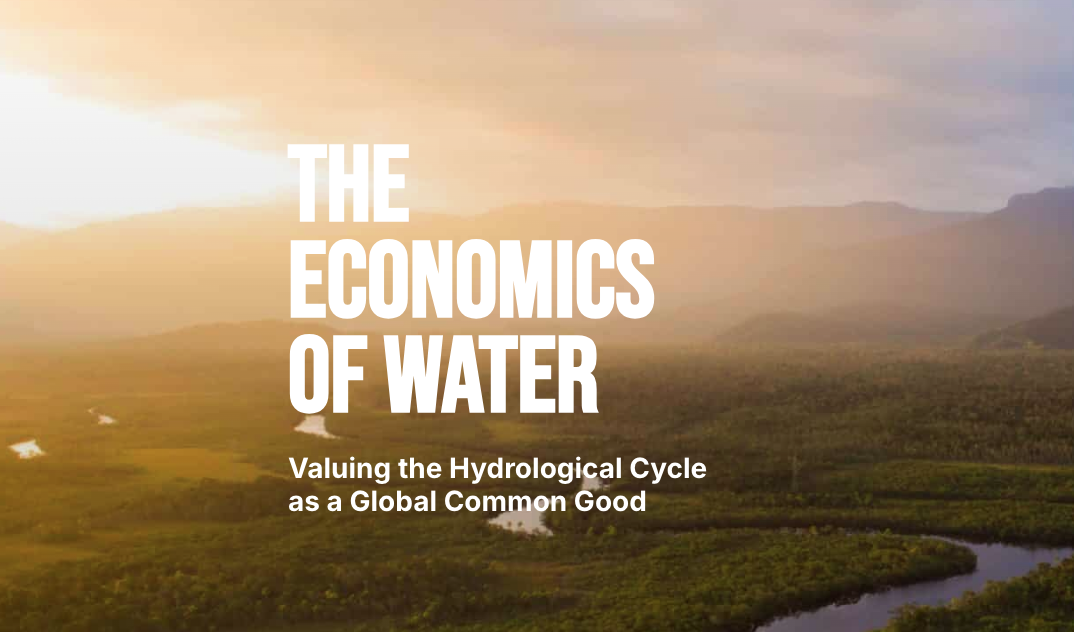
Decades of mismanagement of water resources, deforestation, and the fossil fuel-driven crisis of global warming have put “unprecedented stress” on the Earth’s water systems, according to a new report, and have thrown the world’s hydrological cycle out of balance “for the first time in human history.”
The Global Commission on the Economics of Water, affiliated with the Dutch government and comprised of global experts, published the study on Thursday, warning that policymakers must urgently “reframe the hydrological cycle as a global common good,” recognizing that it is “deeply interlinked with the climate and biodiversity crises.”
The hydrological cycle, or water cycle, is the continuous circulation of water between the planet’s oceans, land, and atmosphere. The experts involved in the new report warn that rising temperatures and pollution—driven by continued fossil fuel emissions and other industrial impacts—are among the factors that are “undermining an equitable and sustainable future for all” in terms of water access.
The commission said a “new economics of water” is needed, recognizing that water connects countries and regions through atmospheric water flows as well as bodies of water.
“We must reshape our shared relationship with water, across borders and cultures, for sustainable, impactful, and just transitions,” the commission said on social media.
The new #EconomicsOfWater begins by recognising that the water cycle must now be governed as a global common good, for the benefit of people and the planet, through collective action and collaboration across sectors and scales, from local to global 👫🌏
— Global Commission on the Economics of Water (@watercommongood) October 18, 2024
We must reshape our… pic.twitter.com/FgpQE8Z9Wk
Both freshwater and land ecosystems have been damaged by mismanagement and “undervaluation of water around the world,” reads the report. “We can no longer count on freshwater availability for our collective future.”
Already, more than 1,000 children die each day from illnesses related to a lack of safe drinking water, and more than half of the world’s food production takes place in areas where water supplies are expected to decrease in the coming years.
“If this isn’t enough for the world to go into emergency mode, then what is?” asked writer Matthew Todd of expected strain on food production. “Think about what that means—billons potentially migrating, war, unprecedented political instability.”
A new approach to water governance must be adopted, said the commission, “from local to river basin to global, to ensure it is governed more effectively and efficiently, delivers access and justice for all, and sustains the earth’s ecosystems.”
Tharman Shanmugaratnam, president of Singapore and a co-chair of the commission, told The Guardian that policymakers must “think radically about how we are going to preserve the sources of fresh water, how we are going to use it far more efficiently, and how we are going to be able to have access to fresh water available to every community, including the vulnerable—in other words, how we preserve equity [between rich and poor].”
The experts found that much of the $700 billion that goes to water and agricultural subsidies annually is misdirected, pushing wealthier farmers to use more water than they need while poorer communities and farmers have not enough.
“Industry is getting a lot of the subsidy, and richer people. So what we need are better targeted subsidies. We need to identify the poor people who really need this,” Ngozi Okonjo-Iweala, the director general of the World Trade Organization and another co-chair of the commission, told The Guardian.
The impact of continued stress of water resources could shrink wealthy countries’ gross domestic product by an average of 8% by 2050 and that of lower-income countries by up to 15%.
Stress on the planet’s water systems have particularly impacted “green water” that is stored in soil, plants, and forests and ultimately evaporates and becomes rainfall.
“Current policy tends to deal with the ‘blue’ water we can see—in rivers, lakes, and aquifers—largely overlooking ‘green’ water,” reads the report. “Intact ecosystems and lands managed in ways that do not adversely impact their hydrological functioning are critical to securing terrestrial rainfall. A stable supply of green water in soils is also crucial for carbon sequestration.”
The degradation of freshwater systems, including the loss of moisture in soil, has already contributed to “frequent and increasingly severe droughts, floods, heatwaves, and wildfires, playing out across the globe.”
The commission mapped the “vast, interconnected network of atmospheric water exchanges that span the entire planet” at an animated storytelling website accompanying the report, providing a visual of how “green water flows connect countries across the globe.”
💥 We’re very excited to launch the Global Commission's storytelling website.
— Global Commission on the Economics of Water (@watercommongood) October 18, 2024
📈Using animated and interactive data visualization, it tells the story of the water crisis, why it matters for our economies, & how we can reset our relationship with water.https://t.co/wcQNjgkhBr pic.twitter.com/6kwLvNmt3z
“Managing water as a resource is more than a local matter,” said the commission.
The report calls for partnerships to be forged between all stakeholders from the local to global levels, aimed at completing five “missions that address the most important and interconnected challenges of the global water crisis”:
- Launch a new revolution in food systems to improve water productivity in agriculture while meeting the nutritional needs of a growing world population;
- Conserve and restore natural habitats critical to protect green water;
- Establish a circular water economy, including changes in industrial processes;
- Enable a clean-energy era with much lower water intensity; and
- Ensure that no child dies from unsafe water by 2030, by securing the reliable supply of potable water and sanitation for underserved communities.
“The Chinese economy depends on sustainable forest management in Ukraine, Kazakhstan, and the Baltic region,” Johan Rockström, director of the Potsdam Institute for Climate Impact Research and a co-chair of the commission, told The Guardian. “You can make the same case for Brazil supplying fresh water to Argentina. This interconnectedness just shows that we have to place fresh water in the global economy as a global common good.”


Julia Conley is a staff writer for Common Dreams.
ZNetwork is funded solely through the generosity of its readers.
Donate




