


September 11 shocked many Americans into an awareness that they had better pay much closer attention to what the US government does in the world and how it is perceived. Many issues have been opened for discussion that were not on the agenda before. That’s all to the good.
It is also the merest sanity, if we hope to reduce the likelihood of future atrocities. It may be comforting to pretend that our enemies “hate our freedoms,” as President Bush stated, but it is hardly wise to ignore the real world, which conveys different lessons.
The president is not the first to ask: “Why do they hate us?” In a staff discussion 44 years ago, President Eisenhower described “the campaign of hatred against us [in the Arab world], not by the governments but by the people”. His National Security Council outlined the basic reasons: the US supports corrupt and oppressive governments and is “opposing political or economic progress” because of its interest in controlling the oil resources of the region.
Post-September 11 surveys in the Arab world reveal that the same reasons hold today, compounded with resentment over specific policies. Strikingly, that is even true of privileged, western-oriented sectors in the region.
To cite just one recent example: in the August 1 issue of Far Eastern Economic Review, the internationally recognised regional specialist Ahmed Rashid writes that in Pakistan “there is growing anger that US support is allowing [Musharraf’s] military regime to delay the promise of democracy”.
Today we do ourselves few favours by choosing to believe that “they hate us” and “hate our freedoms”. On the contrary, these are attitudes of people who like Americans and admire much about the US, including its freedoms. What they hate is official policies that deny them the freedoms to which they too aspire.
For such reasons, the post-September 11 rantings of Osama bin Laden – for example, about US support for corrupt and brutal regimes, or about the US “invasion” of Saudi Arabia – have a certain resonance, even among those who despise and fear him. From resentment, anger and frustration, terrorist bands hope to draw support and recruits.
We should also be aware that much of the world regards Washington as a terrorist regime. In recent years, the US has taken or backed actions in Colombia, Nicaragua, Panama, Sudan and Turkey, to name a few, that meet official US definitions of “terrorism” – that is, when Americans apply the term to enemies.
In the most sober establishment journal, Foreign Affairs, Samuel Huntington wrote in 1999: “While the US regularly denounces various countries as ‘rogue states,’ in the eyes of many countries it is becoming the rogue superpower … the single greatest external threat to their societies.”
Such perceptions are not changed by the fact that, on September 11, for the first time, a western country was subjected on home soil to a horrendous terrorist attack of a kind all too familiar to victims of western power. The attack goes far beyond what’s sometimes called the “retail terror” of the IRA, FLN or Red Brigades.
The September 11 terrorism elicited harsh condemnation throughout the world and an outpouring of sympathy for the innocent victims. But with qualifications.
An international Gallup poll in late September found little support for “a military attack” by the US in Afghanistan. In Latin America, the region with the most experience of US intervention, support ranged from 2% in Mexico to 16% in Panama.
The current “campaign of hatred” in the Arab world is, of course, also fuelled by US policies toward Israel-Palestine and Iraq. The US has provided the crucial support for Israel’s harsh military occupation, now in its 35th year.
One way for the US to lessen Israeli-Palestinian tensions would be to stop refusing to join the long-standing international consensus that calls for recognition of the right of all states in the region to live in peace and security, including a Palestinian state in the currently occupied territories (perhaps with minor and mutual border adjustments).
In Iraq, a decade of harsh sanctions under US pressure has strengthened Saddam Hussein while leading to the death of hundreds of thousands of Iraqis – perhaps more people “than have been slain by all so-called weapons of mass destruction throughout history”, military analysts John and Karl Mueller wrote in Foreign Affairs in 1999.
Washington’s present justifications to attack Iraq have far less credibility than when President Bush Sr was welcoming Saddam as an ally and a trading partner after he had committed his worst brutalities – as in Halabja, where Iraq attacked Kurds with poison gas in 1988. At the time, the murderer Saddam was more dangerous than he is today.
As for a US attack against Iraq, no one, including Donald Rumsfeld, can realistically guess the possible costs and consequences. Radical Islamist extremists surely hope that an attack on Iraq will kill many people and destroy much of the country, providing recruits for terrorist actions.
They presumably also welcome the “Bush doctrine” that proclaims the right of attack against potential threats, which are virtually limitless. The president has announced: “There’s no telling how many wars it will take to secure freedom in the homeland.” That’s true.
Threats are everywhere, even at home. The prescription for endless war poses a far greater danger to Americans than perceived enemies do, for reasons the terrorist organisations understand very well.
Twenty years ago, the former head of Israeli military intelligence, Yehoshaphat Harkabi, also a leading Arabist, made a point that still holds true. “To offer an honourable solution to the Palestinians respecting their right to self-determination: that is the solution of the problem of terrorism,” he said. “When the swamp disappears, there will be no more mosquitoes.”
At the time, Israel enjoyed the virtual immunity from retaliation within the occupied territories that lasted until very recently. But Harkabi’s warning was apt, and the lesson applies more generally.
Well before September 11 it was understood that with modern technology, the rich and powerful will lose their near monopoly of the means of violence and can expect to suffer atrocities on home soil.
If we insist on creating more swamps, there will be more mosquitoes, with awesome capacity for destruction.
If we devote our resources to draining the swamps, addressing the roots of the “campaigns of hatred”, we can not only reduce the threats we face but also live up to ideals that we profess and that are not beyond reach if we choose to take them seriously.

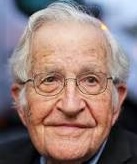
Noam Chomsky (born on December 7, 1928, in Philadelphia, Pennsylvania) is an American linguist, philosopher, cognitive scientist, historical essayist, social critic, and political activist. Sometimes called "the father of modern linguistics", Chomsky is also a major figure in analytic philosophy and one of the founders of the field of cognitive science. He is a Laureate Professor of Linguistics at the University of Arizona and an Institute Professor Emeritus at the Massachusetts Institute of Technology (MIT), and is the author of more than 150 books. He has written and lectured widely on linguistics, philosophy, intellectual history, contemporary issues, and particularly international affairs and U.S. foreign policy. Chomsky has been a writer for Z projects since their earliest inception, and is a tireless supporter of our operations.
ZNetwork is funded solely through the generosity of its readers.
Donate




