


In the context of the mushrooming activism in support of a Green New Deal—an extremely positive development, without a doubt–debate is opening up about whether GND legislation should include policies to keep fossil fuels in the ground and oppose any new major fossil fuel infrastructure, like oil and gas pipelines. Some GND supporters say no, on the grounds that this will make it hard to include labor and people who aren’t environmentalists in the pro-GND movement. I don’t agree with that position, based on experience, and here’s why:
I’ve attended a number of public meetings over the years where I’ve spoken out against proposed new fossil fuel infrastructure. At almost all of them there have been people from unions who, if the pipeline or other infrastructure were built, would get some of the construction jobs—unions like the Laborers, Boilermakers or Pipefitters. Sometimes it has just been union leaders and staff; other times there has been a mobilization of rank and file workers to attend in large numbers.
One of the more memorable experiences I’ve had was in the town of Cove Point, Maryland about six or seven years ago. Local community groups had organized an open, informational, public meeting about the plans to build a Liquified Natural Gas (LNG) export terminal in their town on the Chesapeake Bay. 100 or more local community members showed up, as did about 75 people bused in by the regional affiliate of the Boilermakers union. They were all wearing green t-shirts which, as I remember, proclaimed how clean natural gas was.
Before the meeting started I searched out and spoke to one of the union leaders and was told they were not there to disrupt but to be a visible presence, to listen and participate, which those of us who had organized the meeting were glad to hear.
Mike Tidwell, my boss at the time and the director of the Chesapeake Climate Action Network, was one of the speakers to open the meeting, and he did a very good job of addressing the issue of jobs. What he said, to the best of my recollection, was something like, “We know that some of you are here because you want the jobs that would come if the Cove Point LNG terminal is built, and we respect that. People need jobs, no question about it. But the truth is that if the money that was being invested in this terminal was invested instead in renewable energy or energy efficiency, there would be many more jobs created. We believe that we should all support that alternative for both environmental/climate and jobs reasons.”
A few of the union leaders and a few of the workers spoke up during the very open back and forth after the community-based speakers made their presentations. With one exception, none were overtly hostile. A couple of them, as the evening moved along, actually asked about renewables and job creation or indicated support for what we were saying.
It’s not always like this, I know. I’ve read about and seen videos about public meetings in West Virginia where coal miners have been very aggressive in their advocacy for continued mountaintop removal, for example. And the Laborers Union, in particular, has been extremely aggressive in their support for new oil and gas pipelines.
What are the basic facts about the shift from fossil fuels to renewables and jobs?
1) Whatever the sources of electricity and energy, jobs are created.
2) Investments in wind and solar, dollar for dollar, create more jobs than the same amount of money invested in fossil fuels.
3) As of 2016, according to Forbes Magazine, there were over 2 ½ times as many workers employed in U.S. electricity generation in the wind and solar industry as there were employed in doing so in the coal, oil and gas industries. 2 ½ times, as of 2016!
What about community people and fossil fuel infrastructure? From my experience, if there’s one issue that is a left-to-right, unite everyone at the grassroots issue, it’s this one. In Virginia, for example, in Gubernatorial elections a couple of years ago, you had a progressive in the Democratic Party primary opposing plans to build the Atlantic Coast and Mountain Valley pipelines, and you had a Tea Party guy doing the same in the Republican primary. Neither won, but both had sizeable vote totals.
The abuse of eminent domain by FERC and the pipeline companies, in particular, as well as health and safety risks when a pipeline or compressor station comes to town, have again and again united people across ideological and party lines.
In my county, Essex County in New Jersey, we experienced this when the Williams Company wanted to build a 25,000 horsepower gas compressor in the town of Roseland in 2012/2013. At the time the local mayor and most of the town council were Republican, and at first they passively supported Williams’ plans. But as a group of us started to organize against it, going door to door and convening public meetings, that began to change. It really changed when, in the course of construction on the thing, there was a blowdown of gas which migrated all over the area, including a mile to the local elementary school, causing a panicked shutdown of the school. Ever since, opposition to this compressor and to current plans to expand it have been totally bi-partisan and widespread.
Of course, there’s one more very, very big reason why many more of us need to take up the fight against new fossil fuel infrastructure: that work may well be the most strategic work we can be doing now in our very uphill battle to prevent worldwide climate catastrophe.
Have people forgotten about Standing Rock and the power of that Indigenous-led and -based, massive resistance fight to stop the Dakota Access, tar sands crude oil, 1100 miles long pipeline?
You can’t, on the one hand, support a strong push for 100% renewables, green jobs, environmental justice and then, on the other, be silent about the expansion of the industry which we need to downsize as quickly as possible. It’s a very acute contradiction.
Ted Glick has been a progressive activist, organizer and writer since 1968 and a climate activist and organizer since 2003. Past writings and other information can be found at https://tedglick.com, and he can be followed on Twitter at https://twitter.com/jtglick.

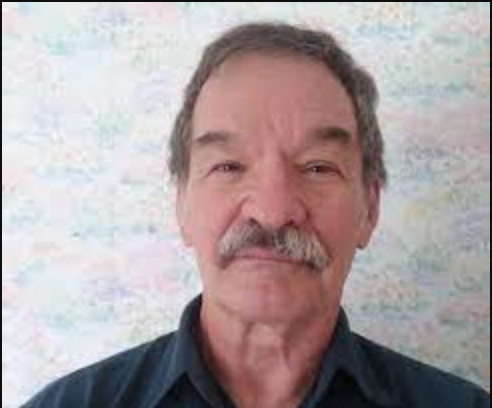
Ted Glick has devoted his life to the progressive social change movement. After a year of student activism as a sophomore at Grinnell College in Iowa, he left college in 1969 to work full time against the Vietnam War. As a Selective Service draft resister, he spent 11 months in prison. In 1973, he co-founded the National Committee to Impeach Nixon and worked as a national coordinator on grassroots street actions around the country, keeping the heat on Nixon until his August 1974 resignation. Since late 2003, Ted has played a national leadership role in the effort to stabilize our climate and for a renewable energy revolution. He was a co-founder in 2004 of the Climate Crisis Coalition and in 2005 coordinated the USA Join the World effort leading up to December actions during the United Nations Climate Change conference in Montreal. In May 2006, he began working with the Chesapeake Climate Action Network and was CCAN National Campaign Coordinator until his retirement in October 2015. He is a co-founder (2014) and one of the leaders of the group Beyond Extreme Energy. He is President of the group 350NJ/Rockland, on the steering committee of the DivestNJ Coalition and on the leadership group of the Climate Reality Check network.
ZNetwork is funded solely through the generosity of its readers.
Donate




