


Three times in the last month I have quoted the Golden Rule, “Do unto others as you would have done unto you,” when I have been speaking on the radio or in person about how progressive social change can come about. Soon after the third time that I did so, yesterday, I reflected on my having internalized this saying such that I have been doing so.
I’ve never in my life, until now, spoken these words to others. I’ve begun to do so after using them in my 2021 book: 21st Century Revolution: Through Higher Love, Racial Justice and Democratic Cooperation. That’s the immediate cause of this new personal development.
The context for my using them within 21st Century Revolution is my belief that there is no way, no chance that we will prevent escalating ecological/climate breakdown and build a new, justice-based world until the organizations which are working for such a world consciously create a way of work, an internal culture, in which values of love and human solidarity are practiced daily.
Here’s what I wrote along these lines at one point in that book: “Our role as human beings is not to let bad things paralyze us, or good things swell our heads, but to ‘do justice, love kindness and walk humbly’ (Micah 6:8) with The Great, Unknown, Creative Force Which Rules the Universe.”
One of the five chapters of this book is entitled, “Does God Exist? Does It Matter?” At the end of this chapter I give my personal answer to that “does it matter” question. I say, in part:
“It does not matter on an individual level whether one professes belief in God or a higher spiritual power. But human history indicates that scientific and technological processes alone just will not work. It matters very much whether human societies have organized entities whose primary purpose is to strengthen an ethical and humane consciousness and develop people striving to live by the principle, do unto others as you would have done unto you. In the words of Albert Einstein, ‘A positive aspiration and effort for an ethical-moral configuration of our common life is of overriding importance. Here no science can save us.’”
It is important to emphasize that this love-based approach is not just an approach that organizations striving to change the world for the better must work at developing and deepening. It is also essential for each of us as individuals to strive to live this way literally hour by hour as we go about our daily tasks. It is so, so easy—speaking very much from personal experience—to become so absorbed in or alienated by what we need to do at work, or in work or other pursuits we want to do at home, that we treat other people, including people we truly love, in a dismissive or disrespectful way. This is particularly true for men.
Do we like it when we’re treated in oppressive, disrespectful or condescending ways? Of course not. So let’s lead by example and do all we can in the coming year to treat and interact with other people as we want them to treat us.

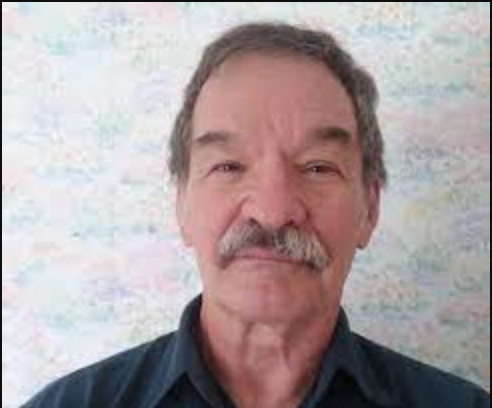
Ted Glick has devoted his life to the progressive social change movement. After a year of student activism as a sophomore at Grinnell College in Iowa, he left college in 1969 to work full time against the Vietnam War. As a Selective Service draft resister, he spent 11 months in prison. In 1973, he co-founded the National Committee to Impeach Nixon and worked as a national coordinator on grassroots street actions around the country, keeping the heat on Nixon until his August 1974 resignation. Since late 2003, Ted has played a national leadership role in the effort to stabilize our climate and for a renewable energy revolution. He was a co-founder in 2004 of the Climate Crisis Coalition and in 2005 coordinated the USA Join the World effort leading up to December actions during the United Nations Climate Change conference in Montreal. In May 2006, he began working with the Chesapeake Climate Action Network and was CCAN National Campaign Coordinator until his retirement in October 2015. He is a co-founder (2014) and one of the leaders of the group Beyond Extreme Energy. He is President of the group 350NJ/Rockland, on the steering committee of the DivestNJ Coalition and on the leadership group of the Climate Reality Check network.
ZNetwork is funded solely through the generosity of its readers.
Donate




