Source: Deadline Detroit

The “hood” is the center of many conversations about why folks are not staying at home, as the virus continues to spread and claim lives across. But it is in the “hood” that people have been forced, socially and economically, to survive (not live) in their own world.

Social distancing is not new to Detroit. Black people in the city have never been allowed distance from the poverty, poor health, violence, and systematic racism that followed the flight of more than 1 million white people to the suburbs in the last 40 years. This is because social distance, even in the time of the Covid-19 pandemic, is a privilege.

I’m not excusing people’s behavior, but providing context to a complex situation.

People in the “hood” know what it is like to survive under extreme conditions and watch loved ones be claimed, for generations, by such viruses as police brutality, poor schools, food deserts and environmental oppression, not to mention mass incarceration, drugs and lack of resources. So, the “hood” is a cesspool of viruses that has claimed millions of lives, but who cares, when they have been socially conditioned to be dependent upon a damn liquor store to meet their essential needs?

Black people are spotted hanging out at parks, corner stores, and otherwise behaving as though it’s business as usual. Officials want to know why they don’t listen to the warnings, as Covid-19 continues to spread and claim lives across Detroit and the state at a rapid pace.

We know there is no social distance for many of Detroit’s workers, whom the public finally see as “essential.” Many are Black people whose livelihood is tied to them staying in close contact with people who may be sick. Even if they do not get Covid-19, they will be forever traumatized.

But there is another reason that social distance is easier for some than others: Social connection for Black Detroiters has for years been a matter of survival.

Survival for Black Detroit is tied to our social development, rooted in our collective oppression and discrimination, that crosses gender and economic lines. Hanging on corners, barbershops, malls and salons high-fiving, laughing, sharing hugs and sharing a good ol’ time is part of how we interact, because these gatherings were outlawed once in this country.

Our communities know what it’s like to survive under extreme conditions. We have learned to survive on leftovers.

Many lives have been lost, but Black Detroiters have always made a way out of no way because Detroit is a Movement City. Black Detroiters have been organizing resistance to corporate greed, violence and oppression for nearly a century. If we want to prevent this from happening in the future, white America must not keep Black people at a social distance ever again.

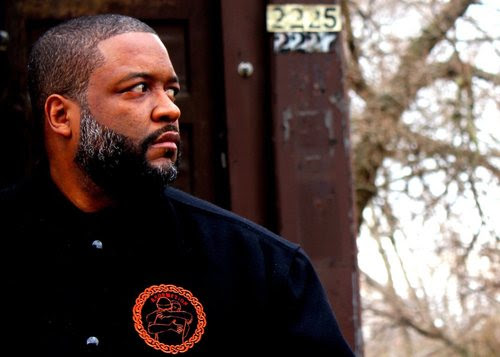
Yusef Bunchy Shakur is a lifelong Detroiter, is co-director of programs at The Michigan Roundtable for Diversity and Inclusion. He is a graduate of the University of Michigan School of Social Work.


ZNetwork is funded solely through the generosity of its readers.

Donate
Donate
Leave A Reply

Subscribe

All the latest from Z, directly to your inbox.

Institute for Social and Cultural Communications, Inc. is a 501(c)3 non-profit.

Our EIN# is #22-2959506. Your donation is tax-deductible to the extent allowable by law.

We do not accept funding from advertising or corporate sponsors.  We rely on donors like you to do our work.

ZNetwork: Left News, Analysis, Vision & Strategy

THE WIND CRIES FREEDOM

The Wind Cries Freedom, the new book from Z co-founder Michael Albert, is a sweeping oral history of a future American revolution.

Through thirty interconnected chapters, it draws out the strategies, failures, turning points, and hard-won wisdom of a movement that called itself the Revolutionary Participatory Society. These are not the polished memoirs of politicians: they are the unfiltered accounts of people who organized in neighborhoods, hospitals, universities, stadiums, courthouses, and places of worship, and kept a shared vision alive through cynicism and exhaustion.

The result is speculative political fiction that reads like history: messy, human, and quietly hopeful in the way that only real experience and long thought can produce.

Get your copy and peruse more features on the book’s website below.

“Read it, argue with it, but don’t look away. The future it recalls is one we must still fight to deserve.”

Yanis Varoufakis

“The most unusual and intriguing combination of prophecy, manifesto, and movement building manual that I have ever encountered.”

Bill Fletcher Junior

“This work fills a huge gap in our social movement literature.”

Cynthia Peters

Subscribe

All the latest from Z, directly to your inbox.

This is your article this month.

We’re glad you keep coming back. If Z’s work has informed, challenged, or inspired you, that’s no accident: there are no paywalls, no ads, and no billionaire owners here, and there never will be. Independent media survives because readers choose to support it.

Billionaires fund their own media. We fund ours. Help us reach 1,000 sustaining donors:

Number of donors694
Our goal1,000

Sustainers at $9/month or more receive the digital Z Magazine.

Already a sustainer? Click here and we won’t ask again. Thank you!

Your reading count is stored only in your browser and is never sent to us.

Sound is muted by default.  Tap 🔊 for the full experience

CRITICAL ACTION

Critical Action is a longtime friend of Z and a music and storytelling project grounded in liberation, solidarity, and resistance to authoritarian power. Through music, narrative, and multimedia, the project engages the same political realities and movement traditions that guide and motivate Z’s work.

If this project resonates with you, you can learn more about it and find ways to support the work using the link below.

Independent media is not disappearing because the ideas are weak.

It is disappearing because platforms reward speed, outrage, and algorithmic visibility over thoughtful analysis.

More than 100,000 people read Z every month, free of paywalls, ads, and billionaire owners. It takes fewer than 1 in 100 of them to fund all of it: 1,000 donors who keep Z independent, for everyone, and build what comes next.

Number of donors694
Our goal1,000

Sustainers at $9/month or more receive the digital Z Magazine.

Subscribe

Join the Z Community – receive event invites, announcements, a Weekly Digest, and opportunities to engage.

OUT NOW: "The Wind Cries Freedom" by Michael Albert

Exit mobile version

