


I guess I should feel honored that, four days ago, I was given the opportunity to get up in front of the New Jersey Supreme Court and tell them what I think about the “democratic†electoral system they were planning to tinker with later that day.
I had been named as a defendant in the case brought by the N.J. Democratic Party to substitute Frank Lautenberg for Robert Torricelli on the November 5th ballot even though the legal deadline for doing such a switch had passed two weeks earlier. I was named as a defendant with all four of the other parties besides the Democrats who have U.S. Senate candidates on the ballot—Republicans, Libertarians, Conservatives and Socialists.
Here’s what I said to the seven esteemed N.J. Supreme Court justices in open court:
When I began receiving what turned out to be over 200 pages of legal documents faxed to my office yesterday, I was first perplexed and then irritated that I had been named as a defendant in this case. What do I have to defend against? I and the Green Party had nothing to do with the decision of the Democratic Party to choose Robert Torricelli as their candidate for the U.S. Senate. We had nothing directly to do with his decision to drop out. We have nothing to do with the Democratic Party’s internal processes of choosing another person to replace him. And we most definitely have no control over the operations of the New Jersey electoral system.
Then I began reading what had been faxed to me, and I realized that I do have something to say today.
Throughout these many documents there are repeated references to “the public interest,†“the fundamental right of ballot access,†and “the paramount public policy that the voters should have the opportunity to choose from among competing candidates.†Three sentences from p. 8 of the September 30 filing with the Honorable Yolanda Ciccone are almost eloquent when they say, “A voter’s opportunity for choice on the ballot is integral to our electoral process and fundamental to the exercise of the franchise. Were voters not to have the full benefit of a selection among competing candidates, they would be deprived of the opportunity to select among different political interests, platforms and philosophies. To the extent N.J.S.A. 19:13-20 is construed to deprive voters of the opportunity for such choice, this basic tenet of our election laws, and indeed our democracy, would be compromised.â€
And yet, the very next sentence goes on to say, in part, “the public interest is best served by preserving the two party system and by ensuring that the official ballot bears the names of candidates of both major political parties.â€
Throughout these legal documents there are as many references to “preserving the two party system†as there are to “the public interestâ€, “choice†and “democracy.†And herein lies the problem.
I’m a third party candidate, the U.S. Senate candidate of the Green Party. Being a serious third party candidate is not easy. I have so far been excluded from the televised U.S. Senate debates. Ten times over the summer I or someone with me were threatened with arrest or with being removed from public spaces such as county fairs, street fairs or the boardwalk if we did not stop passing out my campaign brochures. I received almost no press coverage until I was arrested at the first debate on September 5th when I insisted on at least observing it inside News 12 N.J.’s studio so that I could then make informed comments afterwards.
There is a bigger issue that this court should address as it addresses the relatively narrow technical issue of whether or not the 51-day procedure should be strictly or not so strictly adhered to. That is the issue of whether or not this state or this country is well-served by laws and established practices which give added and unfair advantage to the Democrat and Republican parties to the disadvantage of other parties.
What if, for example, I had decided a few days ago that I did not want to continue as my party’s candidate any longer and dropped out. Does anyone doubt for a minute what the decision would be if the Green Party State Committee was going into court two weeks after that 51-day deadline to attempt to name a replacement for me?
“Democracy†and “choice†at one point in a country’s history have a different meaning at another point. Two-thirds of the potential voting electorate in New Jersey will probably not be voting on November 5th no matter what you decide in this case. There is deep alienation and anger at an electoral system that just about everyone knows is dominated by big money, by corporate interests, to the detriment of the average citizen.
I urge you to address these issues in your deliberations and make a decision on how the N.J. U.S. Senate elections should be conducted over the next month that takes them into account.
Ted Glick is the National Coordinator of the Independent Progressive Politics Network (www.ippn.org) and a candidate of the Green Party of New Jersey for the U.S. Senate www.glickforsenate.org

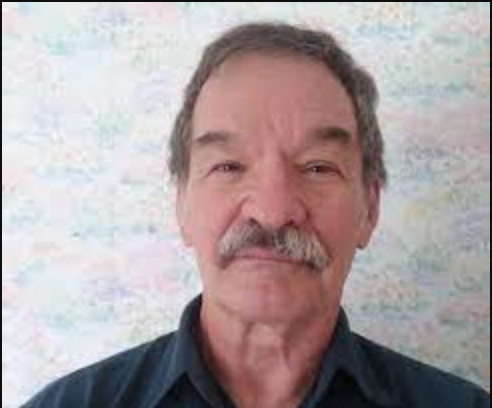
Ted Glick has devoted his life to the progressive social change movement. After a year of student activism as a sophomore at Grinnell College in Iowa, he left college in 1969 to work full time against the Vietnam War. As a Selective Service draft resister, he spent 11 months in prison. In 1973, he co-founded the National Committee to Impeach Nixon and worked as a national coordinator on grassroots street actions around the country, keeping the heat on Nixon until his August 1974 resignation. Since late 2003, Ted has played a national leadership role in the effort to stabilize our climate and for a renewable energy revolution. He was a co-founder in 2004 of the Climate Crisis Coalition and in 2005 coordinated the USA Join the World effort leading up to December actions during the United Nations Climate Change conference in Montreal. In May 2006, he began working with the Chesapeake Climate Action Network and was CCAN National Campaign Coordinator until his retirement in October 2015. He is a co-founder (2014) and one of the leaders of the group Beyond Extreme Energy. He is President of the group 350NJ/Rockland, on the steering committee of the DivestNJ Coalition and on the leadership group of the Climate Reality Check network.
ZNetwork is funded solely through the generosity of its readers.
Donate




