


Written on the occasion of the forthcoming “Apocalypse Now?” issue of the Occupied Times of London, as well as the People’s Climate March in New York City and events before and after, and also the publication of the newly revised and expanded edition of my book, Toward Climate Justice. (Links: theoccupiedtimes.org, peoplesclimatemarch.org, convergeforclimate.org, beyondthemarch.org, new-compass.net/publications/toward-climate-justice-2nd-edition)
– Brian Tokar
Today it often feels as though we are hopelessly mired in apocalyptic thinking, both in our social movements and in popular culture. From Hollywood blockbusters to art house dystopias, and from hip-hop lyrics to “serious” literature, images of irreversible climate chaos, interminable warfare, and total societal collapse seem increasingly inescapable. Apocalyptic visions appear equally-pervasive in current radical discourse, from Derrick Jensen’s popular “end of civilization” treatises from the US west coast to the more contemplative but perhaps equally despairing works of Paul Kingsnorth and the rest of the UK Dark Mountain group.
For some, such outlooks are simply the logical conclusion of even a cursory examination of current climate science. If we don’t stop burning fossil fuels within the next few years – a prospect that seems unimaginable in the current political context – we could face global warming of 4-6 degrees C by the end of this century, resulting in the collapse of the relatively stable patterns of weather and climate that have helped sustain human life on earth for thousands, and likely tens of thousands of years. Absent any semblance of a meaningful global agreement to curtail climate pollution, how can we possibly fend off utter catastrophe?
For some youthful radicals, the prospect of a civilizational collapse is invigorating: the more dire a future we face, the greater the urgency of revolutionary action and the more inviting the challenge. But for most people, facing the unthinkable is merely a path to despair and disengagement. If apocalypse is inevitable, why bother with activism at all? More people will prefer to just dig in, refocusing their energies toward the private sphere and the pleasures (or struggles) of everyday life. One recent study suggests that broad scientific literacy only correlates strongly with climate awareness in relatively progressive-minded circles; for most people, it appears far more important to fit in with the inclinations of one’s own social group than to embrace any particular understanding of the truth.
A recent book, Catastrophism: The Apocalyptic Politics of Collapse and Rebirth, by four North American activist-scholars, describes in some detail how apocalyptic thinking has historically been a dead-end for the left, a chronic enabler for the right, and an outlook that radical movements embrace at their peril. “The politics of fear,” they argue, “play to the strengths of the right, not the left,” and best serve those interests that are “against equality and for war, hierarchy and state violence.”
In contrast, as social movement historian Richard Flacks has shown, people will willingly disrupt the patterns of their daily lives to engage in the project of “making history” once they have a tangible sense that a better way is possible. This, for Flacks, is among the historic roles of democratic popular movements: to further the idea “that people are capable of and ought to be making their own history, that the making of history ought to be integrated with everyday life, that [prevailing] social arrangements … can and must be replaced by frameworks that permit routine access and participation by all in the decisions that affect their lives.”
We now know that events over the next few years and the decades that follow will determine whether the destabilization of the climate will be disruptive and difficult, or catastrophic and extreme. We know the world has both the technical and financial means to end the world’s dependence on fossil fuels and transform our energy systems. We also know it’s possible to enjoy a significantly higher quality of life at much lower levels of personal consumption than we are daily being sold on. This is largely because we now live under an inherently wasteful economic system that eschews any limits to its expansion and growth, a capitalist system that produces in opulent excess, even as a couple of billion people lack the means to satisfy their most basic human needs.
A large portion of the system’s productive capacity mainly serves conspicuous consumption and advertising, or warfare and militarism. In the US, 40 percent of the food that is produced goes to waste every year. In this period of widespread economic stagnation, the expansion of US infrastructure to extract and distribute fossil fuels is expanding at its fastest pace since the economic boom years of the 1950s. This even as scientists affirm that at least three-quarters of known fossil fuel reserves need to remain in the ground to avoid utter climate chaos. At current oil prices, technologies for tapping “unconventional” sources of oil and gas, such as hydro-fracking, horizontal drilling, deepwater drilling, and oil extraction from tar sands—once seen as hypothetically possible but economically prohibitive—have become central to the fossil fuel industry’s plans for the future. Fortunately, communities around the world that are faced with the most immediate consequences of “extreme energy” extraction are organizing, helping spark a wider, reinvigorated global opposition.
The future of humanity, and indeed much of life on earth, now depends on the flourishing of those communities of resistance. From people facing threats from fracking or new oil and gas pipelines, to indigenous and other land-based peoples engaged in long term struggles against accelerated resource extraction – as well as urban communities that are highly vulnerable to temperature extremes and other environmental health threats – the call for climate justice is a potentially unifying message. In other settings, people are reclaiming the potential for localizing food systems and creating community-owned energy alternatives. With proposed top-down solutions faltering – from climate diplomacy to corporate-owned solar and wind farms – the long-standing historical promise of a movement of movements may be our best hope for redeeming the future.
In the 1970s and early eighties a very decentralized grassroots antinuclear movement in Europe and the US prevented the construction of hundreds more nuclear power plants, often embracing a prefigurative politics of community-based direct action rooted in an internal praxis of direct democracy. Many groups called not only for an end to nuclear power, but also offered a vision of a new social order, rooted in solar-powered communities poised to reclaim their political future as well as their energy future. Efforts to redesign buildings and public spaces, and to “green” entire cities, were among that movement’s important offshoots, as was the emergence of Green politics on both sides of the Atlantic. Some activists drew inspiration from the writings of Murray Bookchin and other social ecologists who explored the social and political roots of environmental problems and offered reconstructive visions of a fundamentally transformed society rooted in popular power and confederated direct democracies.
Clearly today there is no single blueprint for social transformation, but rather a renewed culture of resistance and a search for new dynamic processes of social and ecological renewal. Peace studies scholar Randall Amster correctly states that our utopian projects “are properly viewed as ongoing experiments and not finished products.” In the early 1960s (well before the wide acceptance of non-sexist language), the future studies pioneer Frederick Polak wrote that “… if Western man [sic] now stops thinking and dreaming the materials of new images of the future and attempts to shut himself up in the present, out of longing for security and for fear of the future, his civilization will come to an end. He has no choice but to dream or to die, condemning the whole of Western society to die with him.” This is equally true across boundaries of gender and social status, and is no longer limited to the West. While some may still cheer on the proverbial ‘end of civilization,’ a livable future for everyone depends on a far more challenging, but also far more hopeful project of ecological and social renewal.
The coming week’s events in New York City raise the hope of taking that project to a whole new level. See:
A newly revised and expanded edition of Brian Tokar’s Toward Climate Justice, has just been issued by the New Compass Press (new-compass.net/publications/toward-climate-justice-2nd-edition). He is the director of the Institute for Social Ecology (social-ecology.org) and a lecturer in environmental studies at the University of Vermont.

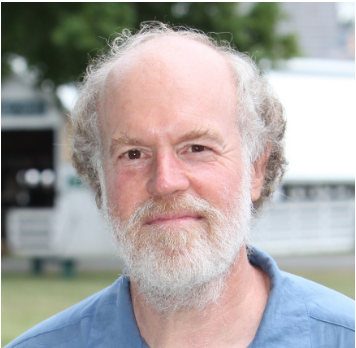
Brian Tokar is an activist and author, and a long-time faculty and board member of the Institute for Social Ecology, based in Plainfield, Vermont. He is the author of The Green Alternative (1987, Revised 1992), Earth for Sale (1997), and Toward Climate Justice: Perspectives on the Climate Crisis and Social Change (2010, Revised 2014), and he has also edited three volumes on biotechnology and food issues. His latest book is Climate Justice and Community Renewal: Resistance and Grassroots Solutions (Routledge, 2020), an international collection on grassroots climate responses, coedited with Tamra Gilbertson, a lecturer at the University of Tennessee. Brian was a founding board member of Vermont’s 350.org affiliate, 350Vermont, and served on that board for ten years. He has contributed to several recent international collections, including The Routledge Handbook on the Climate Change Movement (2014) and Handbook of Climate Justice (2019), Climate Justice and the Economy (2018), Globalism and Localization: Emergent Solutions to Our Ecological and Social Crises (2019), The Global Food System: Issues and Solutions (2014), and Pluriverse: The Post-Development Reader (2019).
ZNetwork is funded solely through the generosity of its readers.
Donate





1 Comment
“history ought to be integrated with everyday life”
history IS integrated with everyday life
which is why strolling around manhatten, for a few hours, then going back to the same daily routines that put us in this fix, will change nothing.
http://www.truth-out.org/news/item/26244-mexico-researcher-raises-alert-about-environmental-risks-in-region-with-highest-concentration-of-wind-farms-in-latin-america
more integration, beyond the anthroposphere