


‘We don’t do pillows … but I could get you an extra blanket.” Kind though she was, the night officer at Clydebank police station couldn’t turn a stone-floored police cell into a cosy bed and breakfast. I’d been driven back to Glasgow after my arrest during a protest at the Faslane nuclear base. The officer did stretch the rules: by the end of my 24-hour stay the satirically labelled “Fastasleep” prison mat was strewn with books, despite the regulation about one item of reading matter. Perhaps it was a relief, after nights of aggressive drunks, to face timorous requests for “the notebook at the top of my rucksack” or my toothbrush. Or perhaps she was influenced by the fact that many of her friends and family sympathise with the protesters. Even before recent talk of replacing Trident, 70% of Scottish people wanted it scrapped. The percentage supporting its replacement will soon be down to single figures.
Within the police force there is respect for the nonviolent actions of people such as Angie Zelter, a past saboteur of Hawk jets bound for East Timor and now one of the organisers of Faslane 365 – whose appeal for people to join its year-long blockade brought me up from Manchester. Angie was one of the people arrested with me. A CID officer asked to be let into her cell to shake her hand to show his respect for the Hawk action. Now Angie is midwife to a movement to stop up to £40bn being spent on weapons whose threatened use (the basis of nuclear deterrence) has been declared illegal by the international court of justice. It would take a fraction of the Trident money to find jobs for the people around Loch Lomond whose economy depends on the incongruous combination of one of Britain’s most beautiful tourist spots and the nuclear base.
It was as clear as the glaring light of my police cell that nothing within the political system was going to change the government’s decision. Democracy in the Labour party has all but been destroyed by Tony Blair, Gordon Brown and sickening opportunism from many who should know better. The response of the Lib Dems has been pathetic.
Civil disobedience is the only way to give voice to the majority of people who want the UK to champion, not undermine, the nuclear non-proliferation treaty, and who want the billions being sunk in the Clyde to be spent on ending the poverty that feeds violent conflict. Civil disobedience is not an end in itself. It is leading to pressure on the Scottish parliament to rid Scotland of nuclear weapons. With the SNP strongly against these arms and likely to become the majority party at Holyrood in May, the fact that defence is not among the devolved powers is not going to protect Trident. The Scottish parliament can use its transport and environment powers to make the base unworkable, and/or it can appeal to the international laws – now part of Scottish as well as English law – that make nuclear deterrence illegal.
Civil disobedience is infectious. On January 8 Scottish parliamentarians who will join the blockade. Clerics too have got their act together, including canons close to the Archbishop of Canterbury. You don’t have to be an Angie Zelter. And if you get locked up you should be the proud recipient of a letter – “the evidence is sufficient to justify my bringing you before the court of this criminal charge (of breach of the peace) … I have decided not to take such proceeding” – from a wise procurator fiscal who knows that when the law moves away from moral common sense, it loses its legitimacy and people lose faith in the institutions trying to implement it.
For more information on the Faslane blockade see Faslane365.org.
Hilary Wainwright is co-editor of Red Pepper.
Guardian Unlimited © Guardian News and Media Limited 2006

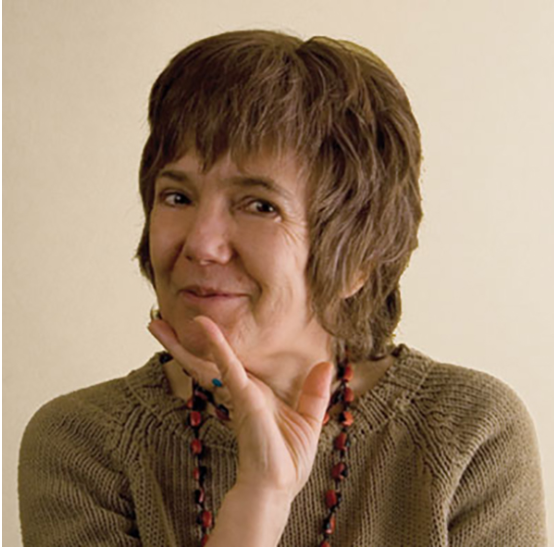
Hilary Wainwright is Research Director of the New Politics Programme at the Transnational Institute and editor of Red Pepper, a popular British new left magazine. She is also an Honorary Fellow in Sociology at Manchester University, UK. Her books include Reclaim the State: Adventures in Popular Democracy (Verso/TNI, 2003) and Arguments for a New Left: Answering the Free Market Right (Blackwell, 1993). She has written for ZNet, The Guardian, The Nation, New Statesman, Open Democracy, Carta, Il Manifesto and El Viejo Topo, as well as appearing as a commentator on BBC1, BBC Radio 4 and the BBC World Service. She has been a Senior Research Fellow at the International Labour Studies Centre, University of Manchester; a Research Fellow at the Centre for the Study of Global Governance at the London School of Economics, at Durham University and at the Open University, UK; Visiting Professor at the University of California, Los Angeles; and a Visiting Scholar at the Havens Center, University of Wisconsin, Madison and at Todai University, Tokyo. Wainwright also founded the Popular Planning Unit of the Greater London Council during the Thatcher years, and was convenor of the new economics working group of the Helsinki Citizens' Assembly from 1989 to 1994.
ZNetwork is funded solely through the generosity of its readers.
Donate




