


Workers across the country are embracing their power in unprecedented ways. Many hope this “hot labor summer” is just the beginning.
Workers have had enough.
In what many have labeled “hot labor summer,” hundreds of thousands of laborers are raising their voices and taking to the streets to demand living wages and better working conditions.
From thousands of writers and actors in Hollywood to thousands of airport workers at major travel hubs nationwide to hotel workers in southern California, working people, across the country and across industries, are embracing their power in unprecedented ways. Starbucks workers are boldly calling out corporate greed and fighting for a fair contract; hundreds of thousands of UPS drivers have possibly averted what would have been one of the largest walkouts in U.S. history at a single employer by flexing their muscles to win a historic contract; and laborers with the Union of Southern Service Workers are challenging the legacy of Jim Crow in the South as they call out exploitative employers like Waffle House.
The power of this moment is impossible to ignore. Beyond grabbing headlines, the wave of recent strikes and union activity is driving change across industries. Workers are standing together to challenge a system that puts all the power in the hands of employers. From A-list actors to fast-food cooks, workers are united in their fight against the rapacious CEOs padding company profits while working people struggle to survive.
Workers joining together and speaking out have helped make unions more popular than they have been in years, with more than 70% of Americans saying they approve of unions (the highest that number has been since 1965) — and it’s no surprise why. Workers in unions earn an average of 18% more than non-union workers and have better access to paid leave and healthcare. This is part of why union membership serves as a way to combat racial and gender wealth gaps and lessens income inequality.
Hotel workers represented by Unite Here Local 11 picket outside the InterContenental hotel on day one of a strike by workers at many major hotels in Southern California. Photo by Mario Tama via Getty Images
In the U.S., poverty is a death sentence. It kills more people than homicide, respiratory disease, gun violence and opioid overdoses—and that was before the Covid pandemic.
While employers dig in to protect the status quo, workers’ united demands are simple: choose justice, end poverty, save lives. Workers are building on a long history in the United States of framing living wages and a voice on the job as a moral issue. President Franklin D. Roosevelt adopted the moral argument of the Social Gospel when he declared that “no business which depends for existence on paying less than living wages to its workers has any right to continue in this country.”
Not only is raising pay and giving workers a voice on the job the right thing to do, it’s a matter of life or death. Researchers at the University of California, Riverside recently released a study showing that poverty is the fourth leading cause of death in America, killing hundreds of thousands every year. In the U.S., poverty is a death sentence. It kills more people than homicide, respiratory disease, gun violence and opioid overdoses — and that was before the Covid pandemic.
It has been 14 years and three presidents since Congress last raised the federal minimum wage. In 2021, 112 million people—one in three people — were poor or low-income, and 52 million of those people were working for less than $15 an hour. Wages are not keeping pace with inflation and the skyrocketing cost of housing, and the end of pandemic-era federal programs is only worsening the crisis for low-income families who work tirelessly to put food on the table and keep a roof over their heads. Our demand for a living wage is the moral issue our nation’s leaders should be focused on. Isaiah 10 says, “Woe unto those who legislate evil and rob the poor of their rights, and make women and children their prey.” It is a moral travesty for us to stand idly by as the wealthy in this nation continue to become richer while our country’s most vulnerable are being denied basic human rights like healthcare and living wages.
While corporate profits are skyrocketing — with the S&P 500 hurtling toward another record high this year—close to 6.5 million working people are living below the poverty line. Executive pay has soared by close to 1,500% over the past 43 years, and, this year, the revenue threshold for making the Fortune 500 list went up 13% from last year to $7.2 billion. As corporations hoard money and power year after year, the workers who help generate that wealth continue to be exploited while seeing none of the earnings. The situation isn’t just absurd, it’s dangerous, and the cost is death.
While workers brave the heat, corporations have been ruthless, like airline contractors who failed to provide cabin cleaners with water in 110-degree heat or Hollywood studios who cut down the trees that provided striking writers with shade on the picket line.
Instead of listening to their workers, corporations have threatened to wait out strikes until workers are homeless or delay and delay negotiations with the hope that workers lose steam. While workers brave the heat, corporations have been ruthless, like airline contractors who failed to provide cabin cleaners with water in 110-degree heat or Hollywood studios who cut down the trees that provided striking writers with shade on the picket line.
It’s clear who has the moral high ground here.
Hollywood actors in the SAG-AFTRA union picket with screenwriters outside of Los Angeles’ Paramount Studios in July. Photo by David McNew via Getty Images
If wealthy companies won’t act, our elected leaders need to force them to do the right thing. We need bold proposals like the Third Reconstruction resolution proposed by members of Congress to bring about economic justice in the United States and a comprehensive approach to address poverty and other systemic injustices. Drawing on the history of the Reconstruction following the Civil War and the Second Reconstruction of the civil rights struggles of the 20th century, the resolution’s sweeping set of 20+ proposals seeks to prioritize the needs of our nation’s 140 million poor and low-income people by raising the minimum wage to a living wage; updating the obsolete official poverty measure to reflect what it takes to secure a decent standard of living today as a new baseline for anti-poverty and welfare programs; expanding unemployment insurance and paid family leave; enshrining the right to form or join a union and guaranteeing access to basic needs like housing, water and health care.
It’s time for our elected leaders to show us whose side they’re on and stand with the millions of working people who serve as the backbone of our economy and communities. Poor and low-wealth people make up nearly 40% of potential voters. If our nation’s leaders fail to act, we’ll find them at the polls, and right this wrong ourselves.
This summer’s worker uprising isn’t just a moment in time, it’s a movement that will continue to grow in strength and numbers until economic justice becomes a reality for all of us. From coast to coast, working people are raising the heat and making their demands loud and clear — and it’s long past time for greedy corporations to pay up.

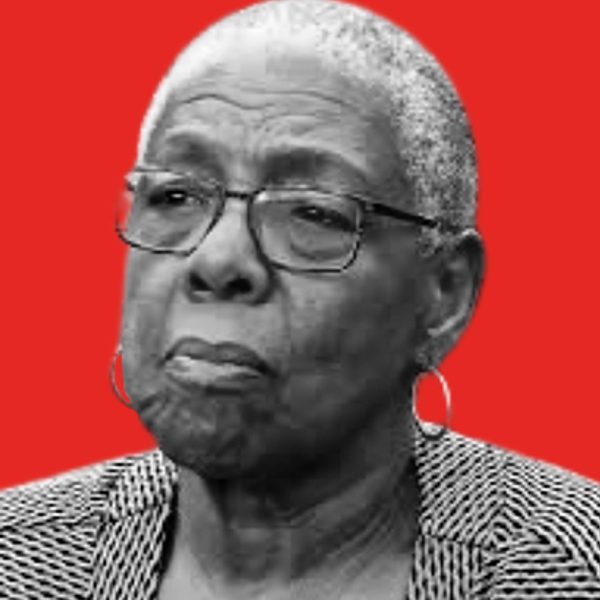
Rosalyn Pelles is a longtime labor organizer and lecturer at the Yale Divinity School’s Center for Public Theology and Public Policy.
ZNetwork is funded solely through the generosity of its readers.
Donate




