


“Never doubt that a small group of thoughtful, committed citizens can change the world; indeed, it’s the only thing that ever has.†Margaret Mead
“The masses make history.†Mao Tse-tung
Several days ago I was interviewed on a Chicago radio station about my work on the climate crisis. In the context of discussion about the big, 30,000 person demonstration in Montreal, Quebec on December 3rd, one of the questions had to do with the effectiveness of such actions. The interviewer asked if they were much more than a convening of the already committed, like preaching to the choir.
In the case of Montreal, there’s no doubt in my mind that this big action, combined with actions in 30 other countries around the world at the same time involving another 70,000 or so people, did have an impact on the United Nations Climate Change conference. It strengthened the resolve and unity of enviros working for the earth inside it. It did the same for many non-U.S. governmental delegates, helping them stand up to the U.S.’s attempts to sabotage the conference. As a result, there were a number of positive, if limited, developments on the stop global warming front coming out of this U.N. gathering.
I’ve participated in and helped to organize a fair number of demonstrations of tens or hundreds of thousands of people over the 38 years that I’ve been an activist. It’s much easier to make a positive case for actions like these that always generate media coverage both before and after. From my experience, actions of this kind also help to strengthen individual participants for the often-boring or difficult day-to-day work back home. This is true even when there are way too many speakers talking for way too long. They send a signal to many not there who hear about them that there is hope, that there are large numbers of people who think the same way. For others, they raise questions about the particular issue being addressed that, over time, will help in the on-going and essential process of consciousness-raising on issues.
Yesterday, I participated in another demonstration, a small one in sub-freezing weather in downtown Newark, N.J. in support of the demand for housing and justice for the victims of Katrina/FEMA, tens of thousands of whom are being evicted from hotels and motels this month. I was one of the first to arrive, right on time, when there were only a few of us. 15 minutes later, when we began picketing and chanting slogans, there were only 10 on the picket line. Although it slowly grew to include about 25 people at the high point, and although there were many hundreds of people on this busy downtown street corner who saw us and scores who took leaflets, it was, without question, a demonstration “of the choir.â€
I’ve participated in smallish actions of a core group like yesterday’s too many times to count during my years of activism. Some have been smaller.
It seems to me that there’s a connection between these smaller actions, or the small meetings or forums, that progressive organizations are always having and the much more rare major demonstrations of tens or hundreds of thousands.
Both are necessary if we are to effect pro-justice social change.
We need “small groups of thoughtful, committed citizens (working together to) change the world.†Usually the activities of these core groups will not be massive, although there are moments in history when conditions ripen such that, seemingly all of a sudden, much larger numbers of people start coming to the meetings and the actions. Core groups of social change activists should always be working toward this changed political reality, even if history teaches us that they’re not the norm.
During those ebb times when the growth seems all too slow, the enemies we are facing all too powerful, the small actions play their role. They keep us “in training,†as it were. They alert those who observe them or who hear about them in the news or via word of mouth that there are organized groups taking up their issues, leading to incremental growth for the organizations. Sometimes the smaller actions, if done in a way that is tactically smart and part of an on-going campaign, lead to victories, and victories are important.
But Mao was also right when he said that “the masses make history.†He got some other things wrong during his up-and-down political career, but he was on target with this one. Small groups, even groups of highly dedicated, smart and experienced organizers, can only do so much.
If we are talking about fundamental change, revolutionary change, about overturning structures of institutionalized racism, oppression and injustice, about getting at the root of the terrorism of the stateless by addressing the growing gulf between the obscene super-rich and the struggling poor and working class people, about saving our deeply wounded and seriously threatened ecosystem—if this is what we are about, then we need a mass movement of millions, of tens of millions in the USA, and as soon as possible.
It’d be great if the upcoming March for Peace, Justice and Democracy (and the Earth) on April 29th in NYC sparked such a movement. If it keeps building, if huge numbers turn out, it just might.
Ted Glick is Project Coordinator of the Climate Crisis Coalition (www.climatecrisis.us) and acting coordinator of the Independent Progressive Politics Network (www.ippn.org), although these ideas are solely his own. He can be reached at indpol@igc.org or P.O. Box 1132, Bloomfield, N.J. 07003.

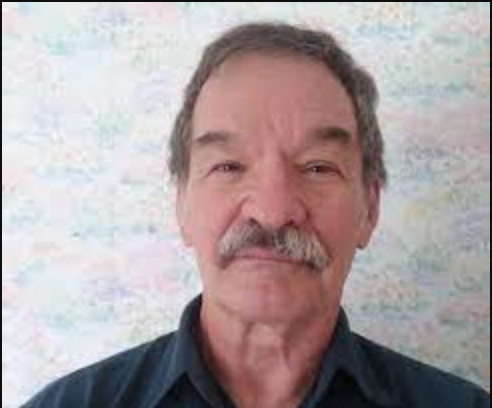
Ted Glick has devoted his life to the progressive social change movement. After a year of student activism as a sophomore at Grinnell College in Iowa, he left college in 1969 to work full time against the Vietnam War. As a Selective Service draft resister, he spent 11 months in prison. In 1973, he co-founded the National Committee to Impeach Nixon and worked as a national coordinator on grassroots street actions around the country, keeping the heat on Nixon until his August 1974 resignation. Since late 2003, Ted has played a national leadership role in the effort to stabilize our climate and for a renewable energy revolution. He was a co-founder in 2004 of the Climate Crisis Coalition and in 2005 coordinated the USA Join the World effort leading up to December actions during the United Nations Climate Change conference in Montreal. In May 2006, he began working with the Chesapeake Climate Action Network and was CCAN National Campaign Coordinator until his retirement in October 2015. He is a co-founder (2014) and one of the leaders of the group Beyond Extreme Energy. He is President of the group 350NJ/Rockland, on the steering committee of the DivestNJ Coalition and on the leadership group of the Climate Reality Check network.
ZNetwork is funded solely through the generosity of its readers.
Donate




