


Baghdad , Jun 14 – Even as authorities for the US-run occupation cede a greater share of security responsibilities to Iraqi forces, spokespeople for the Iraqi police and paramilitaries in many areas of the war-torn country say they lack the legitimacy and tools necessary to carry out their duties. With the transfer of official sovereignty to a US-sanctioned governing body just over two weeks away, officials with both the Iraqi Civil Defense Corps and the Iraqi Police complain they are understaffed, under-equipped and undermined by the US.
And where US control over indigenous security forces ends, it is becoming clearer that the authority of local resistance forces begins.
Bassim Mahmoud Hamid, the Iraqi Police (IP) spokesman for the Ministry of the Interior, says the lack of autonomy from the US military has placed IP personnel in the precarious position of being closely linked to the occupation, rendering them unpopular with ordinary Iraqis and targets of the resistance. ‘We’ve lost more than 200 policemen in Baghdad in the last two months, and ten high ranking officers who have been assassinated,’ Hamid said during an interview in the Coalition conference center.
Hamid said he is frustrated by what he sees as Coalition forces usurping his authority. ‘We are arresting criminals, and the [US] military are coming and forcing us to release some of them, and this has caused many problems for us,’ Hamid said. ‘After June 30, I hope that we’ll be allowed to do the job we have been trained to do, without the interference of the Americans.’ Hamid noted that in a rush to free prisoners from Abu Ghraib and other facilities, the US is setting loose many people the police believe constitute an actual danger to Iraqi society.
Many members of the Iraqi Police and the Iraqi Civil Defense Corps (ICDC) — all of them hired and trained by the United States military or private contractors working on its behalf — are openly critical of the very institutions that pay their meager salaries.
‘The Americans are not good people,’ one policeman commented in Fallujah.
Abdul Rahman, a captain in the Fallujah ICDC, was equally straightforward: ‘We want them out of our country.’
The Fallujah Factor
In Fallujah, US forces have had great difficulty controlling the Iraqi Police and Civil Defense Forces.
There are definite signs that the ICDC and Iraqi Police in the rebellious city are working independently of their US backers. But they appear less independent of the local resistance forces. It is widely understood that the ICDC are collaborating with the local resistance forces, known to Iraqis as mujahideen. Some say the official Iraqi forces are in part run by the mujahideen.
According to the Army Times, the problems for the US military started even before April’s heavy fighting in Fallujah between US Marines and the formidable local mujahideen. ‘Iraqi police and security virtually melted away from the city streets that were taken over by the gunmen,’ reported the Times in a May 24 article about Iraqi forces who were supposed to be assisting US troops with the security of Fallujah before April’s showdown.
Colonel John Toolan, commander of the 1st Marine Regiment near Fallujah, was quoted by the Associated Press as saying, ‘When the fighting started [in Fallujah], it was difficult to get hold of the [Iraqi] security battalion, really, everybody left.’
In a recent interview, Colonel Sabar Fahdil, the commander of the Fallujah police, openly expressed his anger toward what occurred in his city during April. ‘I was there negotiating with the Americans, but they broke the ceasefire so many times,’ he stated firmly.
After what locals considered a victory by the Fallujah armed resistance over US Marines last month, Iraqi police and paramilitaries celebrated openly in the streets, arm-in-arm with the very same mujahideen fighters whom the US had directed them to rout. Even before the celebration began, while Marines were still in the area, Iraqi policeman Ahmed Saadoun Jassin smiled from ear to ear. ‘I can’t describe to you the happiness I feel right now,’ he said. ‘This is a victory for Islam.’
Dhasin Jassim Hamadi, a major in the ICDC, said relations with the US military are minimal and strained. ‘During April the Americans bombed our headquarters and killed three men,’ he said angrily. ‘But now we work under the supervision of the mayor and conduct joint patrols with the police.’
‘We demanded independence from the Americans,’ he added with a large smile. ‘And we got it.’
All of the Iraqi paramilitaries and police claimed they command more respect from the people of Fallujah now that the US forces have left the city. ‘It is obviously better here without them, so of course the people respect us more,’ said Amin, a 28 year-old member of the ICDC, who admitted common crimes still pose a significant problem in Fallujah.
‘Our situation is unstable,’ explained a mechanic in the city’s industrial quarter in May who agreed to speak on condition of anonymity. ‘Only as long as the mujahideen are allowed to run things here, there aren’t as many problems.’
Ill-equipped and Undermined
Back in Baghdad, members of the Iraqi security forces complain that US forces interfere with their work.
Some police officers say they are at times completely undermined by the US military in their own police stations. Abdulla Ali, a policeman in the Al-Adhamiya district of Baghdad, said that when the US Army conducts operations in the area, they occupy his station as a tactical measure.
‘When the Americans take over our police station, they bring us all together and tell us we are no longer in charge of anything,’ he said, holding up his arms in exasperation.
A Baghdad police officer used an anecdote to illustrate the contrast between Iraqi and American methods of providing ‘security’ in the city. According to the policeman, who spoke on condition of anonymity, US soldiers occupied his station and shot at a passing car from the rooftop. Then, he said, when several Iraqis attempted to pull a wounded man from the car, the troops opened fire on the would-be rescuers, too.
‘This is the usual policy of the Americans,’ the policeman said. ‘They always shoot first, because there is nobody to punish them for their mistakes.’ Further complicating the situation is what Iraqis and some American officials characterize as the failure of the US-led forces to properly equip their Iraqi surrogates.
In March, Major General Charles Swannack became the first high-ranking American officer to publicly criticize the US for failing to provide weapons to the Iraqi Police and Civil Defense Corps. Along with other officials, Swannack confessed that eleven months into the occupation, Iraqi security personnel were lacking even the most basic protections afforded their American counterparts.
Jamman Ahmed Al-Awany is a commander of the Iraqi Police in Al-Anbar Province, the area west of Baghdad that includes Fallujah. In charge of 10,850 policemen, Al-Awany suggested that the sheikhs and religious men have helped to calm the volatile situation in Ramadi better than US patrols ever could. Speaking openly in his office there, he said, ‘There have been less attacks on IPs here the last few months because so many of [the policemen] come from this area.’
IP spokesman Hamid believes that with greater autonomy, the police force in Iraq would earn more respect from the Iraqi people. ‘Most Iraqi people support and encourage the Iraqi Police,’ he added.
Hamid expressed confidence in the potential of the Iraqi Police to stabilize a society growing seemingly closer to complete disorder by the month. ‘We are ready to take over the security situation, because we know how to do this.’ He said US commanders ‘will commit the biggest mistake in their life if they don’t let the Iraqis control the security situation.’
Yet many Iraqis say they do not trust the police. A taxi driver in Karrada named Abbas compared the police to gangsters and said they are particularly abusive toward drivers.
‘My internet café was looted twice by local Iraqi Policemen,’ said Amin Mamoud, a proprietor in the Al-Adhamiya district of Baghdad. ‘So many of them are criminals themselves,’ he concluded.

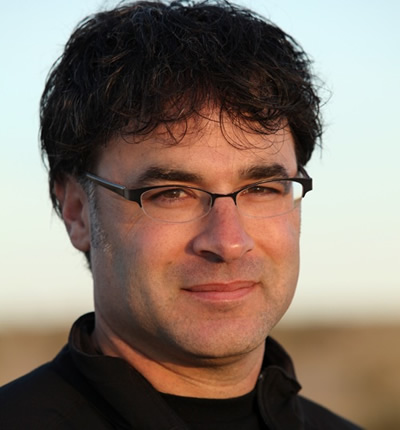
Dahr Jamail is the Baghdad correspondent for The NewStandard. Jamail, a political activist from Anchorage, Alaska, first traveled to Iraq in November 2003 to write about the effects of the US occupation on the Iraqi people. After nine weeks covering Iraq under occupation, he returned to the US and addressed audiences in Alaska and the Northeast about his experience. He has recently returned to Iraq in order to continue reporting on US occupation and privatization. You can view his dispatches and articles at http://newstandardnews.net/iraq.
ZNetwork is funded solely through the generosity of its readers.
Donate




