


Saved from the wrath of a U.S. air strike on November 8 near Mosul, Iraq, Abu Bakr al-Baghdadi, the Caliph of the Islamic State, returned less than a week later with a defiant audio message. He called upon his soldiers to “erupt volcanoes of jihad everywhere.” The sharpest words were for the U.S., which al-Baghdadi said was “terrified, weak and powerless.” The aerial bombing had accomplished little, and the U.S. is “unable to send ground forces to fight the mujahideen.” Al-Baghdadi took the opportunity to announce that his Islamic State (IS) has accepted the oath of loyalty (bay’ah) of the Ansar Bayt al-Maqdis of Egypt, of the al-Qaeda operation in Yemen and of the city of Derna in Libya. Al-Baghdadi’s was a terrifying sermon of triumph — “divide their gatherings, split their body, dismember them completely.” Out of northern Iraq and Syria, the IS spills over into the Arabian Peninsula and North Africa.
As al-Baghdidi released his audio message, U.S. Secretary of Defense Chuck Hagel went before the U.S. Congress to brief them on the U.S. mission in Iraq and Syria. After 130 air strikes, Mr. Hagel said, the IS remains a “serious threat” to the U.S. He said that the U.S. knew that the IS would “adapt, they will adjust by manoeuvring in smaller groups, sometimes making it more difficult to identify targets, hiding large equipment and changing their communication methods.” Jihadi groups had in recent years described their tactics with the colourful phrase, “we are like serpents amongst the rocks,” slithering here and there, on the move. Aerial bombardment is insufficient against such canny tactics. Mr. Hagel said that the U.S. is unwilling to commit ground troops into the morass of northern Syria.
True to its name
The steady pledges of loyalty from North Africa and the Arabian Peninsula strengthen the IS’s position. It is no longer like al-Qaeda, the conspiratorial group that sat in the shadows and used isolated cells to strike at the “near enemy” (Arab governments) and the “far enemy” (the U.S.). The IS has become true to its name. Significantly, al-Qaeda in Yemen signed up to its agenda. It had held large parts of the Abyan Governorate, including the city of Ja’ar, from March 2011 to June 2012. The experience in Yemen had shown that al-Qaeda need not remain merely a terrorist group, but could become the rulers of large tracts of land with large populations (Abyan has half a million residents). Northern Syria has already been in IS hands since May 2013 and substantial parts of northern Iraq since December of that year. No wonder that al-Baghdadi sees his movement as superior to that of Ayman al-Zawahiri’s al-Qaeda.
In an earlier generation, Arabs left their Afghanistan experience to bring the habits of jihad to their homelands; now veterans from Iraq and Syria return to Egypt, Libya and Yemen to direct the extremists in their countries. It is such men that turned the extremist stronghold of Derna, Libya, into an Islamic State enclave, and such men drew Ansar Bayt al-Maqdis from its war in the Sinai Peninsula to hold greater ambitions for all of Egypt. In Derna, AP reporter Maggie Michael found, the jihadis intimidated extremist factions and killed anyone who did not accept their authority. Force is essential to the IS, but so too is the charisma of their efforts in Iraq and Syria. The audacity of their endeavour wins them allegiance from groups that face stiff repression and do not see any purpose in their own previously limited efforts.
Reservoirs of discontent
Small pockets of hardened jihadis attract people across the region who have suffered greatly for their largely peaceful political efforts. The anticipations of the Arab Spring have been snuffed out for reasons that many people simply do not want to recount. Return of the old dominant classes, sanctified by the West and the Gulf Arab states, has turned the harsh machinery of the state against popular pressure. Iraqi security forces massacred untold numbers of peaceful protesters in their encampment in al-Hawija, Iraq in April 2013, and a few months later the Egyptian security forces killed over a thousand peaceful protesters in Rab’a al-Adawiya in Cairo.
In both cases, the path of peaceful resistance was shut down mercilessly. Little was said of the dead in the West, where the return of strongmen to Iraq and Egypt is privately celebrated.
The IS has been able to drain the reservoirs of discontent among pious people who see no justice coming from the strong-armed states in Iraq or Egypt, or indeed amidst the chaos of Libya and Syria. Here lie eerie parallels with the manner in which the Taliban in Afghanistan and Pakistan as well as the Islamic Courts Union and its youth wing al-Shabaab in Somalia are able to appeal to people as being just and incorruptible. As long as the strong arm of the state crushes the ordinary hopes of everyday people, groups like the IS will find the means to appeal to their desperation. It is precisely what has occurred in the Sinai and in northern Libya.
Al-Baghdadi, a small time preacher in Iraq’s Diyala province who was a minor member of Iraq’s armed forces and then the insurgency against the Americans, is now a major figure in the Arab world. This role could have been taken by the phoenix that arose in the squares of the Arab capitals in 2011. That was a social force that did not soak its rhetoric in blood and in hatred of minorities. It was, however, defeated at the hands of the perfidy of the Gulf Arabs and their Western allies. The tectonic shifts that continue to create the Continent of the Islamic State are to be found in the harsh repression of ordinary grievances — whether amongst the people of al-Hawija, who camped out against corruption and violence, or amongst the oil workers of Libya, who had demonstrated for better wages and working-conditions. The hard end of the stick fell on both, driving them onto the Continent of the Islamic State.
(Vijay Prashad is the author of The Poorer Nations: A Possible History of the Global South, 2013).

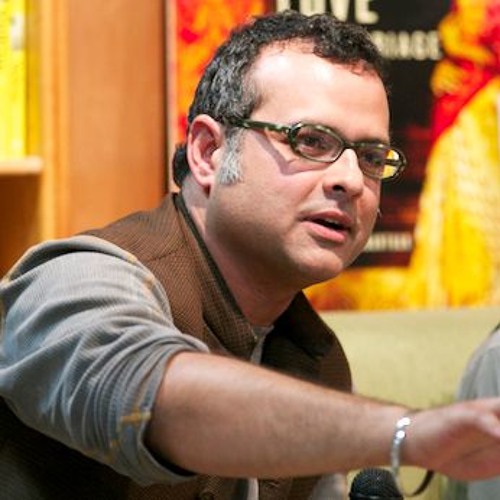
Vijay Prashad is an Indian historian, editor, and journalist. He is a writing fellow and chief correspondent at Globetrotter. He is an editor of LeftWord Books and the director of Tricontinental: Institute for Social Research. He is a senior non-resident fellow at Chongyang Institute for Financial Studies, Renmin University of China. He has written more than 20 books, including The Darker Nations and The Poorer Nations. His latest books are Struggle Makes Us Human: Learning from Movements for Socialism and (with Noam Chomsky) The Withdrawal: Iraq, Libya, Afghanistan, and the Fragility of U.S. Power. Tings Chak is the art director and a researcher at Tricontinental: Institute for Social Research and lead author of the study “Serve the People: The Eradication of Extreme Poverty in China.” She is also a member of Dongsheng, an international collective of researchers interested in Chinese politics and society.
ZNetwork is funded solely through the generosity of its readers.
Donate




