


Are you confused about what is going on in the world? So am I. So is everyone. This is the underlying and continuing reality of a chaotic world-system.
What we mean by chaos is a situation in which there are constant wild swings in the priorities of all the actors. One day, from the point of view of a given actor, things seem to be going in a way favorable to that actor. The next day the outlook looks very unfavorable.
Furthermore, there seems to be no way in which we can predict what position given actors will take on the next day. We are repeatedly surprised when actors behave in ways that we thought impossible, or at the very least unlikely. But the actors are simply trying to maximize their advantage by changing their stance on an important issue and thereby changing the alliances they will make in order to achieve that advantage.
The world-system has not always been in chaos. Quite the contrary! The modern world-system, like any system, has its rules of operation. These rules enable both outsiders and participants to assess the likely behavior of different actors. We think of this adherence to the rules of behavior as the “normal” operation of the system.
It is only when the system reaches a point in which it cannot return to a (moving) equilibrium that renews its normal operations that it enters into a structural crisis. A central feature of such a structural crisis is chaotic uncertainty.
In early September 2017, there have been three such dramatic swings in priorities and alliances. The one that has attracted most attention has been the announcement by U.S. President Donald Trump that he had reached an agreement with the Democratic leaders in Congress – Senator Chuck Schumer and Rep. Nancy Pelosi – to enact a measure for (1) emergency relief for the disaster in Texas and neighboring states without attaching any conditions, combined with (2) raising the debt ceiling for three months.
This agreement was significant for two reasons. First, Trump had been committed not ever to deal with the Democrats. Worse, this deal was seemingly on terms the Democrats had laid down. More important still, Trump made this agreement without informing until the very last minute the Republican leadership in Congress – Rep. Paul Ryan and Sen. Mitch McConnell – who understandably felt blindsided by this move. Secondly, and still worse, he suspended for six months implementing the end to the DACA program that had been proclaimed by previous Pres. Barack Obama. DACA was designed by Obama to permit the so-called Dreamers to remain in the United States and Trump had promised to cancel the program on day one of his taking office.
How long this agreement will last remains to be seen. But the mere announcement of it has upset, and probably for a very long time, all confidence between Trump and the Republicans in Congress. It was certainly a wild swing.
Less noticed but very important was a proclamation by the government of Indonesia that it had changed the name of the waters immediately to its north to the North Natuna Sea. This seemingly innocuous act can be understood in terms of the history of maritime claims in the waters of east and southeast Asia. China has been asserting for some time now claims over most of these seas and building bases on islands or even rocks located in them.
Chinese claims have been contested by the Philippines, Taiwan, and Vietnam, and also by the United States. Until now, Indonesia has tried to remain neutral in these disputes and even offered itself as a mediator. The act of renaming the waters north of Indonesia is however a proclamation of Indonesian rights to waters claimed by China. Not only is this a claim against China but also Indonesia taking a very “tough” stance by arguing this dispute in public. It may foreshadow an end to neutrality on the other disputes in the region. China immediately indicated her displeasure with this renaming. Indonesia is not backing down.
The third shift in alliances is less dramatic because it has been coming for some time. Nonetheless, it has now taken a dramatic form. Turkey seems to have renounced its obligations as a NATO member by arranging to purchase a Russian surface-to-air military system, one that is not “interoperable” with those of NATO allies.
This act is considered a major pivot away from long-standing Turkish relations with western Europe and the United States. From Turkey’s point of view, it is simply a response to acts by NATO members hostile to her. Still, it has implications not only for geopolitical alliances but for major economic arrangements. It is a way of relegating to the forgettable past Turkish grievances with Russia about Syria and Iran. Here too, how long this will last remains to be seen.
Wild swings are the daily bread and butter of a structural crisis. This means that we shall live in chaotic uncertainty until the structural crisis is resolved in favor of one of the two prongs of the bifurcation. If we concentrate on the presumed “meaning” of the wild and often momentary swings, we are doomed to act irrelevantly. We need to concentrate our analyses and our actions on what makes it more likely that the progressive side of the bifurcation outweighs the reactionary side in the middle-term resolution of the struggle.

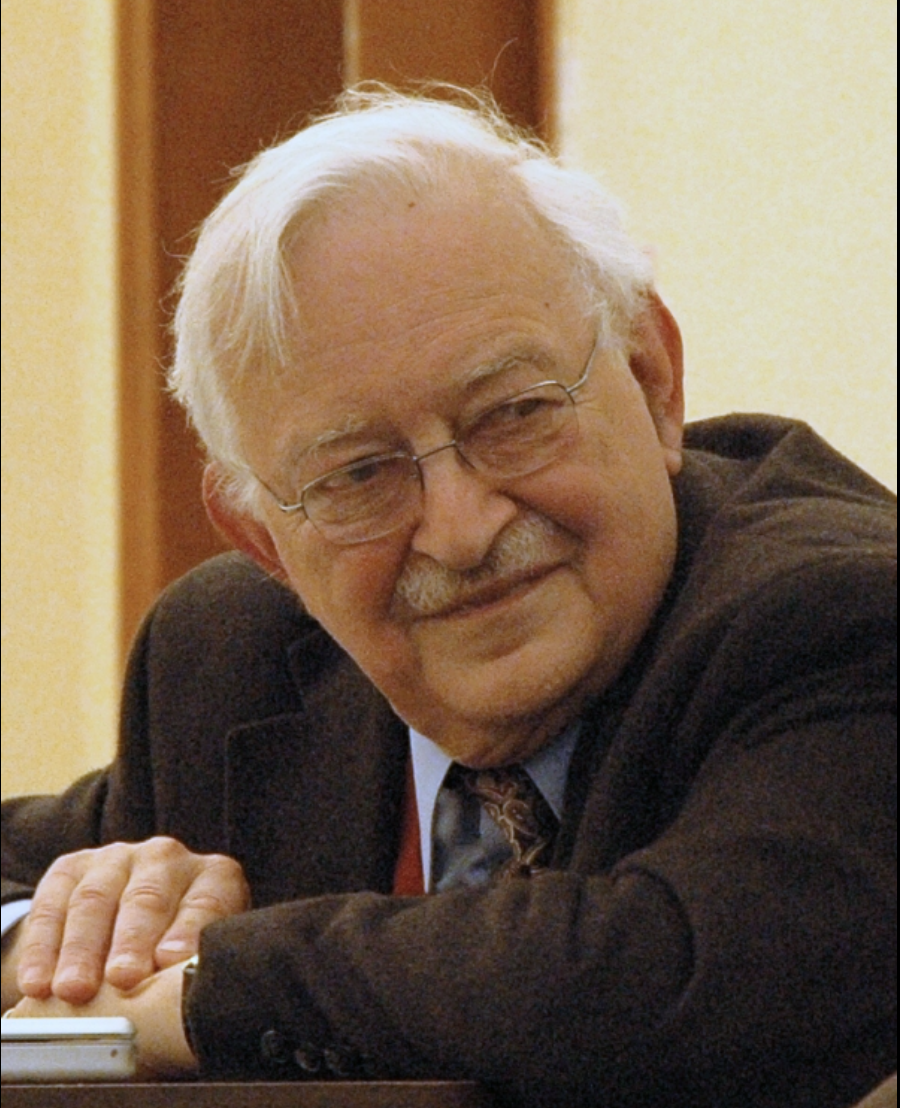
Immanuel Wallerstein (September 28, 1930 – August 31, 2019) was an American sociologist and economic historian. He is perhaps best known for his development of the general approach in sociology which led to the emergence of his world-systems approach. He was a Senior Research Scholar at Yale University from 2000 until his death in 2019, and published bimonthly syndicated commentaries through Agence Global on world affairs from October 1998 to July 2019. He was the 13th president of International Sociological Association (1994–1998). Politically, he considered himself on the "independent left" and was active in a variety of organizations. He argued that we are in the transition from our existing capitalist world-economy to some new system, and that the great political struggle of our time is about which new kind of systemic order will replace our existing one. A new systemic order could be better or worse, depending on our collective ability to push the worldwide decision in one direction or another. He believed that a crucial element in this is a vast debate about the kind of better system we wish to build, and saw the Reimagining Society Project as one of the ways to further this collective debate.
ZNetwork is funded solely through the generosity of its readers.
Donate




